A big island with a small surf map
The Dominican Republic covers about 48,700 square kilometres and has around 11 million people, with roughly 3.6 million in the Santo Domingo area. It shares Hispaniola with Haiti to the west, and it has Puerto Rico across the Mona Passage to the east. The country is hot and tropical on the coast, with Pico Duarte, the Caribbean's highest peak, rising in the mountains of the interior.
For surfers, the useful fact is geography. The north coast faces the Atlantic and picks up winter swell from North Atlantic storms, while the south coast faces the Caribbean Sea and is mostly flat except when a tropical system passes. As a result, nearly all the surf tourism is concentrated around a short stretch of the north coast near Puerto Plata, with some options elsewhere that are less reliable.
When to go: winter swell, summer wind
The surf season on the north coast generally runs from November to April, with December to February the most reliable months for larger waves. Some guides say the biggest swells arrive in October and April, and others extend the season from September. The disagreement reflects how variable swell is, and the practical advice is to plan for winter and check the forecast.
Summer is the windy season. Waves are usually smaller, and the afternoon breeze is strong, which suits kitesurfers and beginners. Hurricane season runs from June to November, so a summer trip can include storms. Travel insurance that covers weather disruption is sensible, and flexibility in your plans is even better.
Water, heat and what to pack
The sea is warm all year, typically in the mid- to high 20s Celsius. Boardshorts and a rash vest are enough for most sessions, and you may want a thin top only if you plan to stay in the water for hours. The average annual temperature for the country is about 26°C, and the coast is humid.
The key items to pack are reef-safe sunscreen, a hat, reef shoes or booties and a spare leash. Many of the best breaks are over reef, so a small first-aid kit with antiseptic is a good idea. If you are bringing a board, a padded bag helps on the roads, where baggage handling can be rough. Surf shops in the main resorts rent and sell boards, so a traveller without their own can usually find something.
How the north coast gets its waves
The north coast faces the Atlantic across a relatively narrow shelf, and swell from winter storms in the North Atlantic wraps in from the north and north-west. Reefs and sand patches along the shore shape that energy into peaks, which is why a handful of places, notably Playa Encuentro, work much more often than the rest of the coast.
Wind matters as much as swell here. The trade winds blow from the east, and a daily sea breeze often adds to them. On many days, the cleanest waves come in the early morning, and by midday conditions are choppy. Hurricane swells can send large, long-period waves in late summer and autumn, but they come with storm risk, so treat them as a bonus rather than a plan.
Reaching Puerto Plata and moving along the coast
The Dominican Republic has several international airports. For the north coast, Puerto Plata is the closest to Cabarete, with a transfer of around half an hour by road. Santo Domingo and Punta Cana are the biggest hubs, and from there it takes several hours to reach the north coast by road. Spanish is the official language, the currency is the Dominican peso and the time zone is UTC−4.
On the north coast, taxis, motorbike taxis called motoconchos and shared minibuses cover short distances. Rental cars are available, but driving can be chaotic and night driving is best avoided outside towns. Check the current entry rules before you travel, including any online arrival forms, because requirements can change.
Reef, rips and wind safety
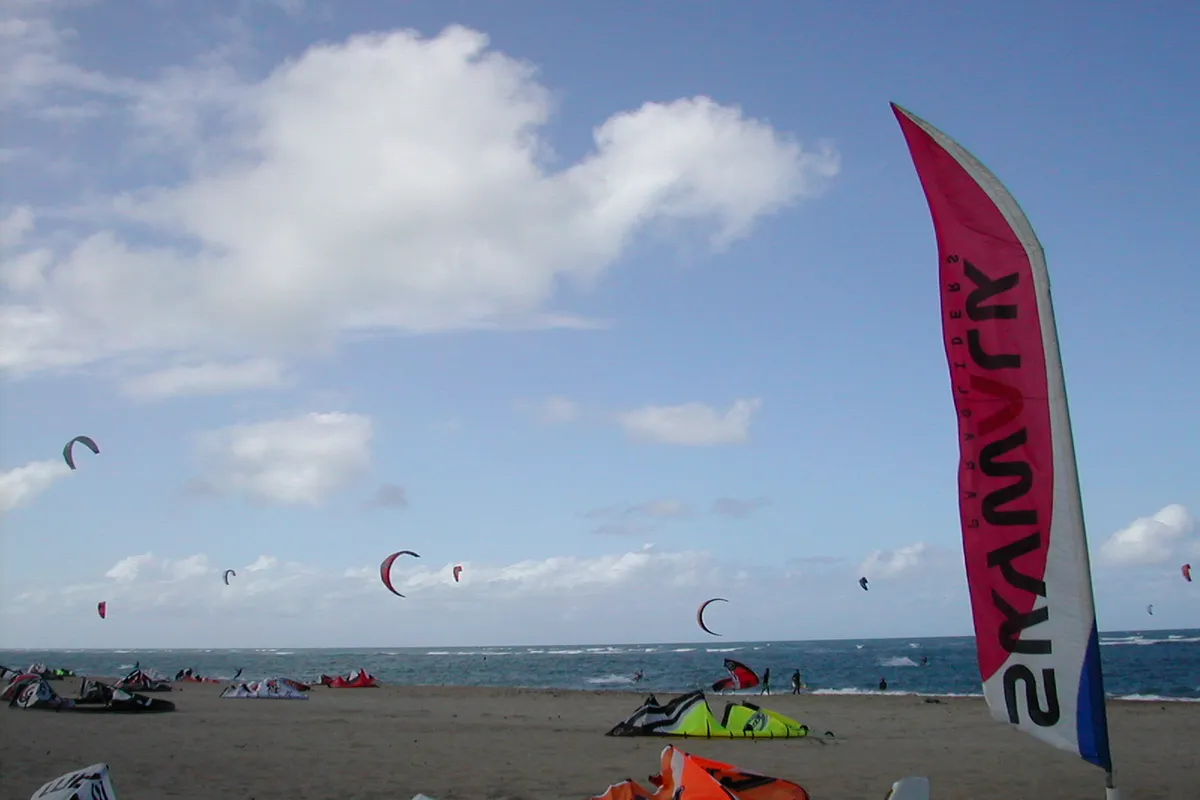
Dominican surf breaks are often over reef, with sea urchins and coral in shallow sections. Rips run through channels beside the reef, and can be strong when the swell builds. On windy days, kitesurfers launch from the same beaches as surfers, and lines can be dangerous in the water. Give kites space and choose surf zones away from the busiest launches.
Heat and sun are also real hazards. Surf early in the morning to avoid the strongest sun and the afternoon wind. Most visitors drink bottled water, and it is wise to carry enough on the road. Keep valuables secure on the beach and use licensed transport at night, as in many popular tourist areas.
Wind sports and the north-coast scene
The north coast has a long-standing reputation for wind sports, with competitions including a Windsurfing World Cup and the multi-sport Master of the Ocean event held in Cabarete. A steady daily breeze makes it easy to learn kitesurfing, and many visitors combine surf and kite lessons in a single trip.
The scene attracts an international crowd, including remote workers and long-stay travellers, which means there are cafes, coworking spaces and restaurants serving a wide range of food. It also means the surf and kite areas are shared, so know the rules of the water. A surf-only trip can work, but the fun of the destination is its mix of sports.
Money, language and local manners
Dominican Spanish is quick and clipped, and in tourist areas such as Cabarete you will hear English, French, German and Russian as well. A few words of Spanish make shops, taxis and surf schools friendlier. Prices are quoted in pesos, although many tourist businesses also accept US dollars or cards, so carry some pesos for small purchases and smaller roadside stalls.
Tipping is customary in restaurants, and a service charge is often added to the bill. Agree the fare before getting on a motoconcho or into a taxi. In the water, the usual rules apply: wait your turn, do not drop in, and talk to the surf instructors and beach staff about local etiquette. Most people are relaxed, and a smile and patience help when the line-up is crowded.
Beyond the beach: history and nature
Santo Domingo's Colonial Zone is a World Heritage Site with the first cathedral, palace, monastery and fortress built in the Americas. Puerto Plata has a cable car and a historic fort, and the north coast has waterfalls, canyoning and a lagoon system of karst caves and mangroves near Cabarete.
Inland, the mountains offer hiking, coffee farms and cooler air. The country is a large destination and can feel overwhelming, so pick a base and explore from there. Plan a day or two of non-surf activities, because flat spells are common outside winter, and the island has far more to offer than waves.
Planning a Dominican surf trip
Stay near Cabarete for the widest choice of schools, rentals and food, and plan on a week to get a real feel for the waves. Fly into Puerto Plata if you can, or budget extra time for the long drive from Santo Domingo or Punta Cana. December to February gives you the best chance of good swell, while November and April tend to be quieter.
The country is generally cheaper than the US territories and many other Caribbean destinations, though prices rise in the high season. Learn a few Spanish phrases, carry some local cash for small purchases and keep an eye on the weather forecast during hurricane season. A relaxed approach goes a long way.
Surf regions of Dominican Republic
North coast: Cabarete and Puerto Plata
The north coast is the country's surf heartland. Cabarete is the base, with Playa Encuentro a few kilometres west offering several reef and sand peaks for beginners to experienced surfers, and a hollow wave called Coco Pipe in winter. Kite Beach has a reef break popular with stand-up paddlers, and Sosúa and Puerto Plata are within easy reach. The Puerto Plata airport is close, and the area has the most schools, rentals and places to stay.
Known for: Cabarete, Encuentro, Kite Beach, Sosúa, Puerto Plata
Samaná and the north-east
The Samaná peninsula and the north-east coast have long beaches, whale watching in winter and a quieter pace than Cabarete. Surf is less reliable and less documented, with occasional waves at north-facing beaches when the swell is large. Local surf shops and schools are the best source for details, and it is worth treating the area as a place to combine beach time with a day or two of surf rather than a dedicated surf stop.
Known for: Samaná, Las Terrenas
The south and east coasts
The south coast near Santo Domingo, Boca Chica and Juan Dolio, and the east coast around Punta Cana, face the Caribbean and Atlantic and are mostly flat, apart from occasional tropical storm swell. They are better known for resorts, diving and historic sites than for surf. They are useful as arrival points, and the colonial city is a highlight, but most surfers continue to the north coast.
Known for: Boca Chica, Juan Dolio, Punta Cana
Learning to surf in the Dominican Republic
Cabarete is the best-organised place in the country to learn, with many schools and instructors working at Playa Encuentro and on smaller days in the bay. Lessons usually run for around two hours with a soft board, and the warm water means a rash vest and boardshorts are enough.
Ask the school how it picks a wave, how many students share an instructor and what happens when the surf is too big. The left at Encuentro is a gentle wave suitable for learners and improvers, while the hollow reef is not. Because the area is a wind-sports centre, make sure your lesson is held away from kite lines.
Summer, with smaller waves and strong winds, is a good time for beginners, and winter is better for progression. A short coaching session can help you read the reef and avoid common mistakes.
Surfing in Dominican Republic: questions
When is the best time to surf in the Dominican Republic?
November to April is the main surf season on the north coast, with December to February the most reliable. Summer waves are smaller, the wind is stronger and hurricane season runs from June to November.
Where is the best surf in the Dominican Republic?
Playa Encuentro, near Cabarete on the north coast, is the main break and one of the most consistent waves in the Caribbean, according to local guides. Other options exist but are less reliable.
Do I need a wetsuit?
No. The water is warm all year, so boardshorts and a rash vest are enough. Reef shoes are worth having for rocky entries and shallow reef.
Which airport is best for Cabarete?
Puerto Plata is the closest, about half an hour away by road. Santo Domingo and Punta Cana have more flights but require a long drive to reach the north coast.
Is the Dominican Republic good for beginners?
Yes. Cabarete has schools, gentle lefts at Encuentro and warm water. Beginners should avoid the hollow reef breaks and keep clear of kite lines.
Sources & editorial notes
Country context checked against the sources below. Regional summaries are Book & Surf editorial planning suggestions, not forecasts or safety assessments.