A coast that surfs all year, with a main season
Ecuador's coast is about 2,237 km long and receives surf throughout the year. The waves come from two directions. Northern-hemisphere swells arrive mostly between December and April and bring the larger surf to the north and centre of the mainland. Southern-hemisphere groundswells, strongest between June and September, light up exposed points and sandbars further south.
Because the equator runs through the country, there is no real winter or summer in the northern-hemisphere sense. The calendar is divided into a hot, wetter season from about January to April and a cooler, drier and often overcast one for the rest of the year. Most surf guides treat January to April as the headline season, but they also point out that beginners and intermediates often prefer the smaller waves of May to November.
Why the water is warm, and when it is not
Ecuador sits where the cool Humboldt Current meets warmer tropical water, which gives the coast a pattern that differs from the Peruvian deserts to the south. Reported sea temperatures at places such as Montañita and Mompiche are typically in the mid-20s Celsius through much of the year, and many surfers wear only board shorts or a thin rash vest.
Cooler water appears with the drier months, after heavy rain near river mouths and when strong offshore winds push the surface water out. A light spring suit or long-sleeve top can be useful at those times. Further south towards Salinas and the Santa Elena peninsula, the cold current has more influence and the air is often greyer. In the Galápagos, the water is cooler again, and a wetsuit is usually worthwhile.
Left points, sandbars and the shape of the waves
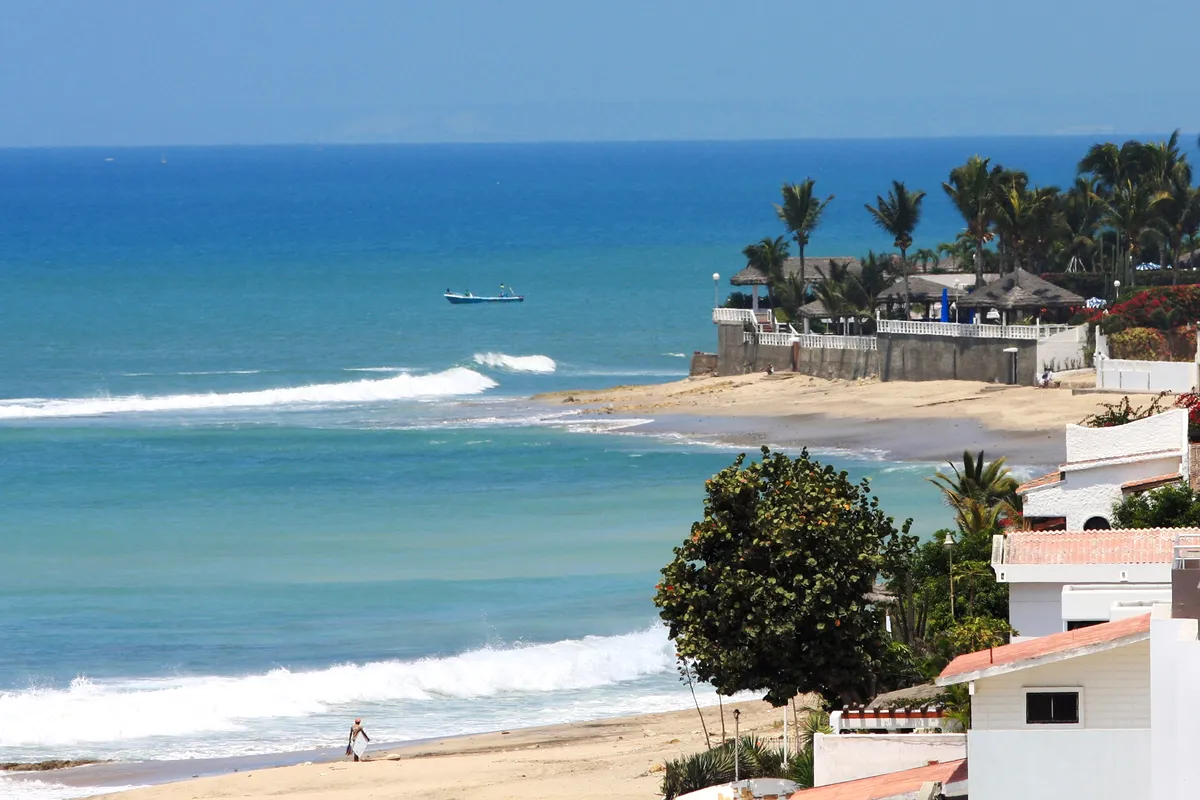
The Ecuadorian coast offers a mixture of wave types that are unusual for a country of its size. In the south, rocky points such as La Punta at Montañita shape the swell into rideable walls, while long sand-bottom beaches produce peaks that move with the tides and banks. Mompiche, in the north, is an exposed left-hand point that depends on larger northern swells, and Canoa, in Manabí, is a long beach break popular with beginners.
There are few heavy reef breaks by international standards, but there are enough rocks, rivers and shifting sandbars to keep line-ups interesting. Many of the best waves are in small communities with limited services, so it helps to travel with basic gear, a leash and a spare fin.
Getting around: the coast road and the regional airports
Most international visitors arrive at Guayaquil or Quito. From Guayaquil, buses and shuttles run north-west along the coast to Montañita and the Ruta del Spondylus, which follows the shore through fishing villages and beach towns. Regional airports at Salinas and Manta shorten some journeys, and there are flights to the Galápagos from the mainland.
Roads along the coast are generally paved but can be slow, with trucks, livestock and landslides in the wet months. Distances are deceptive. A trip from Montañita to Mompiche, for example, involves several hours and a change of buses, so plan the route in advance and allow a day for each long leg. US dollars are the currency in use, so bring small bills.
Culture, food and the pace of a coastal trip
Coastal Ecuador has its own food and rhythms. Ceviche, grilled fish, shrimp and plantain dishes are common, and the beachside restaurants of Manabí are known for seafood. In the Santa Elena peninsula you will meet communities with deep fishing traditions, and inland the Valdivia archaeological site recalls one of the oldest known cultures in the Americas.
Surf travellers often combine a few days on the coast with time in the Andes or the Amazon. Quito's historic centre and the Cotopaxi region are within a short flight or a long bus ride of the coast, so a mixed itinerary is realistic. Spanish is the common language, and a few phrases will help in smaller towns where English is less widely spoken.
Safety, security and sensible habits
Ecuador has a mixed security picture. Tourist beaches such as Montañita are busy and mostly safe if you follow standard precautions, but petty theft and bag snatching are the usual problems. Conditions vary by province and have changed in recent years, particularly in some northern coastal areas, so check your government's current travel advice before you book and again before you go.
In the water, the main hazards are rocks at the points, rips along the sandbars and occasional jellyfish. Mompiche has a reputation for sharks and rocks according to some guides, so ask locally. Use licensed operators for boat trips, and do not leave valuables in vehicles or on the beach during a session.
Planning a first trip
A simple plan is to fly into Guayaquil, spend a week on the southern coast between Montañita and Olón, and add a boat day in Machalilla National Park for humpback whales if you are travelling in the middle of the year. A second week can take in Salinas or the Manabí coast, with a night or two in Quito if you want to see the Andes.
If you have more time, the Galápagos have surf at San Cristóbal in the December to May window, but access, park fees and logistics make this a separate trip. Book accommodation ahead for Carnival in February and for national holidays, and travel light, because buses and shared taxis are not generous with luggage space.
Costs, seasons for budgets and what to pack
Ecuador is one of the more affordable surf destinations in South America, and a mid-range traveller can usually find simple lodging, local meals and shared transport at modest prices. Costs rise during Carnival in February and the holiday weeks, particularly in Montañita and Salinas. Food at local restaurants, including set lunches called almuerzos, is typically inexpensive compared with Europe or North America.
Pack light clothing, a rash vest, reef-safe sun protection, insect repellent and a lightweight rain jacket for the wetter months. A leash and spare fins are worth bringing. If you plan to travel north or into the mountains, add a warm layer, because temperatures drop quickly with altitude. Check airline fees for boards on domestic flights as well as international ones.
Whale season and the flat-day list
Between roughly June and September, humpback whales pass along the central coast, and boat trips leave from Puerto López in Machalilla National Park. This coincides with the southern swell season, so a surf trip in the middle of the year can combine both. On flat days, walking, cycling and visits to small fishing harbours are easy to arrange, and the coast road offers plenty of places to stop for fresh seafood.
Surf regions of Ecuador
Montañita and the southern Ruta del Spondylus
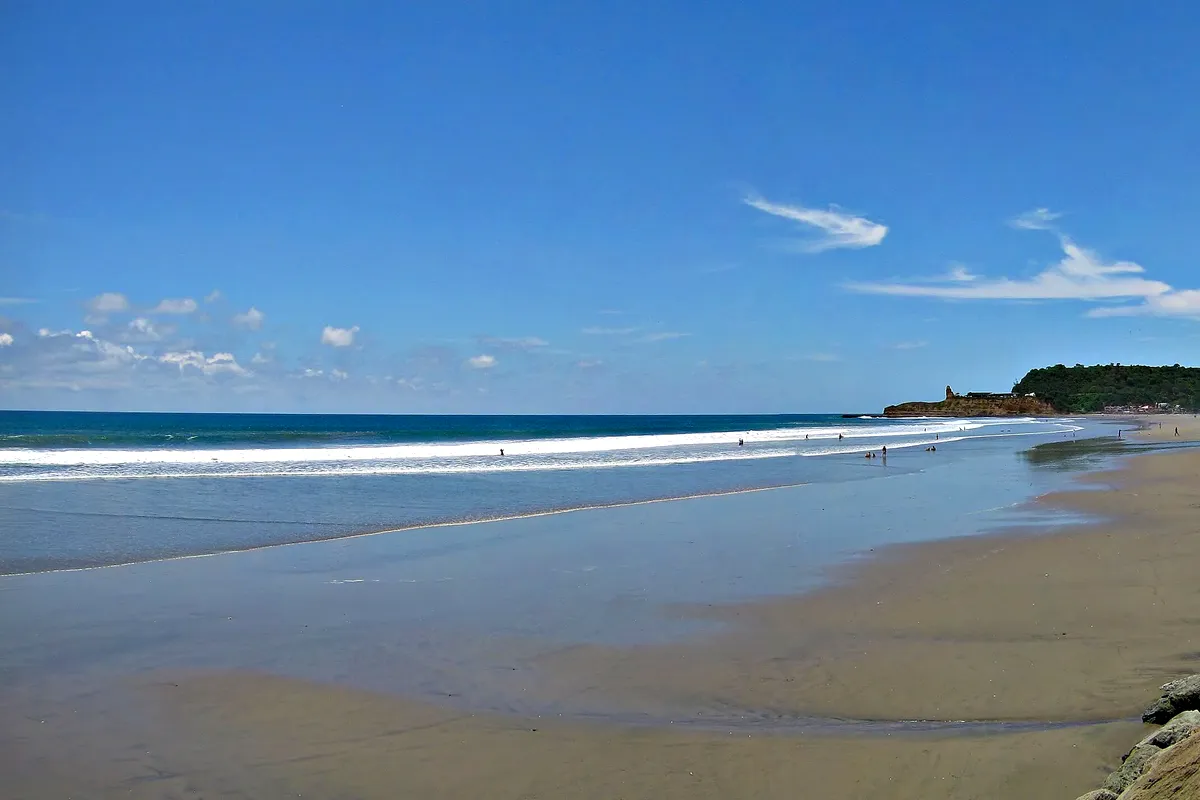
The stretch of the Santa Elena coast around Montañita is the heart of Ecuadorian surf travel. Montañita has a rocky point at one end and about two kilometres of beach break, with lessons and rentals along the sand, and a famously busy nightlife. Olón, just across the headland, and Ayampe, along the Ruta del Spondylus, are quieter bases. Sea temperatures are warm in the wet season and slightly cooler during the drier months, and swell is consistent enough to surf most of the year.
Known for: Montañita, La Punta, Olón, Ayampe
Salinas and the Santa Elena peninsula
At the western tip of the country, Salinas is a resort city with several breaks around the peninsula, and Punta Carnero has hosted national and international competitions. The peninsula has a drier, more exposed feel than the Ruta del Spondylus, and the cold Humboldt influence is stronger. The area suits surfers who want a city base with a regional airport, hotels and restaurants, and the 2009 ISA World Junior Surfing Games were held at Salinas.
Known for: Salinas, Punta Carnero, Playas
Manabí: Manta, Canoa and Bahía de Caráquez
The coast of Manabí province mixes port cities with long, sandy beaches. Canoa is a beach break that is widely recommended for beginners and active throughout the year, with the busiest surf season from roughly January to April. Manta, a larger port and tuna-fishing city, hosted the Bodyboarding World Cup in 2004 and has reef breaks nearby. The region is less visited than Montañita and rewards those who want long beaches with fewer surfers.
Known for: Canoa, Manta, Bahía de Caráquez
Esmeraldas: Mompiche, Same and Atacames
In the far north, Esmeraldas province has a greener, wetter climate and a more rural feel. Mompiche is the best-known break, an exposed left-hand point that depends on larger north and north-west swells and can go flat between them. Same and Atacames are beach towns with surf options and a lively Ecuadorian domestic tourist scene. Check the security situation and road conditions carefully before travelling here.
Known for: Mompiche, Same, Atacames
The Galápagos: San Cristóbal
San Cristóbal is the surfing island of the Galápagos and receives swell from both the North and South Pacific, with the main season from about December to May. Surf breaks are near the town of Puerto Baquerizo Moreno, with others reached by boat. Wildlife, including sea lions, is part of the experience. National park rules, fees and travel costs mean this is a separate, planned trip, not a casual add-on.
Known for: San Cristóbal, Punta Carola
Learning to surf in Ecuador
Ecuador is a good, inexpensive place to learn because the water is warm and the beach breaks are forgiving. Montañita has the most schools and rental shops, with lessons on the sandy beach break. Canoa, in Manabí, is another beginner-friendly option and is quieter. Salinas offers lessons for those who prefer a city base.
A group lesson usually runs about two hours, and many schools offer multi-day packages. Ask about class size, safety supervision and the quality of boards. Early mornings tend to give lighter winds and fewer people. If you plan to stay for a few weeks, you can progress from the whitewater at Montañita to the smaller peaks at Olón.
Surfing in Ecuador: questions
When is the best time to surf in Ecuador?
January to April has the larger northern swells and warm weather, which suits intermediates and above. May to November has smaller waves and more cloud, and many beginners prefer it.
Do I need a wetsuit in Ecuador?
On the mainland coast most surfers use board shorts or a rash vest, because the water is warm. A spring suit helps in cooler months and further south. In the Galápagos, a wetsuit is more likely to be needed.
Which Ecuadorian town is best for beginners?
Montañita has the most schools and a forgiving beach break, and Canoa in Manabí is also widely recommended. Keep away from the rocky point at Montañita until you are confident.
Is it safe to travel to Ecuador's coast to surf?
Popular beach towns are mostly safe with normal precautions, but security conditions vary by province. Check your government's current advice, avoid walking alone at night and keep valuables out of sight.
Can I surf in the Galápagos?
Yes. San Cristóbal has surf, with the season generally from December to May. Plan it as a separate trip because of park rules, fees and flights.
Sources & editorial notes
Country context checked against the sources below. Regional summaries are Book & Surf editorial planning suggestions, not forecasts or safety assessments.