The breaks
Recognised, publicly known surf spots around Montañita. Suitability depends on the day's swell, wind and tide, so treat the level as a guide, not a guarantee.
| Break | Type | Best for | Notes |
|---|---|---|---|
| La Punta | Reef/point at the north end | Intermediate–Advanced | Rocky take-off, holds swell and is usually crowded. Sources describe it mainly as a right, but at least one calls it a left, so ask locally before paddling out. |
| Montañita beach break | Sand-bottom beach break | Beginner–Advanced | About two kilometres of peaks with rights and lefts. Soft on small days and punchy on big ones; this is the main lesson area, so watch for learners. |
| Olón | Beach break | Beginner–Intermediate | A wider, quieter beach across the headland with some rocky entries. A good backup when Montañita is packed or blown out. |
| Ayampe | Beach and river-mouth peaks | Intermediate | A less crowded stretch to the north with a more rural feel. Conditions depend on the banks near the river mouth, so check them at low tide before surfing. |
| Salinas and Punta Carnero | Beach and point breaks | Intermediate | A longer drive south, at the end of the Santa Elena peninsula. The area has hosted national and international contests and offers an alternative when the north swell is small. |
Montañita surf climate, measured
Ten years of ocean model data for the open water off this coast: what the swell usually looks like before it reaches the beach. Shelter, sandbars and reefs change what you actually surf, so read this next to the month notes below.
| Month | Swell | Period | From | Wind | Water | Wetsuit | Days over 2.5 m |
|---|---|---|---|---|---|---|---|
| Jan | 1.2 m | 13 s | SW | 13 km/h S | 26°C | Boardshorts | 0% |
| Feb | 1.2 m | 13 s | SW | 10 km/h S | 26°C | Boardshorts | 0% |
| Mar | 1.2 m | 13 s | SW | 7 km/h S | 27°C | Boardshorts | 0% |
| Apr | 1.2 m | 14 s | SW | 10 km/h S | 26°C | Boardshorts | 0% |
| May | 1.3 m | 13 s | SW | 14 km/h S | 26°C | Boardshorts | 0% |
| Jun | 1.4 m | 14 s | SW | 16 km/h SW | 25°C | Boardshorts | 0% |
| Jul | 1.3 m | 14 s | SW | 16 km/h SW | 24°C | Rash vest or 1 mm top | 0% |
| Aug | 1.2 m | 14 s | SW | 15 km/h S | 23°C | Rash vest or 1 mm top | 0% |
| Sep | 1.3 m | 14 s | SW | 15 km/h SW | 23°C | Rash vest or 1 mm top | 0% |
| Oct | 1.3 m | 14 s | SW | 15 km/h SW | 24°C | Rash vest or 1 mm top | 0% |
| Nov | 1.3 m | 13 s | SW | 15 km/h SW | 24°C | Rash vest or 1 mm top | 0% |
| Dec | 1.2 m | 14 s | SW | 14 km/h S | 24°C | Rash vest or 1 mm top | 0% |
Median values from ERA5 at a sea point near Montañita (1.75°S, 81°W), sampled 4 days a month at 12:00 UTC, 2015-2024. Highlighted months are our suggested planning window. Not a forecast or a safety assessment. How we use this data.
Book a surf trip to Montañita
Everything we can link you to for this trip, grouped by what you need. Before you pay a camp or school, read who holds your money, and check that your insurance covers surfing.
Where to stay
Search near the breaks. Filter for surf hostels, apartments or hotels once you can see the map.
Surf lessons and activities
Listings change by season, so check what the operator includes and who coaches.
Flights
Add your dates and check the board fee on every leg before you pay.
Car hire
Ask about roof racks and whether the insurance covers boards on the roof.
Airport transfer
Tell the driver you have a board and its length when you book.
Mobile data
Download a forecast app and offline maps before you land.
Flight delay claims
If a delay eats your first surf day, check whether you can claim.
Luggage storage
Useful between check-out and a late flight. Check the size limit before dropping a board.
Links marked as partner links may earn us commission at no cost to you; the rest earn us nothing. We have not checked live availability or price, and the seller's terms apply. How we handle this.
Cheapest months to fly to Montañita
Lowest return fare to GYE that Aviasales users found recently, in US dollars. Treat these as a guide to which months are cheaper, not as prices you can book today.
| From | Nov 26 | Dec 26 | Jan 27 | Apr 27 |
|---|---|---|---|---|
| London | – | $1374 | $953 | – |
| New York | $578 | $362 | $285 | $294 |
Prices seen by 1 November 2026. Travelpayouts Data API. Board fees are extra on most airlines: see our surfboard baggage guide.
A beach town with a surf point at its edge
Montañita sits in the parish of Manglaralto in Santa Elena Province, roughly 180 km north-west of Guayaquil, and has a permanent population of only about a thousand people. Its name means 'small mountain', a reference to the headland that separates it from neighbouring Olón. That headland is the reason surfers came: the point gives shape to the swell, and the long beach next to it gives everyone else somewhere to practise.
The town grew from a fishing village into a stop on the backpacker circuit, and surfing is only part of the draw. Expect bars, hostels, craft stalls and street food within a few blocks of the sand, and a crowd that changes sharply between peak weeks and the quiet months.
Reading the two waves: La Punta and the beach
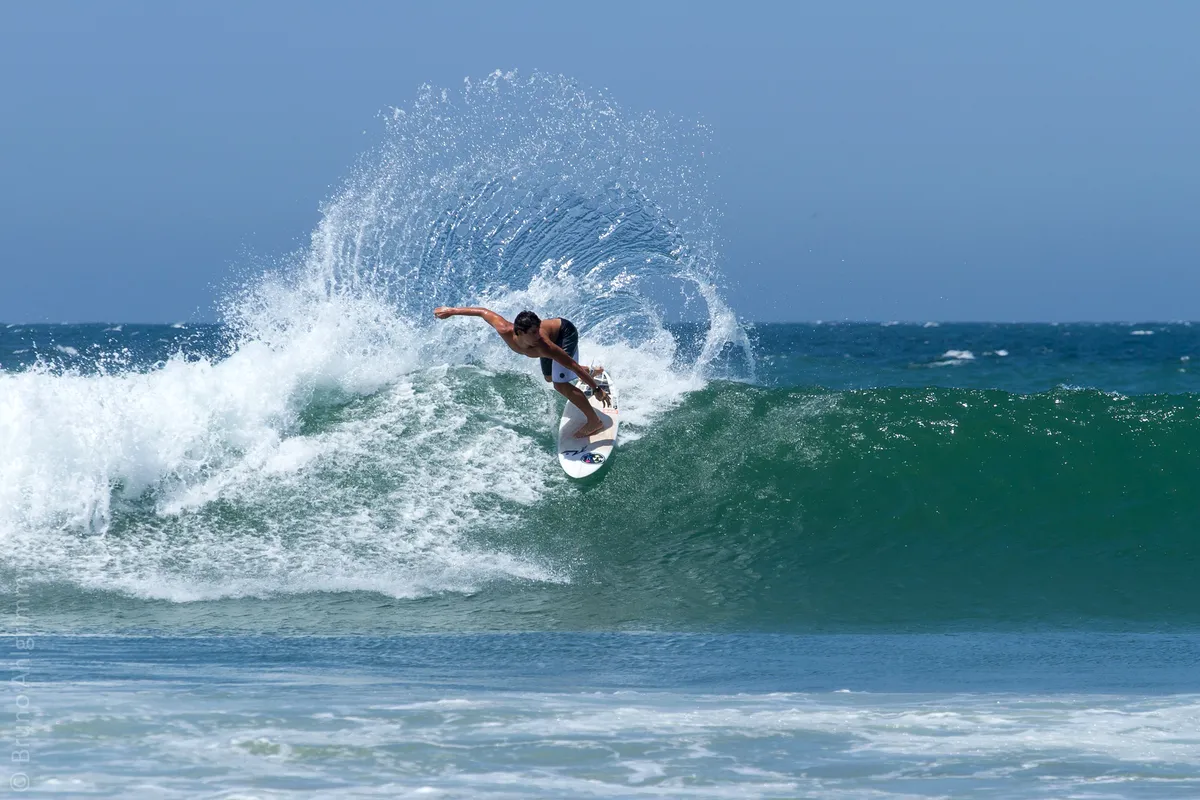
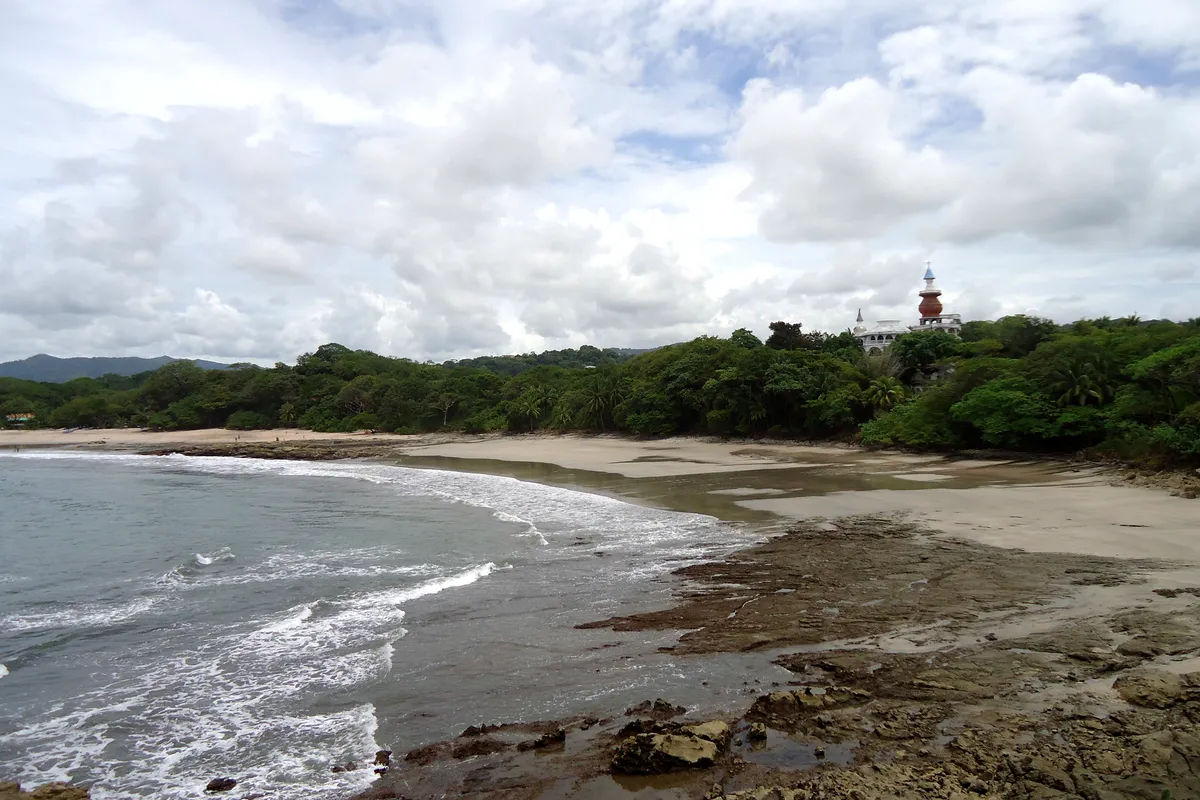
There are two main set-ups. La Punta is the rocky point at the northern end of the beach. Most accounts describe it as a right-hand reef wave that holds a fair amount of swell and works through much of the tide, though at least one source describes it as a left, so look before you paddle out. It is the busiest peak in town and rocks near the take-off and inside are a real hazard.
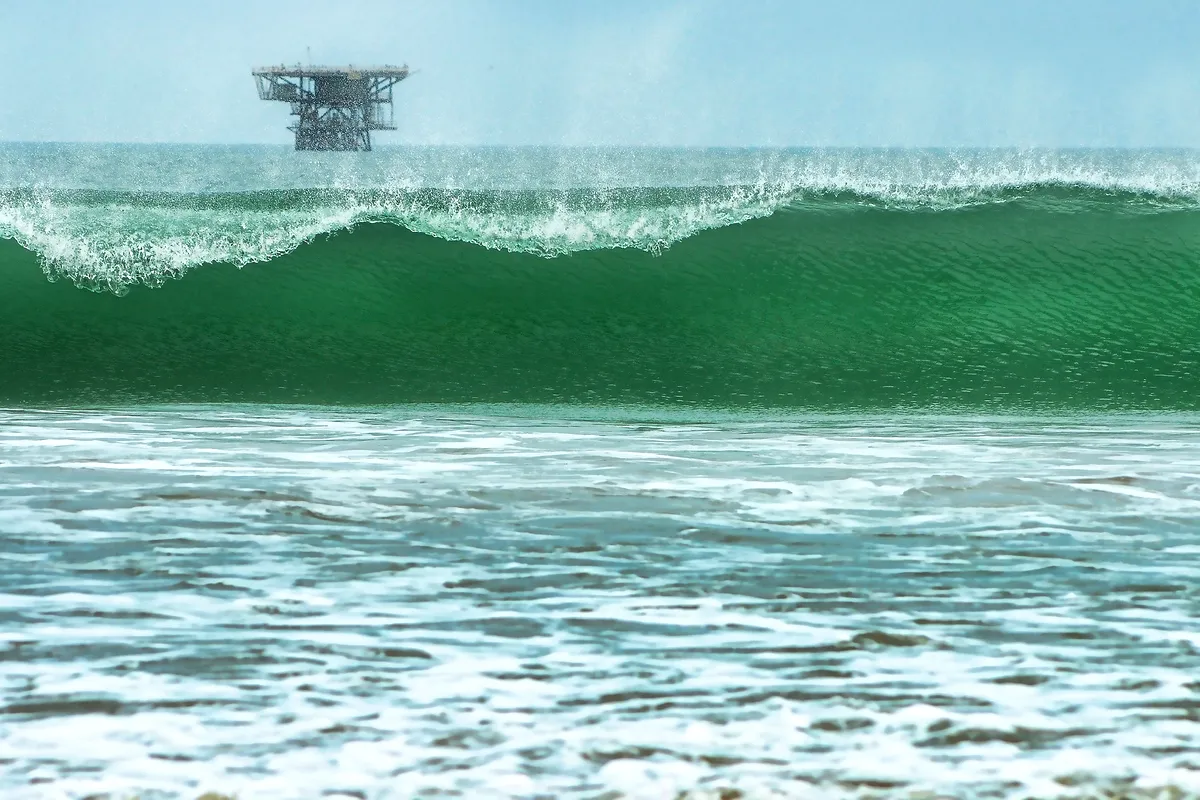
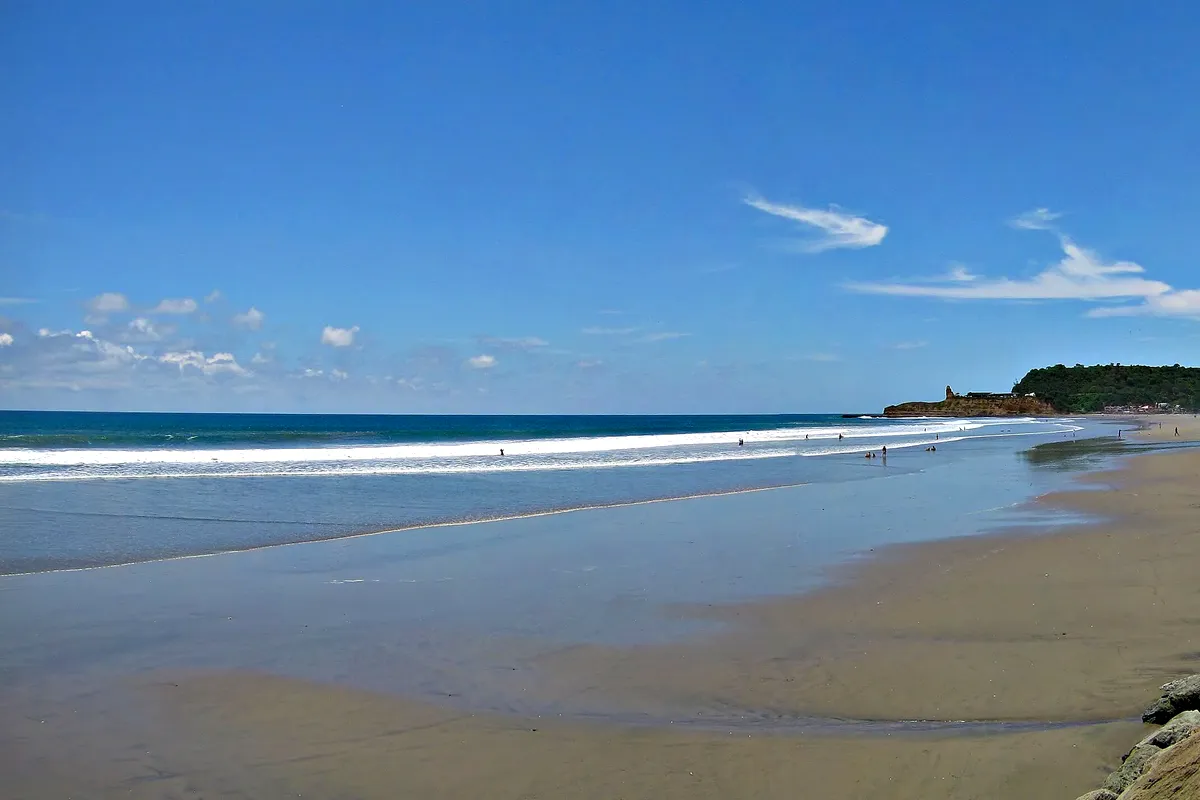
The beach break stretches for about two kilometres, with rights and lefts over sand. Its character depends on the banks: some days it is soft and forgiving, on others it closes out in long, heavy walls. It is where most lessons take place, and the south end of the beach is usually less crowded than the area opposite the main street.
Olón, Ayampe and other beaches along the coast road
A short ride north, across the headland, Olón has a wide, quiet beach with a more relaxed feel and a few rocky entry points where water shoes are useful. It suits surfers who want a calmer base than Montañita and are happy to walk or take a short taxi in.
Further along the Ruta del Spondylus, Ayampe is a small settlement with a river mouth and a laid-back crowd; sources disagree on exactly where it sits relative to the provincial border, so check a map when planning. Both places pick up the same swell as Montañita and can be less crowded. South of town, the Valdivia archaeological site is about 10 km away and is a sensible half-day for a flat afternoon.
When to go, and what the weather does
The warm, wetter months from January to April bring the larger north swells, and waves of around two metres have been recorded in January to March. Summer waves can be much smaller, typically between knee and head height, with late autumn and winter often bringing waves of around 1.5 metres. Southern swells, usually from June to September, tend to light up the point.
The weather pattern matters as much as the swell. From roughly May to December the sky is often grey and cooler on the coast, while January to April is hot and humid with afternoon showers. Water temperature stays warm enough for board shorts or a thin rash vest for most of the year; a light wetsuit can be useful if the wind is cold.
Nights, noise and sleeping
Montañita is a party town, and the busiest stretch is the main pedestrian street, where bars and music run until dawn. The place hosts a Carnival each February that includes an international surfing competition, and electronic music festivals are held on the beach in peak season.
If you plan to surf at dawn, stay a few blocks back from the bars or in Olón, where nights are quieter. Book ahead for Carnival and national holidays, when prices rise and rooms are scarce. Pickpocketing and bag theft are the common problems in crowded places, so keep valuables out of the water bag and out of sight.
Getting to Montañita from Guayaquil
Most visitors fly into Guayaquil, then travel by road. Direct buses run from the city's main terminal along the coast, and the journey is generally around three hours, though traffic and weekends add time. Private transfers and shared shuttles are available and are simpler with a board bag.
There is also a regional airport at Salinas, further south on the peninsula, which can be useful if you are combining beaches. From Quito, most travellers fly to Guayaquil first. Local transport between Montañita, Olón and Manglaralto is by motorbike taxi, bus or on foot, and none of it is difficult to organise on arrival.
Flat days, whales and the Machalilla coast
When the ocean flattens there is plenty to do without leaving the coast. Walks to nearby beaches, yoga classes and bodyboarding or paddling fill most days, and scuba diving and windsurfing are also popular here.
Farther along the Ruta del Spondylus, Machalilla National Park and the fishing town of Puerto López are well known for humpback whale watching in the middle of the year. If you are travelling in June to September, a boat day can be arranged through licensed operators, which makes more sense than a rushed drive on the way home.
Montañita surf season month by month
A broad planning picture, not a forecast. Swell, wind and water temperature vary from year to year.
| January | Hot and humid, with the larger north swells arriving. Waves can reach around two metres; the point and the beach both work for confident surfers. |
|---|---|
| February | Peak of the warm season and Carnival, which includes an international surfing competition. Strong crowds and high prices, but consistent waves. |
| March | Still warm and rainy in the afternoons, with good swell early in the month. A solid choice before the school holidays and the long weekends. |
| April | Swell tails off but the sea stays warm and crowds thin. Good for intermediates who want fewer people in the water. |
| May | The cooler, drier season begins and skies often turn grey. Waves are smaller and friendlier, suited to learning. |
| June | Southern swells start to reach the point. Humpback whales appear along the coast, a good reason to include a boat day. |
| July | Cooler air and water, with consistent swell for La Punta. A light wetsuit or long-sleeve top can be welcome in the wind. |
| August | Often overcast but with steady southern swell and quieter streets. A good month for surfers who prefer the town calm. |
| September | The tail end of the southern swell season and the end of whale watching. Fewer visitors, so beds and boards are easier to find. |
| October | Smaller, softer waves on the beach, usually with a thin sea fog. Fine for beginners and easy to organise at short notice. |
| November | A transition month with waves around knee to waist height on many days. Water warms again and prices stay low. |
| December | Warmer days return and the first north swells can appear. Christmas and New Year bring crowds and busy nights. |
Taking lessons on Montañita's beach
Montañita has many schools and board rentals, concentrated close to the beach. The sandy beach break is the standard place to learn, with the south end usually the best choice because it is further from the point. Most lessons are 1.5 to 2 hours; ask whether group size is capped, whether a board and rash vest are included, and who is responsible for people in the water.
Beginners should keep away from La Punta, where rocks and a crowded take-off are a poor combination. Early mornings are calmer, and the wind is usually lighter. If you are staying only a few days, a morning lesson followed by a self-guided session at Olón is a reasonable plan.
Comparing options across the country? Read our guide to surfing in Ecuador.
Seasonal notes on this page describe typical patterns, not the conditions on a given day. Use the local forecast, lifeguard advice and a qualified instructor for water-safety decisions, and get a written breakdown of what any surf package includes before paying.
Montañita surf trip questions
When is the best time to surf in Montañita?
January to April has the larger north swells and the warmest weather. June to September brings southern swells that favour La Punta and is also whale season. Beginners may prefer the smaller waves between May and November.
Is Montañita good for beginners?
Yes, the sandy beach break has plenty of space for lessons and rentals are easy to find. Beginners should stay away from La Punta, which has rocks and a crowded line-up.
Do I need a wetsuit in Montañita?
Most surfers manage with board shorts or a rash vest, as the water is warm for most of the year. A thin long-sleeve top or spring suit helps in cooler months, with wind or after rain.
How do I get to Montañita from Guayaquil?
It is about 180 km by road, and the usual journey is roughly three hours by bus, shuttle or private transfer. Allow extra time at weekends and public holidays.
Is Montañita safe?
It is a tourist town with a busy nightlife scene, and petty theft is the main concern. Keep valuables out of the water bag, avoid walking alone late at night and check your government's current travel advice.
Sources & editorial notes
Destination context checked against the sources below. Base-selection and itinerary suggestions are Book & Surf editorial recommendations. Seasonal windows are broad planning suggestions, not measured forecasts or guarantees.
- Wikipedia: Montañita ↗
- Wikipedia: Surfing in Ecuador ↗
- Surf-Forecast: Montañita ↗
- Wanderbus Ecuador: Montañita surfing guide ↗
We do not claim to have personally surfed every break. Read our editorial standards.