Pipeline.
Pipeline, also called Banzai Pipeline or Pipe, is a reef break off Ehukai Beach Park in Pupukea on the North Shore of Oahu. Wikipedia describes waves breaking in shallow water above a sharp, cavernous reef and forming large hollow curls, and says numerous surfers and photographers have died there. The wave has hosted the Pipe Masters for decades and has appeared in films and songs. For visitors it is a spectacle that deserves a long look from the beach and a clear understanding of what the water below it is like.
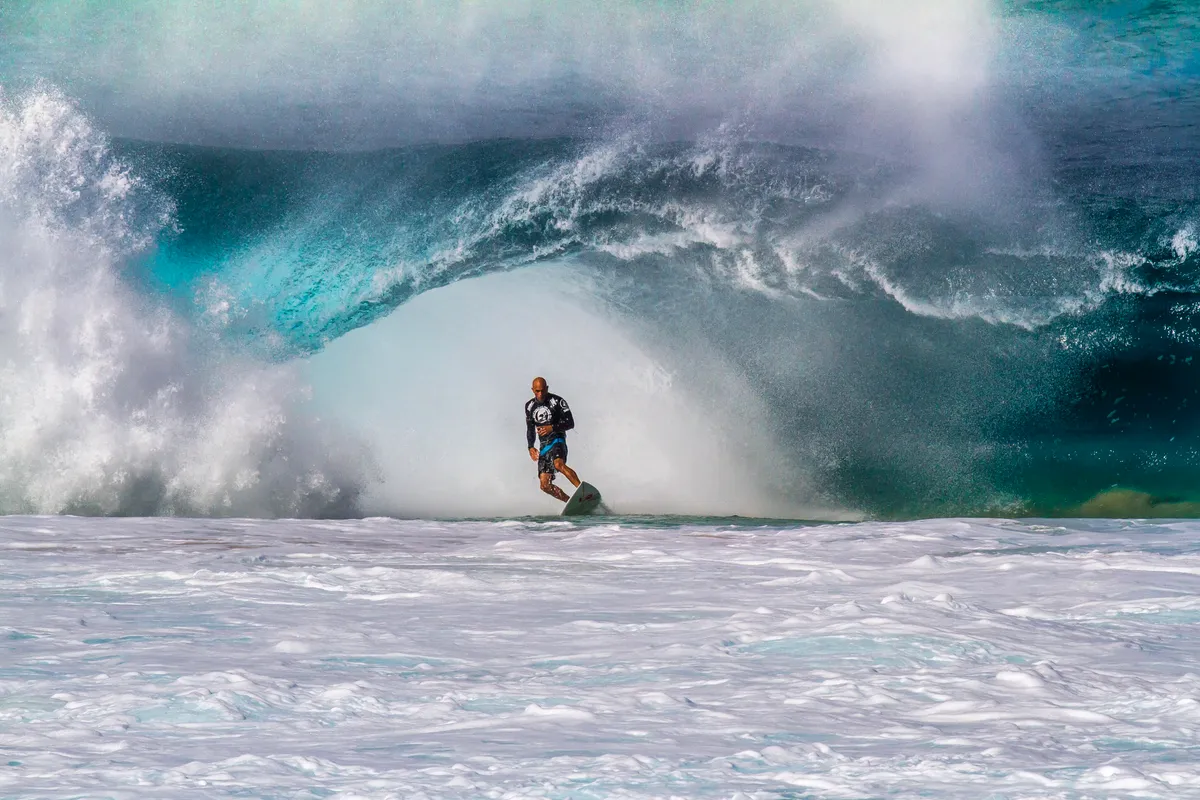 Photo: Fosterand sons · CC BY-SA 4.0 · Wikimedia Commons
- Level
- Expert
- Direction and bottom
- Both · Reef
- Best swell
- NW to N groundswell
- Best wind
- ESE offshore
- Best tide
- Works at all stages; shallower at low tide
- Best months
- Nov, Dec, Jan, Feb
- Size
- Average about 9 ft, up to about 20 ft; second reef from about 12 ft
- Hazards
- Shallow reef and lava spires, Heavy hold-downs, Strong rips, Crowds, Territorial lineup
Three reefs and two directions
Wikipedia explains that Pipeline comprises four waves: Pipeline itself, a left also called First Reef; Backdoor, a right that peels the other way off the same peak; and the outer Second and Third Reef waves, which activate in increasing depth as the swell grows. Second Reef starts breaking at roughly 12 feet, and Third Reef breaks only in extreme sizes. The average wave is about 9 feet and can reach about 20 feet.
The reef is flat and tabletop-like, with caverns underneath that produce an air bubble that pops on the wave face. That structure helps to create the thick, round barrel, but it also means there is very little margin for error. Underwater lava spires can injure surfers who fall, and sand build-up can sometimes make the waves close out. Off the Wall and Backdoor are especially dangerous shallow sections.
Winter swells and wind
Surf-Forecast says the best swell is north-west, and the best wind is offshore from the east-south-east. Groundswells are more common than windswells. Winter, especially January, is the main season, with clean surf about 52 percent of the time on the page's figures, blown out about 29 percent and too small about 19 percent. Summer is mostly flat. Wikipedia adds that a strong west swell clears sand from the reef, and a strong north swell then tends to produce the best waves.
The page says Pipeline works at all stages of the tide, but a low tide exposes more of the reef and increases the risk. Surfers who know the break pay close attention to the tide and the swell direction before deciding whether it is safe to paddle out. The sea temperature on Surf-Forecast is about 26 degrees Celsius, so most people wear a rash vest or shorts.
Who should stay on the beach
Pipeline is a wave for highly experienced surfers who have trained for shallow, powerful barrels, ideally in smaller Hawaiian surf first. The reef is hard, the waves are fast, and the lineup is competitive and territorial. Surf-Forecast warns of rips and rocks, and it lists the crowd as often crowded. Visiting surfers who paddle out without understanding the etiquette are a risk to themselves and to others.
Even strong surfers from other regions should spend time watching, try other North Shore breaks first and consider the consequences of a mistake. If you have not surfed a barrelling wave over shallow reef, the answer is not here. Swimming is also dangerous. Lifeguards on the North Shore are well informed, and their advice about the beach on a given day should be followed without argument.
Where to watch and how to arrive
Ehukai Beach Park is on Kamehameha Highway in Pupukea and has a sandy beach that offers a view from a short distance. Surf-Forecast lists Dillingham Airport at about 17 kilometres and Kaneohe Bay at about 38 kilometres, but most visitors fly into Honolulu and drive north. Traffic on the North Shore is heavy in winter, especially on big-swell days and contest days, so leave extra time and be prepared to park some distance away.
Watch from the sand or the beach path, keeping well back from the shore break. Photographers and tow-ins sometimes use the same area, and lifeguards may close the water or the beach at short notice. Do not walk out onto rocks to get a better angle, because waves can sweep a long way up the shore on large days.
Neighbouring breaks
Surf-Forecast lists Ehukai (Gums), Log Cabins, Off the Wall and Insanities, Pupukea and Rockpiles within a short distance. Waimea Bay is about 6 kilometres to the west. Each break has a different personality and a different level of difficulty, and the North Shore guide covers how to approach the whole coast. Pipeline itself is best treated as a wave for watching and for those who have earned the right to be there.
The ocean off North Shore, Oahu, by month
| J | F | M | A | M | J | J | A | S | O | N | D | |
|---|---|---|---|---|---|---|---|---|---|---|---|---|
| Swell, m | 2.6 | 2.7 | 2.4 | 2.1 | 1.9 | 1.6 | 1.7 | 1.7 | 1.7 | 2.1 | 2.4 | 2.7 |
| Period, s | 14 | 12 | 11 | 10 | 9 | 8 | 8 | 8 | 9 | 11 | 11 | 13 |
| Water, °C | 25 | 24 | 24 | 24 | 25 | 26 | 26 | 27 | 27 | 27 | 26 | 25 |
Open-ocean ERA5 medians, not wave size at the break. Sources.
Questions about Pipeline
Is Pipeline left or right?
Both. The left is Pipeline (First Reef), and the right is Backdoor. They break from the same peak in opposite directions.
When should I go to see it?
In winter, especially November to February, when north-west and north swells arrive. Summer is usually flat.
Is Pipeline safe for intermediate surfers?
No. The reef is shallow, lava spires can cause injury, and the lineup is competitive. It is for experts with experience in shallow barrels.
How big does Pipeline get?
Wikipedia says the average wave is about 9 feet and can reach about 20 feet, with outer reefs breaking in larger swells.
Where can I watch Pipeline from?
Ehukai Beach Park on Kamehameha Highway has a sandy beach where you can watch from a safe distance. Stay well back from the shorebreak, follow lifeguard instructions and arrive early on big days, when parking is limited and traffic is heavy.
Check a live forecast and local advice before paddling out. Heavy waves injure and kill experienced surfers.