Why surf in the Maldives
The Maldives consists of more than a thousand small coral islands grouped into atolls, scattered across the Indian Ocean south-west of Sri Lanka. Swells generated by storms in the Southern Indian Ocean travel long distances and arrive organised and clean. When they hit the outer reefs of the atolls, especially near the channels, or passes, between islands, they peel along the coral as long, well-shaped waves.
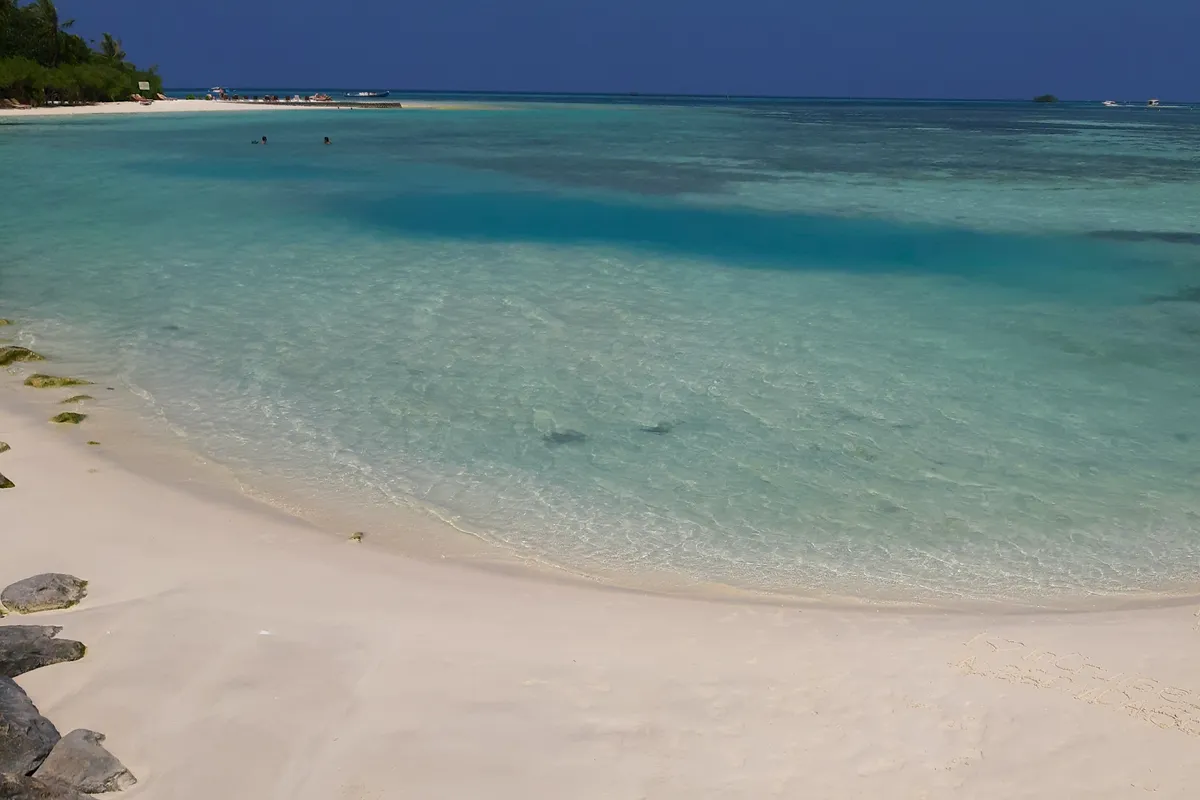
The result is some of the most consistent and perfect reef surf in the world, in warm, clear water, often only a short boat ride from where you stay. Most waves are for intermediate and advanced surfers, as they break over shallow coral, but some breaks are more forgiving on small days. The setting, with white-sand islands and turquoise lagoons, is spectacular.
When to go surfing in the Maldives
The main surf season runs from roughly March to October, during the south-west monsoon, when Southern Indian Ocean swells are most consistent. June to August usually brings the biggest swells, but also stronger winds and more rain. March to May and September to October often offer a good balance of swell, lighter winds and calmer weather.
The southern atolls, such as Huvadhoo, can be good earlier and later in the season, around February to April and September to November, when winds are often lighter. From December to February, swells are generally smaller and the weather drier.
Boat trips, resorts and local islands
There are three main ways to surf the Maldives. Surf charter boats move between breaks according to the swell and wind, giving access to many waves and fewer crowds; they are popular with groups of experienced surfers. Surf resorts are built on islands near quality breaks, offering comfort and boat transfers, and some breaks near resorts are reserved for their guests.
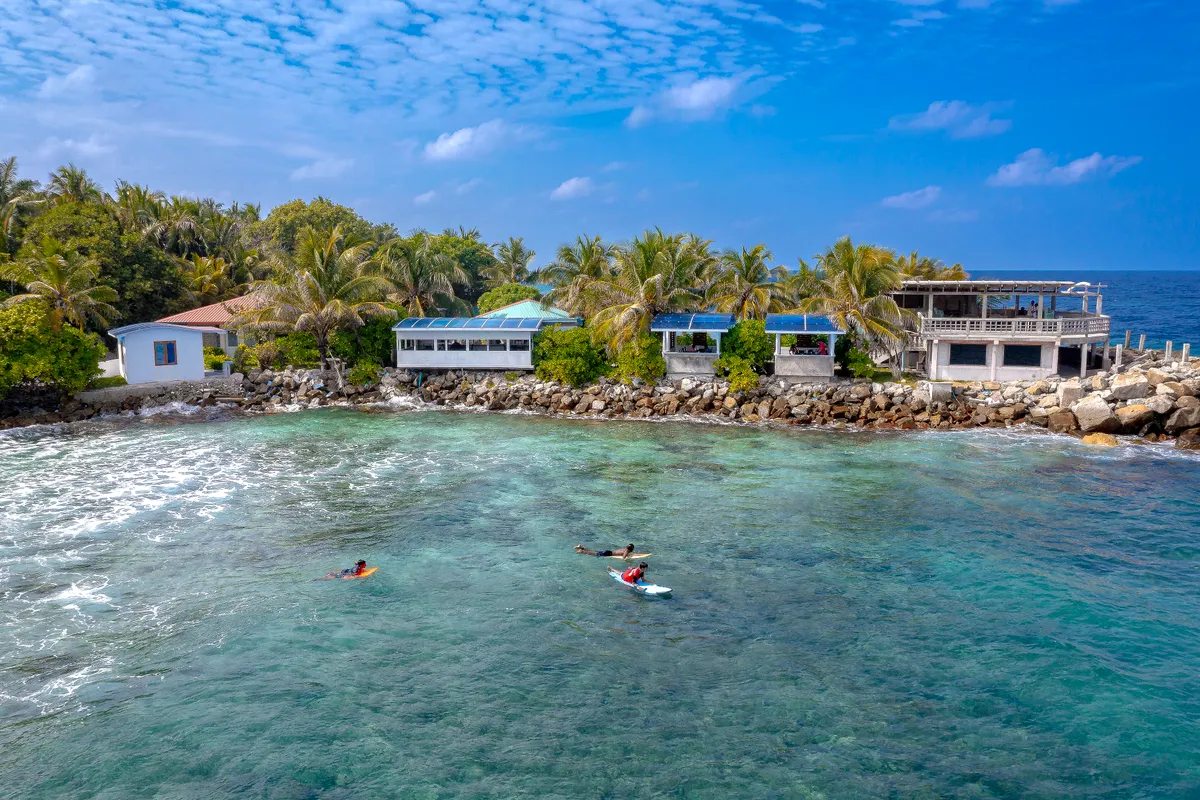
Since the Maldives opened local islands to guesthouse tourism, staying on inhabited islands such as Thulusdhoo or Himmafushi in North Malé Atoll has become a more affordable option, with boat transfers to nearby breaks. Local islands follow Maldivian customs, including dress codes and the absence of alcohol.
Charter, resort or guesthouse: how to choose
Choosing how to stay is the biggest decision in planning a Maldives surf trip. Charter boats are best for experienced surfers who want to maximise time in the water and move between breaks with the swell. They involve living on a boat, often with a group, and the cost is usually shared. Surf resorts suit couples, families and surfers who want comfort, good food and a stable base; some offer exclusive or limited access to nearby breaks, which can mean fewer crowds.
Guesthouses on local islands are the budget option, giving access to quality breaks in North and South Malé with daily boat trips. They offer a glimpse of Maldivian village life, with modest dress codes and no alcohol. Many surfers combine options, for example a week in a guesthouse followed by a few nights at a resort. Whatever you choose, check exactly which breaks are accessible, how many boat trips are included and whether surf guiding is part of the package.
Crowds and etiquette
The best-known breaks, especially in North Malé, can be crowded in peak season as boats, resorts and guesthouses converge on the same waves. Sit wide when you arrive, wait your turn and do not drop in. Boat crews should avoid anchoring in the line-up, and large groups should avoid swamping a peak. Maldivian surfers have a strong local community, and some breaks are their home waves, so treat them with respect. Early mornings and less famous breaks are often quieter.
Travelling around the Maldives
Velana International Airport, on an island next to the capital, Malé, is the arrival point, with flights from the Middle East, Asia and Europe. From there, speedboats, public ferries and seaplanes connect to resorts, local islands and charter boats. North Malé Atoll's surf islands are a short speedboat ride from the airport.
To reach the central and southern atolls, domestic flights and boat transfers are needed. Most surf trips are arranged in advance through charters, resorts or guesthouses.
Diving, snorkelling and marine life
The Maldives is one of the world's great diving and snorkelling destinations, with coral reefs, manta rays, whale sharks, turtles and reef sharks. Many surf trips include snorkelling between sessions, and flat days are perfect for diving trips. Respect marine life: do not touch coral, keep your distance from animals and choose responsible operators. Coral bleaching has affected Maldivian reefs in some years, making careful, low-impact tourism especially important.
Planning your budget
Costs in the Maldives vary enormously. Guesthouses on local islands are the most affordable, with surf packages often including accommodation, meals and boat trips. Resorts range from mid-range to some of the most expensive hotels in the world, and surf resorts usually charge for boat trips and guiding. Charter boats are priced per person per week and can be good value for groups who fill the boat.
Other costs include international flights, transfers by speedboat or seaplane, which can be expensive for remote resorts, and taxes. Booking in the shoulder months of March to May and September to October can offer better prices and lighter crowds.
Reef safety and what to pack
The water is warm all year, so boardshorts or a swimsuit with a rash vest are all you need. Reef booties and a helmet can be useful on shallow reefs. Bring high-protection reef-safe sunscreen, a hat and sunglasses, and a good first-aid kit for reef cuts. Clean any cuts carefully, as infections are common in the tropics.
Currents in the channels between islands can be strong. Surf with others, follow the advice of boat crews and surf guides and be aware of where you will be picked up.
Island customs and line-up manners
The Maldives is a Muslim country, and local islands follow conservative customs. Dress modestly in villages, covering shoulders and knees; swimsuits are only appropriate on designated tourist beaches, often called bikini beaches, and at resorts. Alcohol is only available at resorts and on some boats.
In the water, popular breaks can be shared by surfers from several boats, resorts and guesthouses. Respect local surfers, take turns and avoid dropping in. Some breaks are restricted to resort guests; check the current rules before planning a session.
Planning a Maldives surf trip
For a first trip, North Malé Atoll offers easy access, several quality breaks and options from local guesthouses to resorts and charters. Experienced surfers looking for fewer crowds may prefer boat trips or resorts in the central or southern atolls. Budget varies widely, from guesthouses on local islands to luxury resorts and private charters.
Surf regions of the Maldives
North Malé Atoll
North Malé Atoll is the most accessible surf zone, close to the airport. Thulusdhoo has Cokes, a powerful right-hand reef, and Chickens, a long left. Himmafushi has Jailbreaks, Sultans and Honky's, while Lohis and Pasta Point are near resorts. Local islands and resorts offer bases for all budgets.
Known for: North Malé Atoll, Cokes, Chickens, Jailbreaks, Sultans, Honky's, Lohis, Pasta Point
South Malé Atoll
South Malé Atoll, a little further from the airport, has breaks such as Riptides, Quarters and Natives, near resorts and local islands. The waves are often slightly smaller and more forgiving than North Malé's best breaks, and crowds can be lighter.
Known for: Riptides, Quarters, Natives
The central atolls
The central atolls, such as Meemu and Laamu, have more remote breaks that see fewer surfers, usually reached by charter boats or resorts. Laamu's Yin Yang is one of the best-known waves in the region.
Known for: Yin Yang
The southern atolls
The southern atolls, particularly Huvadhoo, also called Gaafu, have many quality reef breaks and are popular with charter boats. Breaks such as Beacons, Tiger Stripes and Blue Bowls offer powerful waves with fewer crowds. The southern atolls can work well earlier and later in the season.
Known for: Beacons, Tiger Stripes, Blue Bowls
Learning to surf in the Maldives
The Maldives is better suited to intermediate and advanced surfers, because most waves break over shallow coral. However, some resorts and guesthouses offer lessons on smaller days at more forgiving breaks, with experienced instructors and guides. Beginners should only surf with an instructor and wear protective gear if recommended.
If you are a complete beginner, consider learning at a sandy beach destination first, such as Sri Lanka's Weligama, and visiting the Maldives once you can catch and ride green waves.
Surfing in the Maldives: questions
When is the best time to surf in the Maldives?
The main season runs from March to October, with June to August bringing the biggest swells. March to May and September to October often offer lighter winds.
Is the Maldives good for beginners?
Most waves break over shallow coral and suit intermediate and advanced surfers. Some resorts and guesthouses offer lessons on smaller days with instructors.
Can I surf the Maldives on a budget?
Yes. Guesthouses on local islands such as Thulusdhoo and Himmafushi in North Malé Atoll offer more affordable stays near quality breaks.
Do I need a wetsuit in the Maldives?
No. The water is warm all year. A rash vest, reef booties and sun protection are recommended.
Are some Maldives breaks private?
Some breaks near resorts are reserved for resort guests. Check the current rules before planning a session.
What should I wear on local islands?
Dress modestly in villages, covering shoulders and knees. Swimsuits are appropriate on designated tourist beaches and at resorts.
Should I choose a surf charter or a resort in the Maldives?
A charter suits experienced surfers who want to surf as much as possible and move between breaks. A resort suits those who want comfort and a stable base, sometimes with exclusive access to nearby waves. Guesthouses on local islands are the budget option.
Can I dive and surf on the same trip?
Yes. The Maldives is famous for diving and snorkelling, and many surf trips include snorkelling between sessions or diving on flat days.
How much does a Maldives surf trip cost?
It varies widely. Guesthouses on local islands are the most affordable, charter boats can be good value for groups, and resorts range from mid-range to very expensive. Transfers and taxes add to the cost.
Which atoll is best for surfing in the Maldives?
North Malé Atoll is the most accessible, with several quality breaks close to the airport. The southern atolls, especially Huvadhoo, offer powerful waves and fewer crowds, usually by charter boat.
Are there sharks in the Maldives?
Reef sharks are common and generally pose little risk to surfers. Treat all marine life with respect and follow local advice.
How do I get from the airport to the surf?
Speedboats, public ferries and seaplanes connect Velana International Airport with resorts, local islands and charter boats. North Malé breaks are a short speedboat ride away.
Sources & editorial notes
Country context checked against the sources below. Regional summaries are Book & Surf editorial planning suggestions, not forecasts or safety assessments.