The breaks
Recognised, publicly known surf spots around Durban. Suitability depends on the day's swell, wind and tide, so treat the level as a guide, not a guarantee.
| Break | Type | Best for | Notes |
|---|---|---|---|
| Cave Rock | Right-hand reef | Advanced | Steep, fast and shallow at Brighton Beach on the Bluff. Best on powerful south-east swell, with a dedicated local crew. Not for beginners or intermediates. |
| uShaka Beach | Protected beach break | Beginner | Sheltered from strong south-east swell, with small, soft waves and surf schools. Described as having a relaxed atmosphere. |
| Addington Beach | Beach break | Beginner–Intermediate | Gentle lefts and rights over sand, good for longboards and learners. Works best on moderate east-south-east wind and a solid south-south-west swell. |
| The Wedge (Dairy Beach) | Beach break | Intermediate | A consistent peak that holds larger swell, with south-south-west swell and east-north-east wind ideal. Crowds are the main issue. |
| North Beach | Beach break | Intermediate | Usually waist to head high, with lefts and rights that are more rippable than heavy. Swimming zone rules apply, so check the surfing times. |
| Bay of Plenty | Beach break | Intermediate | A consistent beach break with occasional hollow sections that holds larger swells. Often busy, especially during events. |
Durban surf climate, measured
Ten years of ocean model data for the open water off this coast: what the swell usually looks like before it reaches the beach. Shelter, sandbars and reefs change what you actually surf, so read this next to the month notes below.
| Month | Swell | Period | From | Wind | Water | Wetsuit | Days over 2.5 m |
|---|---|---|---|---|---|---|---|
| Jan | 1.6 m | 8 s | E | 23 km/h NE | 26°C | Boardshorts | 0% |
| Feb | 1.6 m | 10 s | E | 18 km/h E | 26°C | Boardshorts | 3% |
| Mar | 1.6 m | 10 s | E | 18 km/h NE | 26°C | Boardshorts | 3% |
| Apr | 1.7 m | 10 s | SE | 22 km/h NE | 25°C | Boardshorts | 8% |
| May | 1.5 m | 11 s | SE | 16 km/h NE | 24°C | Rash vest or 1 mm top | 0% |
| Jun | 1.6 m | 11 s | S | 18 km/h NE | 23°C | Rash vest or 1 mm top | 5% |
| Jul | 1.6 m | 10 s | S | 15 km/h NE | 22°C | Rash vest or 1 mm top | 8% |
| Aug | 1.8 m | 12 s | S | 23 km/h NE | 21°C | 2 mm shorty or spring suit | 8% |
| Sep | 1.7 m | 9 s | SE | 19 km/h S | 22°C | Rash vest or 1 mm top | 5% |
| Oct | 2.0 m | 9 s | E | 25 km/h NE | 22°C | Rash vest or 1 mm top | 18% |
| Nov | 1.6 m | 9 s | E | 23 km/h NE | 23°C | Rash vest or 1 mm top | 8% |
| Dec | 1.5 m | 8 s | S | 20 km/h S | 24°C | Rash vest or 1 mm top | 5% |
Median values from ERA5 at a sea point near Durban (30°S, 31°E), sampled 4 days a month at 12:00 UTC, 2015-2024. Highlighted months are our suggested planning window. Not a forecast or a safety assessment. How we use this data.
Book a surf trip to Durban
Everything we can link you to for this trip, grouped by what you need. Before you pay a camp or school, read who holds your money, and check that your insurance covers surfing.
Where to stay
Search near the breaks. Filter for surf hostels, apartments or hotels once you can see the map.
Surf lessons and activities
Listings change by season, so check what the operator includes and who coaches.
Flights
Add your dates and check the board fee on every leg before you pay.
Car hire
Ask about roof racks and whether the insurance covers boards on the roof.
Airport transfer
Tell the driver you have a board and its length when you book.
Mobile data
Download a forecast app and offline maps before you land.
Flight delay claims
If a delay eats your first surf day, check whether you can claim.
Luggage storage
Useful between check-out and a late flight. Check the size limit before dropping a board.
Links marked as partner links may earn us commission at no cost to you; the rest earn us nothing. We have not checked live availability or price, and the seller's terms apply. How we handle this.
Cheapest months to fly to Durban
Lowest return fare to DUR that Aviasales users found recently, in US dollars. Treat these as a guide to which months are cheaper, not as prices you can book today.
| From | Nov 26 | Dec 26 |
|---|---|---|
| London | – | $976 |
| New York | $1503 | – |
Prices seen by 1 November 2026. Travelpayouts Data API. Board fees are extra on most airlines: see our surfboard baggage guide.
A city strip made for beach breaks
Durban has a humid subtropical climate, with hot, humid summers and mild, dry winters that are frost-free. Wikipedia gives an average summer temperature of about 24 degrees Celsius and about 17 degrees in winter, with roughly 2,365 hours of sunshine a year. Water comes from the warm Agulhas Current, so most people surf in boardshorts or a light top for much of the year.
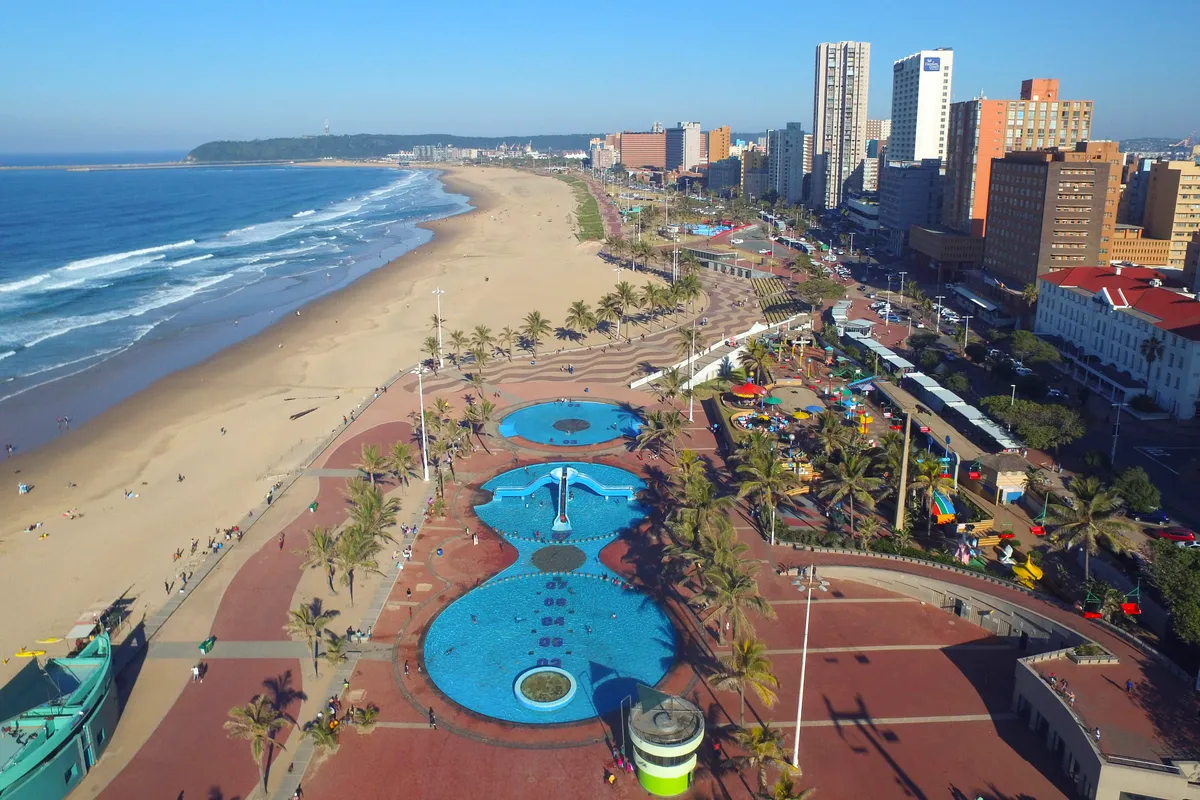
The city's beachfront, known as the Golden Mile, is a series of beaches separated by piers and groynes that shape sandbars into peaks. Most of the surf here is beach break, with a mix of lefts and rights that changes with the sand. Because piers hold the banks in place, the surf is more consistent than on many open beaches.
The result is an urban surf scene. You can stay in the city, walk to a break and be at lunch in a cafe within minutes. That convenience is part of the appeal, and it also means a crowd, so reading the wave and the flags matters.
Sharks, nets and what they do and do not do
Sharks are part of the picture here, and Durban's approach is different from Cape Town's. The KwaZulu-Natal Sharks Board has maintained protective nets along main beaches since 1964, according to travel sources, and the South Africa hub mentions nets and drumlines on the KwaZulu-Natal coast. Those measures reduce risk at bathing beaches but do not make the sea safe. Nets are not complete barriers, and sharks and other species are caught in them.
The gear is also removed in bad weather. A recent news report said the Sharks Board took shark safety gear out of several beaches because of severe conditions, so the net status can change from day to day. Before you enter the water, check the Sharks Board or eThekwini Municipality for the current situation, look for the lifeguard flags and ask a local surfer.
Use the same habits that make sense elsewhere. Avoid murky water after heavy rain, stay out at dawn and dusk if you are unsure, do not go in alone and leave the water when a siren or a lifeguard tells you to. A Sharks Board official has warned people off Cave Rock in the past because it is a surf area rather than a netted bathing beach, and that is worth keeping in mind.
Cave Rock: the exception to the easy waves
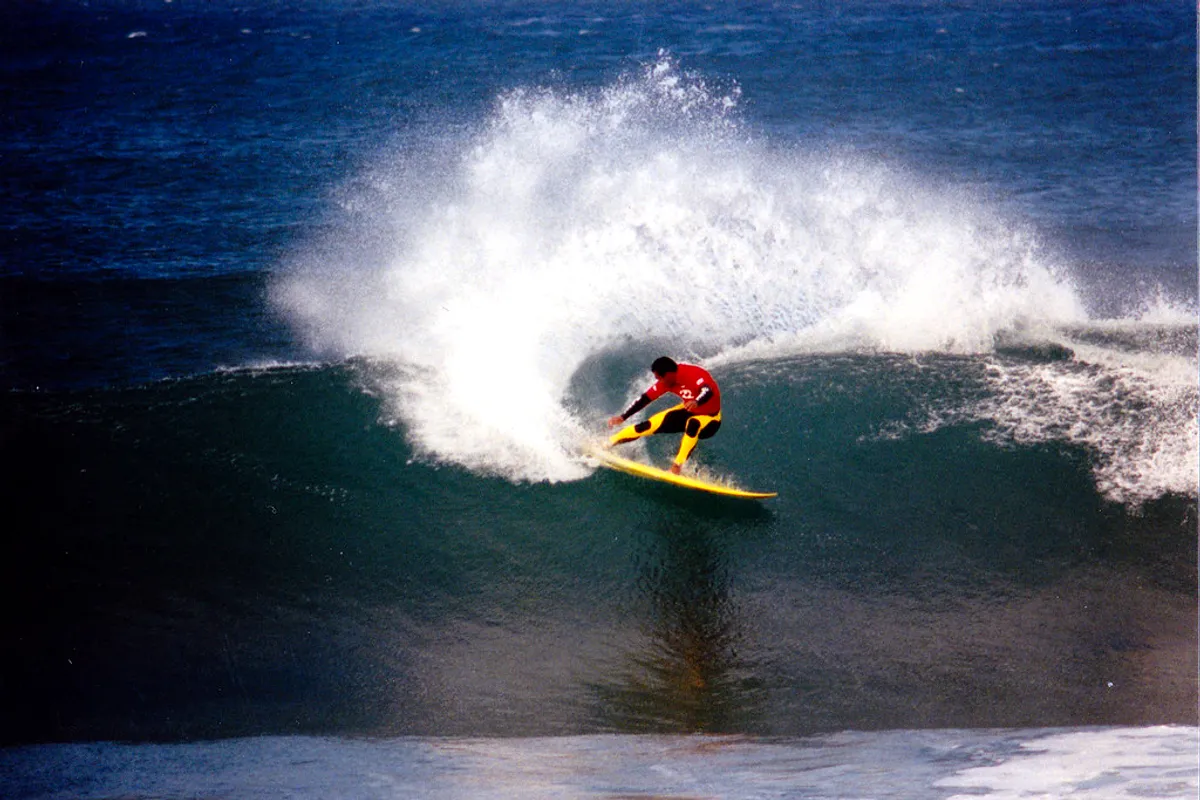
Cave Rock, at Brighton Beach on the Bluff side, is a reef rather than a sandbar. Guides describe a steep drop followed by a fast right-hand face with barrel sections and a backdoor, working best on powerful south-east swells that can reach about 12 feet. It is regularly described as for advanced surfers only, and it is dominated by a dedicated local crew.
That combination of shallow rock, heavy power and local ownership means it is not a place for visitors to test themselves. If you are an experienced surfer, watch for a session, learn the etiquette and ask before you paddle out. If you are not, treat it as a spectacle from the shore.
The nearby New Pier is also mentioned as an advanced spot with powerful barrels, though details are thin. In general, the closer you get to a hard-edged feature in Durban, the less welcome a casual visitor tends to be.
Golden Mile peaks for most levels
Among the Golden Mile beaches, uShaka Beach is a protected beach break with small lips that suits beginners, and it is sheltered from strong south-east swells. Addington Beach has gentle lefts and rights over sand that suit beginners and longboarders, and schools use it when conditions allow. The Wedge, at Dairy Beach, is a consistent beach break that handles larger swells and suits many styles, though crowds are the main issue and it has hosted competitions.
North Beach is described as a more rippable intermediate wave, usually waist to head high and bigger on strong days, with a light west to north-west wind best. Bay of Plenty is another consistent beach break with lefts and rights and occasional hollow sections, home to the Durban Surf Lifesaving Club and often busy during contests.
Ansteys Beach on the Bluff is a less crowded beach break for all levels that can produce A-frame tubes on large south-east days. In every case, the best banks move with the seasons, so ask on arrival which beach is working.
Seasons, swell and the berg wind
Surf guides name March to September as the best period, with south-south-west swells and offshore winds, while October to February is less consistent. Durban also gets swell year-round from other directions, and a north-easterly berg wind can blow offshore on some summer days. In practice, there is surf in most months, which is why the South Africa hub describes Durban as a year-round option.
The local swell window is wide but the weather is volatile. Summer brings heat, humidity and thunderstorms, and heavy rain can wash debris into the water. Winter days are dry and mild, and the cooler air often comes with cleaner winds. The sea stays warm even then, which is the great advantage over Cape Town.
Tide matters as well. Many banks work best mid to high tide, though some are better at low. If you only have a short visit, aim for the early part of the day, when the wind is lightest and the beaches less crowded.
Getting to Durban and getting around
King Shaka International Airport is at La Mercy, about 36 kilometres north of central Durban. It opened in May 2010, and all operations at the old Durban International Airport moved there on 1 May that year. Scheduled international destinations include Dubai, Doha and Istanbul, and there are domestic routes.
The transfer to the beachfront is by road, usually by shuttle, taxi or hire car, and takes well under an hour in normal traffic. The Bluff beaches and the Golden Mile are close enough to each other to move between by car, and ride-hailing is common. If you want to explore the north or south coast, a hire car is the easiest way.
Plan your carrying of valuables sensibly. Leave passports and spare cash at your accommodation, keep your phone and keys in a dry bag or a locked car, and follow local advice about where to park and which areas are best avoided after dark.
Localism, etiquette and sharing the Golden Mile
Guides note that localism is a factor at the better spots on the Golden Mile, while others, like uShaka Beach, have a reputation for being relaxed. The sensible rule is to read each line-up on its own terms. Sit wide, wait your turn, do not paddle around the peak, and greet the people you meet in the car park.
Durban is a diverse city, and surf culture reflects that. The Durban surf lifesaving clubs and community groups have a long history on the beachfront, and the South Africa hub mentions programmes that introduce young people from disadvantaged communities to the sea. Support local shops, schools and shapers where you can.
Respect lifeguard instructions. The main beaches have designated bathing zones and surfers are sometimes restricted to specific times or areas. North Beach, for example, is described as a swimming beach where surfing is allowed before the bathing area opens in the morning or after it closes in the evening. Check the signs and follow them.
Food, markets and days without waves
When it is flat there is plenty to do. The beachfront promenade is a busy walking and cycling route, and the city has a large Indian community whose food is one of Durban's best-known features. The beach, the harbour and the nearby suburbs reward a slow day on foot or by car.
If you want to leave the city, the north and south coast beaches, including Ballito and Scottburgh in the national hub, are a short drive away, and the Drakensberg mountains are a longer trip inland. Wildlife reserves in KwaZulu-Natal are also within reach, which makes a combined surf and safari trip realistic.
In winter, the sardine run along this coast draws attention from divers and wildlife watchers, but it is irregular and not guaranteed, so do not plan a trip around it.
Durban surf season month by month
A broad planning picture, not a forecast. Swell, wind and water temperature vary from year to year.
| January | Hot, humid summer with smaller, less consistent swell. Warm water suits beginners, but thunderstorms and crowds can interrupt sessions. |
|---|---|
| February | Similar to January, with warm water and mixed swell. Berg-wind mornings can produce offshore days, and the beachfront is busy. |
| March | Swell starts to become more consistent as the season turns. Still warm and humid, with fewer holidaymakers on the sand. |
| April | Autumn brings regular south-south-west swell and cleaner winds. One of the better months, with warm water and moderate crowds. |
| May | Dry, mild days and consistent swell. A strong month for improvers and experienced surfers, with the water still comfortable. |
| June | Winter swell is at its most regular and the air is cooler. A light wetsuit or top is common, and the beaches are quieter. |
| July | Peak winter swell with dry weather and often good offshore winds. Cave Rock is at its most active, and school holidays bring crowds. |
| August | Consistent surf and mild days. A solid month for visitors who want swell without summer heat or storms. |
| September | Still within the main swell season, with warming air and water. Spring light and manageable crowds make it a good time to visit. |
| October | Swell becomes less consistent and the heat returns. Good for beginners and for travellers who prefer small waves. |
| November | Early summer with humidity and occasional storms. Waves are smaller, the water is warm and the beachfront gets busier. |
| December | Peak holiday season, with big crowds and hot, humid weather. Surf is small on many days, so mornings matter. |
Learning to surf on the Golden Mile
Durban is a very good place to learn, thanks to warm water and sheltered banks. uShaka Beach and Addington Beach are the usual choices for beginners, with surf schools operating on the sand. The soft, small waves and absence of heavy localism at the learner beaches make for an easy first week.
Before booking, ask about group size, whether instructors are in the water, what safety equipment is on the beach and how the school handles shark alerts and net status. A good school will talk about this directly and will not take you in if conditions are poor or the nets are down.
If you are progressing, consider a coaching session at The Wedge or North Beach, where the peaks are more demanding but still sandy. Leave the reefs, including Cave Rock, until you have seen them work from the beach and can paddle out with a local who knows the break.
Comparing options across the country? Read our guide to surfing in South Africa.
Seasonal notes on this page describe typical patterns, not the conditions on a given day. Use the local forecast, lifeguard advice and a qualified instructor for water-safety decisions, and get a written breakdown of what any surf package includes before paying.
Durban surf trip questions
Is Durban good for surfing?
Yes. Warm water, consistent beach breaks along the Golden Mile and one heavy reef at Cave Rock make it a strong all-level destination. Swell is best from March to September.
Are there sharks in Durban?
Yes. Nets and drumlines protect main beaches but are not a complete barrier and can be removed in bad weather. Check current status, follow lifeguards and avoid murky water.
Is Durban safe for surfers?
Surf conditions are generally fine, but you should follow local advice on parking and valuables, avoid isolated areas and be respectful in busy line-ups. Cave Rock needs experience.
Do I need a wetsuit in Durban?
Rarely. The Agulhas Current keeps the water warm, so boardshorts or a light top are common. A thin suit helps on winter mornings.
How far is the airport from the beach?
King Shaka International Airport is about 36 kilometres north of the city centre. Allow under an hour in normal traffic to reach the beachfront.
Where should beginners surf in Durban?
uShaka Beach and Addington Beach are the usual learner beaches, with schools and gentle waves. The reefs and Cave Rock are not suitable for beginners.
Sources & editorial notes
Destination context checked against the sources below. Base-selection and itinerary suggestions are Book & Surf editorial recommendations. Seasonal windows are broad planning suggestions, not measured forecasts or guarantees.
- Wikipedia: Durban ↗
- The Surf Atlas: Durban surfing ↗
- Wikipedia: North Beach (Durban) ↗
- Wikipedia: Shark net ↗
We do not claim to have personally surfed every break. Read our editorial standards.