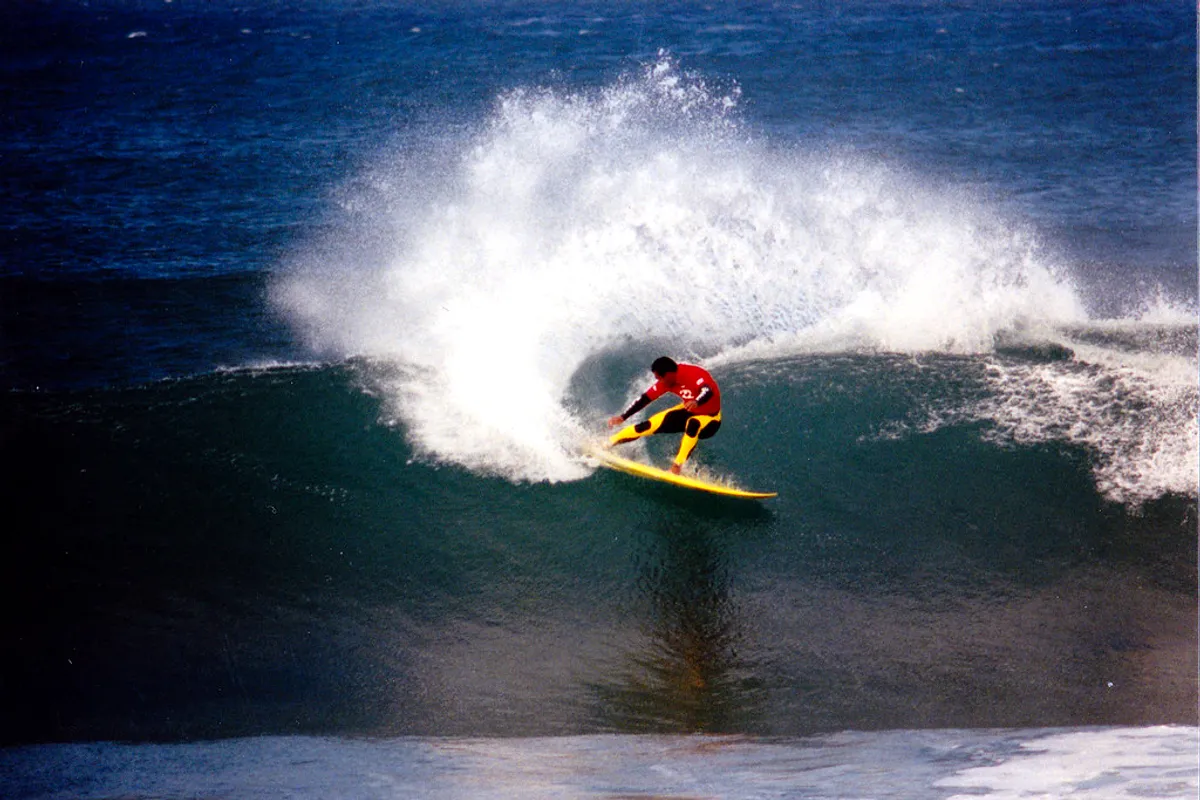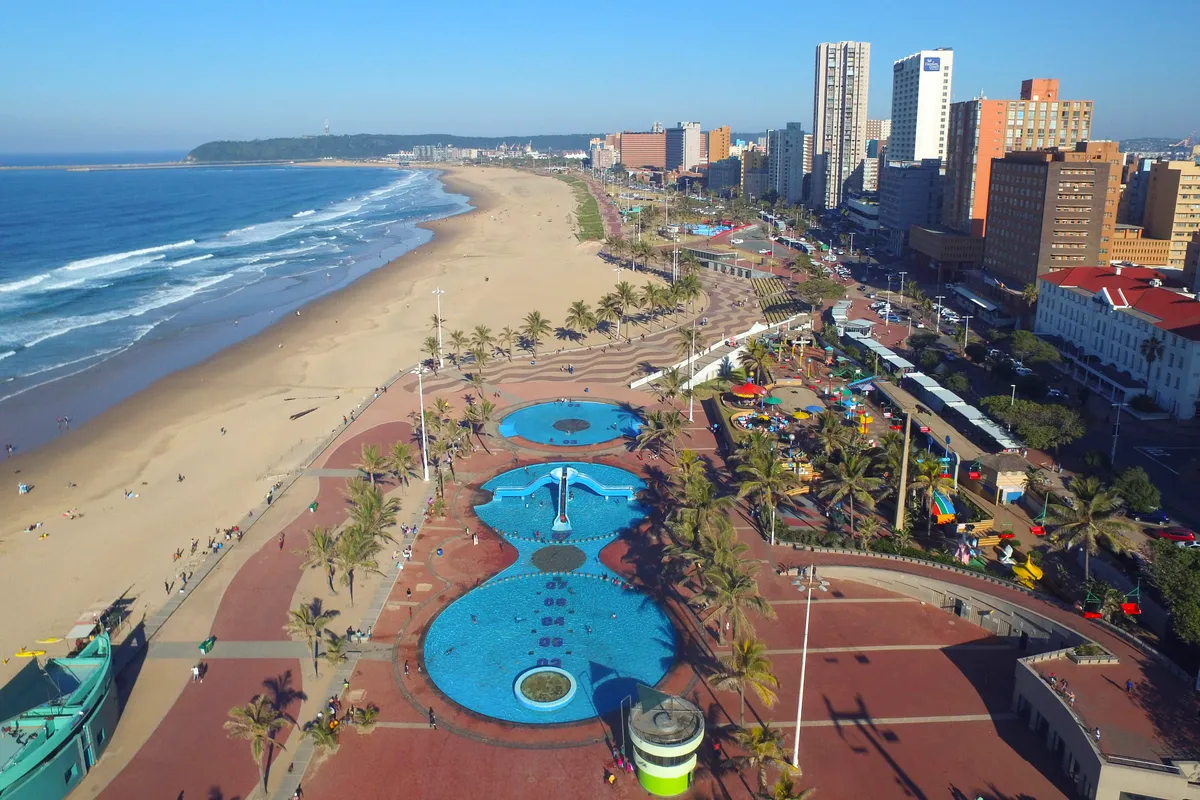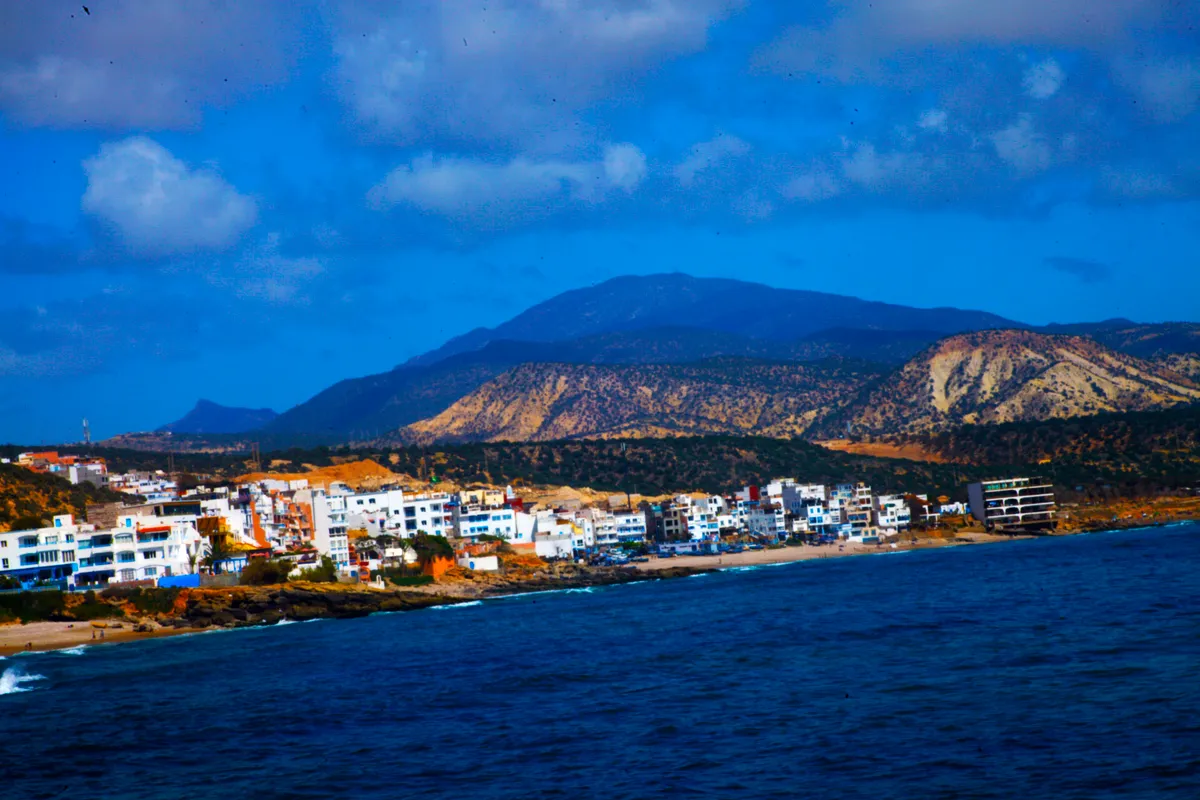
The breaks
Recognised, publicly known surf spots around Muizenberg, Cape Town. Suitability depends on the day's swell, wind and tide, so treat the level as a guide, not a guarantee.
| Break | Type | Best for | Notes |
|---|---|---|---|
| Surfers Corner | Sandy beach break | Beginner–Intermediate | The main surf area, with long soft waves, board rental and schools. Busy in summer, and the main spotter station watches this stretch. |
| Muizenberg main beach | Beach break | Beginner | The broad central beach in front of the promenade. Waist-high waves on many days, best at low to mid tide, with strong rip currents reported on bigger days. |
| Long Beach, Kommetjie | Beach break (Atlantic side) | Intermediate | A colder, more powerful beach break on the other side of the Peninsula, listed in the national hub. An option when False Bay is blown out. |
| Llandudno | Beach break (Atlantic side) | Intermediate–Advanced | A cold-water Atlantic beach with strong swell exposure. Not for beginners, and conditions change quickly. |
Muizenberg, Cape Town surf climate, measured
Ten years of ocean model data for the open water off this coast: what the swell usually looks like before it reaches the beach. Shelter, sandbars and reefs change what you actually surf, so read this next to the month notes below.
| Month | Swell | Period | From | Wind | Water | Wetsuit | Days over 2.5 m |
|---|---|---|---|---|---|---|---|
| Jan | 2.5 m | 12 s | SW | 34 km/h SE | 19°C | 2 mm shorty or spring suit | 53% |
| Feb | 2.4 m | 12 s | SW | 30 km/h S | 19°C | 2 mm shorty or spring suit | 48% |
| Mar | 2.3 m | 11 s | SW | 23 km/h SE | 17°C | 3/2 mm full suit | 38% |
| Apr | 2.4 m | 12 s | SW | 24 km/h SE | 16°C | 3/2 mm full suit | 43% |
| May | 2.6 m | 13 s | SW | 19 km/h NW | 16°C | 3/2 mm full suit | 53% |
| Jun | 3.0 m | 12 s | SW | 25 km/h N | 16°C | 3/2 mm full suit | 73% |
| Jul | 3.0 m | 13 s | SW | 22 km/h NW | 15°C | 4/3 mm full suit | 65% |
| Aug | 2.9 m | 13 s | SW | 27 km/h NW | 15°C | 4/3 mm full suit | 78% |
| Sep | 2.6 m | 12 s | SW | 27 km/h SE | 15°C | 4/3 mm full suit | 70% |
| Oct | 2.4 m | 11 s | SW | 25 km/h S | 16°C | 3/2 mm full suit | 43% |
| Nov | 2.4 m | 11 s | SW | 31 km/h S | 17°C | 3/2 mm full suit | 30% |
| Dec | 2.6 m | 11 s | SW | 26 km/h SE | 18°C | 3/2 mm full suit | 60% |
Median values from ERA5 at a sea point near Muizenberg, Cape Town (34.25°S, 18.25°E), sampled 4 days a month at 12:00 UTC, 2015-2024. Highlighted months are our suggested planning window. Not a forecast or a safety assessment. How we use this data.
Book a surf trip to Muizenberg, Cape Town
Everything we can link you to for this trip, grouped by what you need. Before you pay a camp or school, read who holds your money, and check that your insurance covers surfing.
Where to stay
Search near the breaks. Filter for surf hostels, apartments or hotels once you can see the map.
Surf lessons and activities
Listings change by season, so check what the operator includes and who coaches.
Flights
Add your dates and check the board fee on every leg before you pay.
Car hire
Ask about roof racks and whether the insurance covers boards on the roof.
Airport transfer
Tell the driver you have a board and its length when you book.
Mobile data
Download a forecast app and offline maps before you land.
Flight delay claims
If a delay eats your first surf day, check whether you can claim.
Luggage storage
Useful between check-out and a late flight. Check the size limit before dropping a board.
Links marked as partner links may earn us commission at no cost to you; the rest earn us nothing. We have not checked live availability or price, and the seller's terms apply. How we handle this.
Cheapest months to fly to Muizenberg, Cape Town
Lowest return fare to CPT that Aviasales users found recently, in US dollars. Treat these as a guide to which months are cheaper, not as prices you can book today.
| From | Nov 26 | Dec 26 | Jan 27 | Feb 27 | Mar 27 | Apr 27 |
|---|---|---|---|---|---|---|
| London | $682 | $816 | $808 | $799 | $784 | $857 |
| New York | $1094 | $1898 | – | $1209 | $1533 | $1282 |
| Los Angeles | – | – | – | $1443 | – | – |
| Sydney | $1554 | – | $1460 | – | – | – |
| Frankfurt | $759 | – | $1233 | $805 | $747 | $718 |
Prices seen by 1 November 2026. Travelpayouts Data API. Board fees are extra on most airlines: see our surfboard baggage guide.
Why Muizenberg suits first waves
Muizenberg sits on the north shore of False Bay, and its beach runs round the top of the bay for more than 20 kilometres towards Strand. Surf sources describe a sandy bottom, low-angle waves that peel slowly and a main surfing area at Surfers Corner, where restaurants, coffee shops and surf shops line the street behind the sand.
The formula is simple and it works. Swell arrives from the south-west to south-east, loses power crossing the bay and breaks as a soft, forgiving wall that a beginner can stand on and a longboarder can trim for a long time. On many days the line-up is a mix of schools, locals on logs and visitors on foam boards, with the whole thing happening in knee- to waist-high water.
That gentleness is the draw, and it is also why the beach gets crowded, particularly in summer. Surf-forecast reviewers report that the crowds are at their worst in that season, so early sessions and weekdays make a real difference.
Reading the shark flags properly
False Bay is known for its white shark population, and the Shark Spotters programme runs a spotter service from Muizenberg that issues alerts when sharks approach bathers at the main beach or surfers at Surfers Corner. Spotters watch from high ground and use a flag system; learn it before you paddle out.
A green flag means spotting conditions are good and no shark has been seen. A black flag means the spotters cannot see clearly into the area most water users occupy, so it is a warning about visibility rather than a sighting. A red flag signals high shark activity, in the sense that a shark was recently in the area, and the programme advises waiting about an hour before re-entering. A white flag with a black shark means a shark is near and everyone must leave the water, and a siren sounds. If there are no flags at all, no spotters are on duty.
This is a risk-reduction tool, not a guarantee. A 2020 Daily Maverick report said that 85 per cent of shark sightings at Fish Hoek and Muizenberg beaches over the previous decade took place in poor spotting conditions under a black flag. Treat black-flag days with caution, and obey the flag and the siren every time.
The beachfront upgrade and the huts
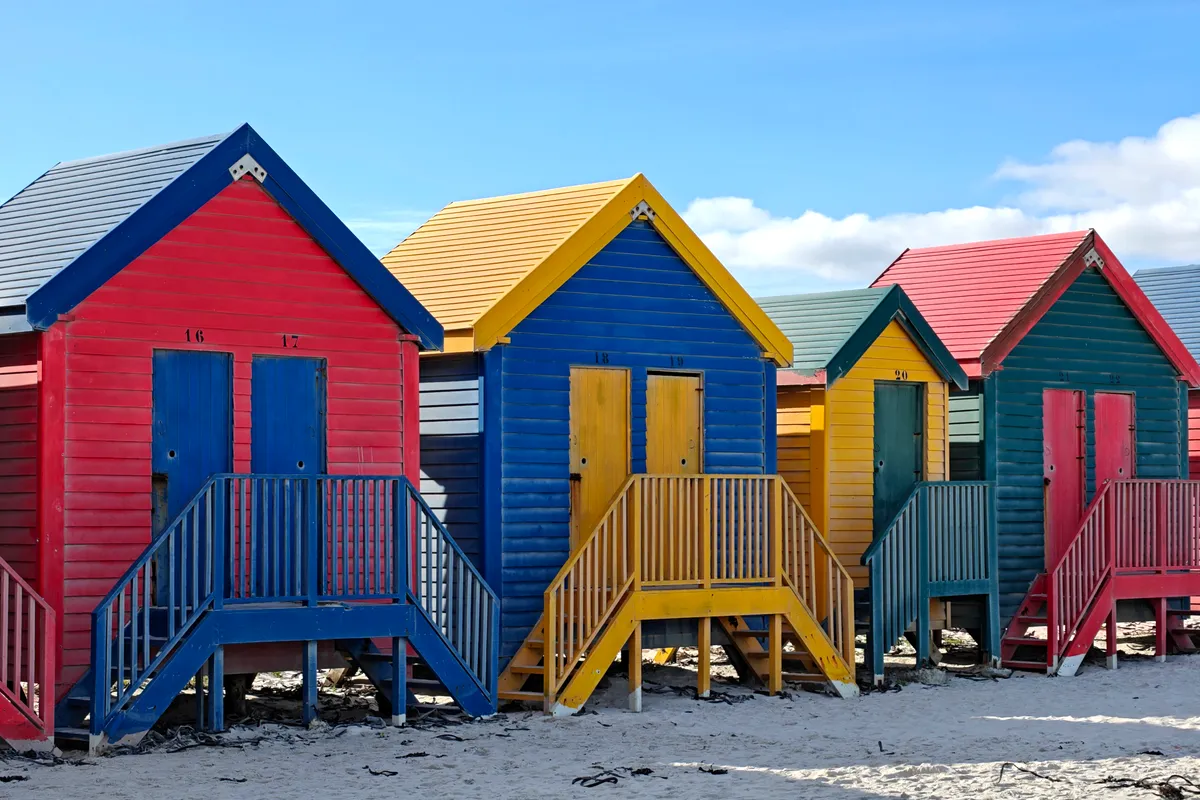
The painted beach huts are the postcard image of Muizenberg. Wikipedia reports that the City of Cape Town planned to replace the eight famous huts with new ones keeping the original design and colours as part of a beachfront upgrade that began at the western section of Surfers Corner in 2024. A citation dated July 2026 refers to the huts being dismantled, and Shark Spotters was temporarily relocated during the work.
For visitors, that means the exact look of the beach, where the spotters stand and which access paths are open may differ from older photos and guidebooks. Rules about parking, kiosks and changing facilities can also change. Check with a local school or the City of Cape Town before assuming that a particular facility is available.
The core of the place has not changed: a long beach, a station, cafés and a steady stream of people in wetsuits. If the upgrade means a few paths are closed, the sand is still a short walk from the street.
Tide, wind and swell here
Local surf data suggests that Muizenberg takes swell from roughly south-west to south-east, in a modest size range, and that a rising tide at low to mid-tide is preferred by some forecasters, while others say it can be surfed at all tides, with longer rides around mid-tide. In other words, it is forgiving, but not all hours are equal.
Wind matters more than most visitors expect. A north-west offshore is described as best, and even a light onshore can spoil the surf. Cape Town's well-known south-easter is generally an onshore wind for much of False Bay, and I did not find a source that calls it good for Surfers Corner, so expect that to be a poor surf day and a good day for the Peninsula's other beaches or a cultural trip.
The practical routine is to look at a wind forecast the night before, check at dawn and surf early, before the afternoon breeze arrives. If you are on a school lesson, they will do the same.
Wetsuits and the temperature of False Bay
Water temperatures on Cape Town's Atlantic side are cold because of the Benguela Current, and False Bay on the eastern side is a little warmer. That makes Muizenberg more comfortable than the Atlantic seaboard, but it is still a cold-water place for most of the year.
In winter many surfers use a 4/3 or 5/4 wetsuit with boots, and in the warmer months a 3/2 is common. Schools supply wetsuits, so you only need your own if you plan to rent boards separately. Gloves and hoods are not essential for lessons but help in the coldest weeks.
The air feels different from the water. Even on a hot summer day a south-easter can chill you, so bring a windproof layer. The sun is strong, so wear a hat and rash vest for the walk to and from the water.
Getting there: the train, the road and the airport
Muizenberg station is on the Southern Line between Cape Town and Simon's Town, operated by Metrorail. The line reached Muizenberg in 1882, and the beach is a short walk from the platform. The train is a classic way to arrive, but service reliability and safety conditions on Cape Town's commuter rail vary, so check current advice with your accommodation or a local source and consider a ride-hailing or private transfer if in doubt.
By road, the drive from Cape Town International Airport is typically under an hour outside peak traffic. A car is useful for exploring the Peninsula, with Table Mountain, the penguins at Boulders Beach and Cape Point all within a day's reach. Parking near Surfers Corner can fill up on sunny weekends.
If you stay in Muizenberg itself, most things are on foot. Many people choose it for exactly that reason, since you can leave a board at the shop or school and walk to dinner.
History, Agatha Christie and the long view
Surfing is only one layer of Muizenberg's story. Het Posthuys, built by the Dutch East India Company in 1673, is among the oldest buildings in South Africa, and the Battle of Muizenberg in 1795 led to the first British occupation of the Cape. The town takes its name from Wynand Willem Muijs, who commanded an outpost on the Zandvlei shore in 1743, though another account links the name to a Sergeant Muys.
The railway turned it into a seaside resort in the Victorian era, and well-known visitors followed. Wikipedia mentions that Agatha Christie wrote about taking the train to Muizenberg to surf after her nursing shifts, which makes it one of the oldest documented surf scenes in the country.
Behind Surfers Corner, the Greater Zandvlei Estuary Nature Reserve covers around 200 hectares and offers bird-watching and walking on a flat day.
Beyond the beach: a few good flat-day options
False Bay offers more than waves. The walk or train ride to Kalk Bay, with its harbour and cafés, is a classic half-day, and Boulders Beach has a penguin colony further along the Peninsula. Cape Point, the Cape of Good Hope and the winelands are all reachable by car.
If you do want to surf on a day when Muizenberg is blown out, the Peninsula offers other choices, including Long Beach at Kommetjie and Llandudno on the Atlantic side, mentioned in the South Africa hub as intermediate beach breaks. Those are colder, more exposed and more demanding than Surfers Corner.
If you want to extend a trip, the classic route runs east along the Garden Route to Jeffreys Bay, though that is better suited to winter and is a long drive, so give it several days.
Muizenberg, Cape Town surf season month by month
A broad planning picture, not a forecast. Swell, wind and water temperature vary from year to year.
| January | Summer, with the south-easter often strong and the beach at its busiest. Waves are small, which suits learners, but mornings are best. |
|---|---|
| February | Warm and crowded, with long evenings and gentle surf. The south-easter can blow out afternoons, and the water is as warm as it gets. |
| March | Late summer, with smaller crowds and the first signs of more swell. A good shoulder month for lessons and sunny days. |
| April | Autumn swell starts to arrive and the wind often eases. Fewer visitors, cooler mornings and better waves for improvers. |
| May | The start of the winter swell season, with cooler water and more consistent waves. Thicker wetsuits come out, and the beach is quieter. |
| June | Cold, wet days alternate with clean northwesterly mornings. Good for surfers who like fewer people, but cold for beginners. |
| July | Mid-winter, with the biggest and most regular swell. Muizenberg can be too large for lessons on some days, and the water is at its coldest. |
| August | Still winter, with changeable weather and good surf on offshore mornings. A solid month for experienced surfers who want less crowd. |
| September | Spring light and decent swell. The wind starts to turn, and crowds remain moderate before the school holidays. |
| October | Warming up, with smaller waves and a growing south-easter. A good time for beginners and for travellers wanting lower prices. |
| November | Early summer, with a mix of small swell and rising wind. Beaches fill up as school holidays approach, so mornings are essential. |
| December | Peak holiday season, with big crowds, strong wind on many afternoons and small, gentle surf. Book accommodation well ahead. |
Learning to surf at Surfers Corner
This is one of the easiest places in the world to take a first lesson. The waves are soft, the beach is long and sandy, and many schools operate from the same few hundred metres. Group lessons usually include a board, a wetsuit and basic safety instruction, and private lessons are common.
Choose a school that explains the shark-flag system before you enter the water, takes small groups and has instructors in the water with beginners. Ask what happens under a black, red or white flag, because policies vary and a good school will not push you into the water against the flags.
Outside lessons, rental boards are easy to find, and foam boards are widely used. If you are progressing, ask local surfers about the tides and about where on the beach the rips run, because strong rip currents are reported at Muizenberg and they are the most common cause of trouble.
Comparing options across the country? Read our guide to surfing in South Africa.
Seasonal notes on this page describe typical patterns, not the conditions on a given day. Use the local forecast, lifeguard advice and a qualified instructor for water-safety decisions, and get a written breakdown of what any surf package includes before paying.
Muizenberg, Cape Town surf trip questions
Is Muizenberg good for beginners?
Yes. It is widely regarded as one of the best learning beaches in South Africa, with long, soft waves, a sandy bottom and many schools. Cold water and strong rips mean you still need a wetsuit and supervision.
Are there sharks at Muizenberg?
False Bay has a known white shark population. The Shark Spotters programme runs flags and a siren at the beach. Obey the flags, avoid surfing alone and be cautious when the black flag shows poor visibility.
What do the Shark Spotters flags mean?
Green is good spotting conditions with no shark seen, black means poor visibility, red means high shark activity and white with a black shark means a shark is near and everyone must leave the water.
How do I get to Muizenberg from Cape Town?
By Metrorail on the Southern Line, by road or ride-hailing. The airport drive is typically under an hour outside peak traffic. Check train safety and reliability before relying on the rail.
What is the best time to surf at Muizenberg?
April to September offers the most swell, though it is colder and can be big. Summer is smaller and busier. Early mornings are best year-round because of the south-easter.
Do I need a wetsuit?
Yes. False Bay is cold, so most people wear a 3/2 in summer and a 4/3 or 5/4 in winter. Schools supply wetsuits for lessons.
Sources & editorial notes
Destination context checked against the sources below. Base-selection and itinerary suggestions are Book & Surf editorial recommendations. Seasonal windows are broad planning suggestions, not measured forecasts or guarantees.
- Wikipedia: Muizenberg ↗
- Shark Spotters: What is Shark Spotters? ↗
- Daily Maverick: How a surfer's project turned the tide on shark fear ↗
- Surfnerd: Muizenberg forecast ↗
We do not claim to have personally surfed every break. Read our editorial standards.