The breaks
Recognised, publicly known surf spots around Essaouira & Sidi Kaouki. Suitability depends on the day's swell, wind and tide, so treat the level as a guide, not a guarantee.
| Break | Type | Best for | Notes |
|---|---|---|---|
| Essaouira city beach | Beach break, sheltered by Mogador Island | Beginner | Mogador Island blocks most north-west swell, leaving small and gentle waves on winter days. Often flat in summer and usually windy by midday. |
| Tagharte | Beach break and small left point | Beginner–Intermediate | The exposed southern end of the bay, with bigger and more consistent surf than the city beach. Prone to closeouts and strong wind, and a kite beach in summer. |
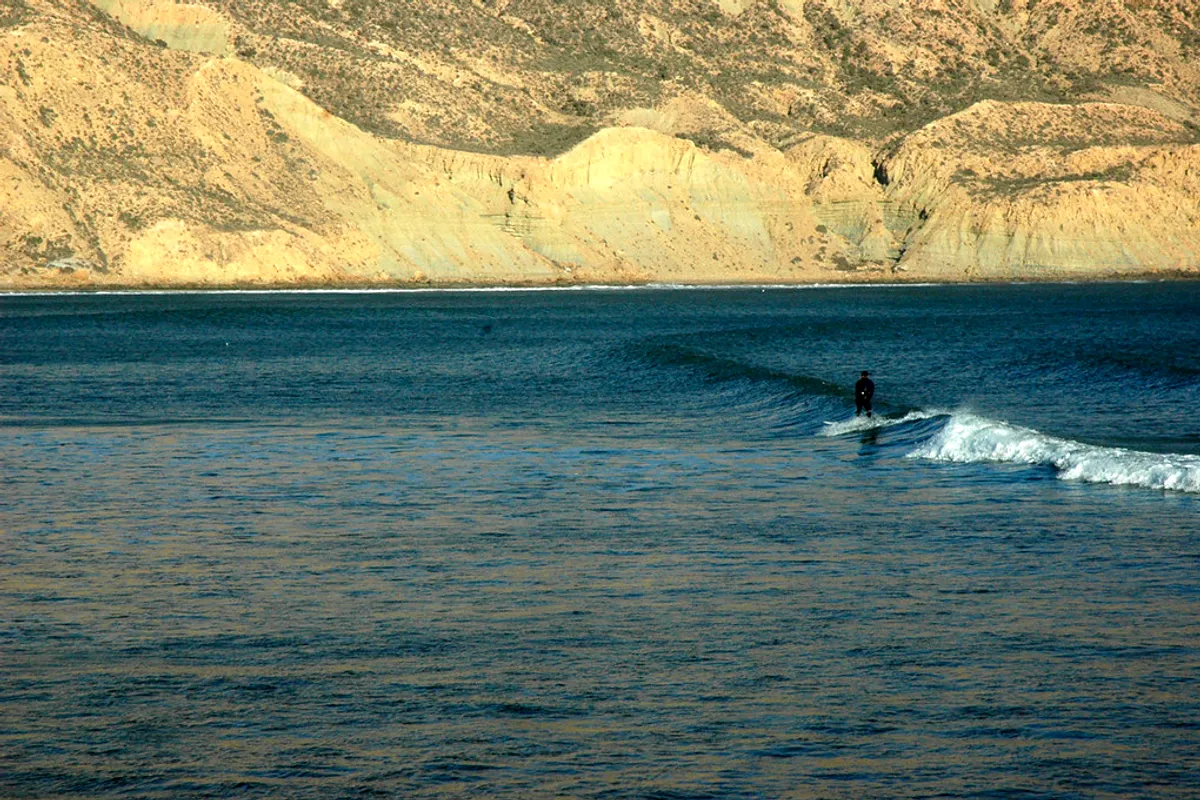
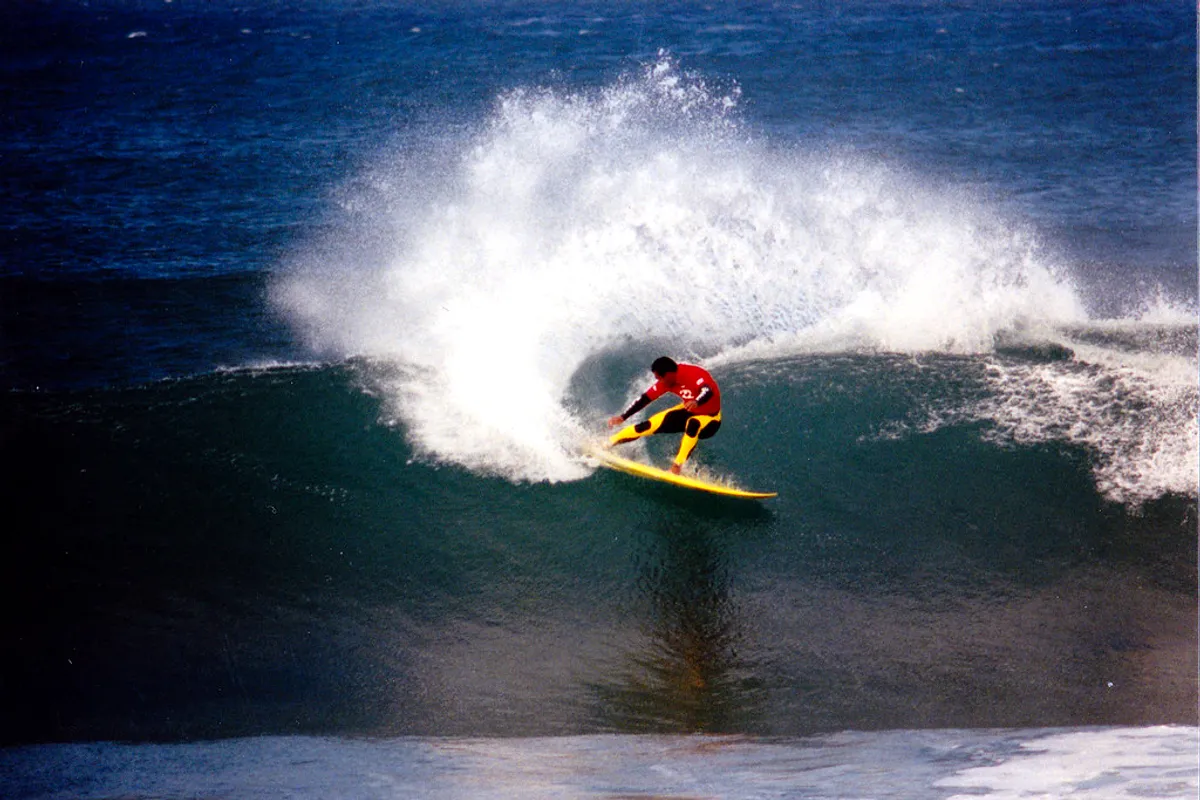
| Sidi Kaouki | Beach break with a right-hand reef point | Beginner–Advanced | Five or six named peaks on an open beach, with a reef point at the north end for confident surfers. Best on west to north-west swell with easterly offshores, and often blown out in summer. |
| Cap Sim | Right-hand point | Intermediate–Advanced | Reached by a rough track south of town. Works on steady westerly or northerly swell, with sand and jagged rock underfoot. Barrels need strong easterly wind. |
| Tafedna | Right-hand points | Intermediate | Over an hour south of Essaouira, with long rights and several peaks. Rarely crowded, but remote and best visited with a local driver. |
Essaouira & Sidi Kaouki surf climate, measured
Ten years of ocean model data for the open water off this coast: what the swell usually looks like before it reaches the beach. Shelter, sandbars and reefs change what you actually surf, so read this next to the month notes below.
| Month | Swell | Period | From | Wind | Water | Wetsuit | Days over 2.5 m |
|---|---|---|---|---|---|---|---|
| Jan | 2.1 m | 13 s | NW | 12 km/h NE | 17°C | 3/2 mm full suit | 30% |
| Feb | 2.3 m | 13 s | NW | 17 km/h NE | 17°C | 3/2 mm full suit | 40% |
| Mar | 2.2 m | 13 s | NW | 18 km/h N | 17°C | 3/2 mm full suit | 40% |
| Apr | 1.7 m | 12 s | NW | 19 km/h N | 17°C | 3/2 mm full suit | 13% |
| May | 1.7 m | 10 s | N | 23 km/h N | 17°C | 3/2 mm full suit | 5% |
| Jun | 1.5 m | 9 s | N | 23 km/h N | 18°C | 3/2 mm full suit | 0% |
| Jul | 1.6 m | 8 s | N | 25 km/h N | 18°C | 3/2 mm full suit | 0% |
| Aug | 1.5 m | 7 s | N | 27 km/h N | 18°C | 3/2 mm full suit | 3% |
| Sep | 1.5 m | 10 s | N | 20 km/h N | 19°C | 2 mm shorty or spring suit | 0% |
| Oct | 1.7 m | 12 s | NW | 15 km/h NE | 19°C | 2 mm shorty or spring suit | 10% |
| Nov | 2.0 m | 12 s | NW | 17 km/h NE | 18°C | 3/2 mm full suit | 23% |
| Dec | 2.1 m | 13 s | NW | 12 km/h NE | 18°C | 3/2 mm full suit | 35% |
Median values from ERA5 at a sea point near Essaouira & Sidi Kaouki (31.5°N, 9.75°W), sampled 4 days a month at 12:00 UTC, 2015-2024. Highlighted months are our suggested planning window. Not a forecast or a safety assessment. How we use this data.
Book a surf trip to Essaouira & Sidi Kaouki
Everything we can link you to for this trip, grouped by what you need. Before you pay a camp or school, read who holds your money, and check that your insurance covers surfing.
Where to stay
Search near the breaks. Filter for surf hostels, apartments or hotels once you can see the map.
Surf lessons and activities
Listings change by season, so check what the operator includes and who coaches.
Flights
Add your dates and check the board fee on every leg before you pay.
Car hire
Ask about roof racks and whether the insurance covers boards on the roof.
Airport transfer
Tell the driver you have a board and its length when you book.
Mobile data
Download a forecast app and offline maps before you land.
Flight delay claims
If a delay eats your first surf day, check whether you can claim.
Luggage storage
Useful between check-out and a late flight. Check the size limit before dropping a board.
Links marked as partner links may earn us commission at no cost to you; the rest earn us nothing. We have not checked live availability or price, and the seller's terms apply. How we handle this.
A medina by the sea, and a wind you plan around
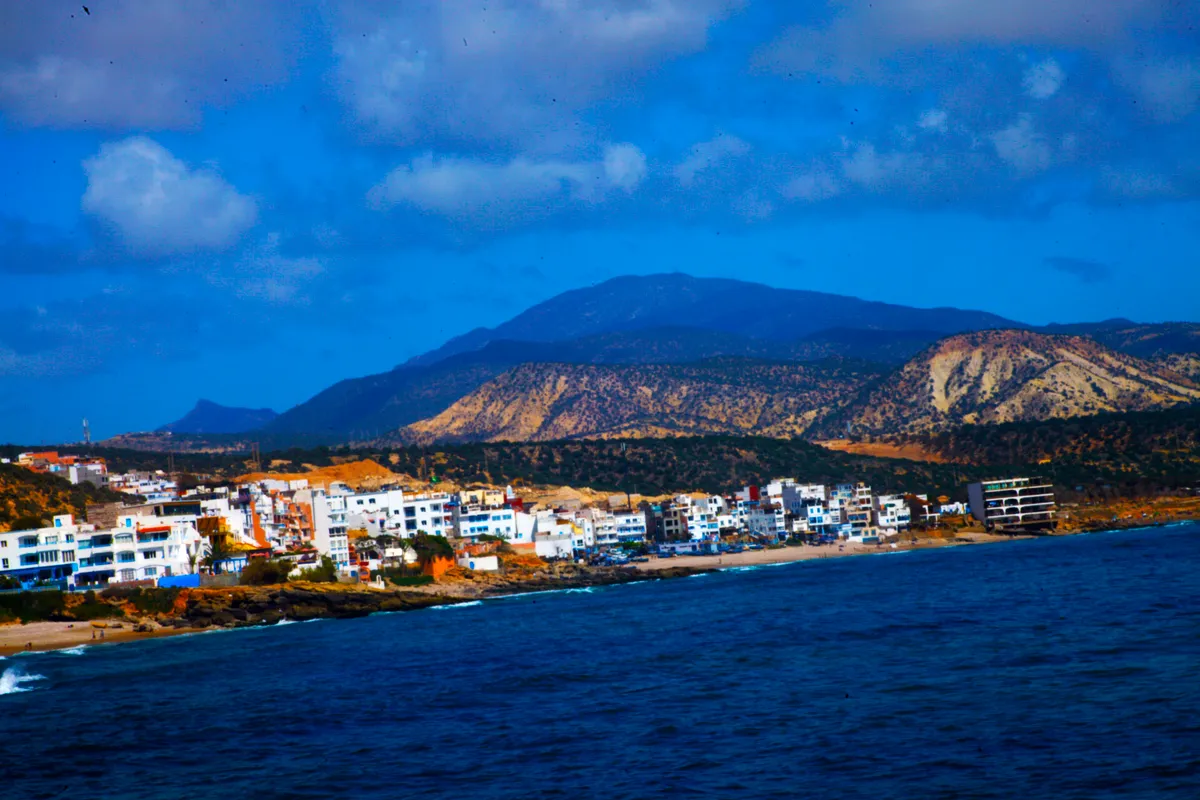
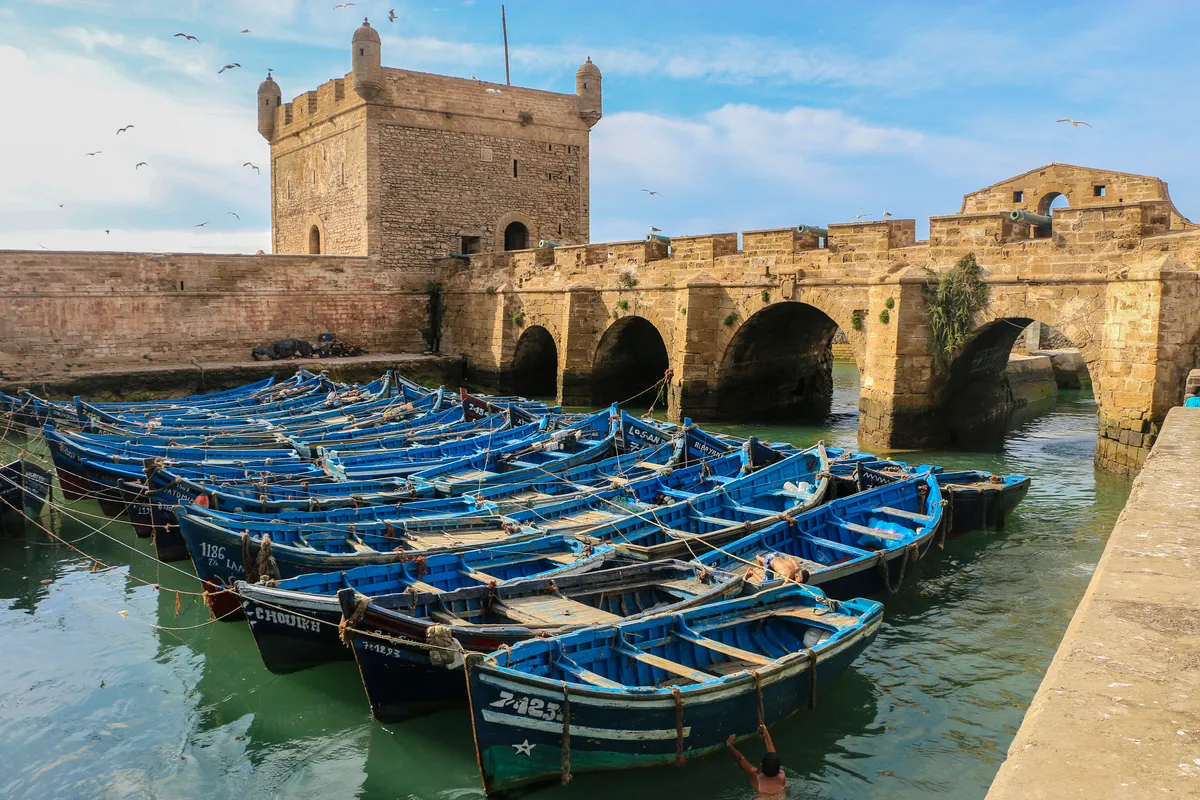
Essaouira was formerly called Mogador, and its medina was inscribed as a UNESCO World Heritage Site in 2001. The core area is only 30 hectares, which is why it feels so walkable: ramparts, a working fishing harbour, narrow lanes and cafés all sit within a short stroll of the beach. The town historically served as the port for Marrakech, and the road between the two runs in a nearly straight line.
The defining feature of the place for any water user is the wind. Strong trade winds drive the coastal upwelling that feeds the local fishing industry, and they also blow across the bay on most afternoons. Surf guides describe a collision of Atlantic trade winds with hot Saharan air that produces near-constant gusts, strongest in the summer months of May to September. That is why Essaouira is a kitesurf and windsurf capital first and a surf town second.
The practical advice is simple. Choose winter if you want surf, plan sessions for the first part of the morning and treat the afternoon as a time for the medina, a walk on the ramparts and fish at the harbour.
How Mogador Island shapes the city beach
The island of Mogador sits just offshore and partly shelters the bay, which is why the harbour is calm and why the town's own beach has smaller, softer waves than the exposed coast around it. Surf guides note that the island shields the city beach from most north and north-west swell, though winter swells that wrap into the bay can still produce chest-high waves that suit beginners.
That shelter cuts both ways. On big days the city beach may be one of the few places that is manageable for newcomers, while on small days it can be flat. It also tends to hold the wind, because the broad, flat beach and the dry hinterland leave little to block it.
The island has history too: archaeologists have excavated a Roman villa there, along with Phoenician pottery. It is not a surf spot but it is a reminder that this bay has been a sheltered harbour for a very long time.
Tagharte and the southern end of the beach
The south end of Essaouira's beach, often called Tagharte, is more exposed than the central stretch, so it gets bigger and more consistent waves. It is mostly shorebreak, with a small left point at the far southern end, and it is prone to closeouts and mush when the wind comes up. In the summer months it is mostly a kite beach.
For surfers the useful rule is to check the water in the morning and bring something with a bit of volume. Longer boards and soft-tops make the best of weak, wind-affected surf. The bottom is sandy, but there are rocky patches near the point, and the whole stretch can show currents when a swell is running. As with all Moroccan beaches, take care where the water is moving seaward.
The southern end is also where most of the kite schools and rental huts sit, so share the space politely and keep clear of kite lines.
Sidi Kaouki: the surf village
Sidi Kaouki, about half an hour south of Essaouira, is a small village on an open beach with five or six named peaks, a right-hand reef point at the north end for more experienced surfers and a long stretch of sand for everyone else. Surf guides describe the break as mainly beach break with reef sections, and best on west to north-west swells with easterly offshores. The village is windier than the town's main beach and is also a kitesurf and horse-riding spot.
The pace is slower than in Essaouira. There are a handful of guesthouses, cafés and surf shops, a marabout shrine on the beach and little else, so it suits people who want a quiet base for a week of surf and long walks. It can be blown out in summer, so the best months for surf are the cooler ones.
If you stay here, plan your food and cash in advance, and be prepared to take a taxi into Essaouira in the evening.
Cap Sim, Tafedna and the rougher points south
South of Essaouira the coast turns rockier. Cap Sim is reached by a rough track and is mainly a right-hand point with some short lefts. It works best on steady 5 to 6 foot swells from the west or north, and barrels need a strong easterly. The bottom is sand and jagged rock, which makes it a spot for competent surfers who can read the water.
Tafedna, over an hour south, has long right points and several peaks and is rarely crowded. It is the kind of place that needs a car, a local contact and good judgement, because services are almost non-existent and the tracks can be rough.
The usual approach is to hire a local driver or ask a surf school to take you. Respect the village, park where you are directed and take out whatever you take in. Do not treat these spots as places for large groups: they are small, and the locals who live nearby have first claim to the waves.
Getting to Essaouira and moving around
Essaouira–Mogador airport is about 7 to 8 kilometres from the town and has a few low-cost flights from France and London Stansted, plus some domestic routes, according to one surf guide. For wider choice, many visitors fly to Marrakech, where the bus takes about three hours with Supratours as the main operator named, or to Agadir and travel north.
Casablanca is roughly four hours away by road, and Taghazout is about two hours by car. Imsouane, famous for its long, easy wave, is also about two hours south, and some visitors combine the two bases. Sidi Kaouki is a taxi ride from town, and local taxis and shared grand taxis link nearby villages.
A car is useful for the southern points but not essential if you stay in town or at Sidi Kaouki. Roads in Morocco can be busy, and night driving is best avoided because of animals and unlit vehicles.
Flat days, festivals and food
When there is no surf, the town does a very good job. Walk the sea walls, visit the fishing port and eat grilled fish at the stalls, which is part of the daily life of the place. The medina has craft workshops, particularly wood marquetry, and a small, walkable souk.
Essaouira is also known for music. The Gnaoua festival has been held since 1998, normally in the last week of June over four days, and draws around 450,000 spectators a year according to Wikipedia. It is a very busy time and accommodation fills early, so book ahead or avoid the dates if you want a calm trip.
For days out, horse and camel rides on the beach, hikes in the argan forests inland and cycle trips are all common. Argan oil is a local product, and cooperatives sell it directly if you want to buy it.
Wetsuits, sun and etiquette on this coast
Water along this stretch of the Moroccan coast is cool because of the Canary Current and coastal upwelling, so a 3/2 or 4/3 suit is normal in winter and a shorty is enough in late summer. The sun is intense in summer, even when the wind is cold, so bring a hat and long sleeves for the beach.
Wind makes a lot of difference to how cold you feel. A windproof layer for the walk to the water and back is worth more than an extra millimetre of rubber. Surf shops sell basic equipment, but a spare leash and fins are worth bringing.
This is a Muslim country, and modest dress away from the beach is appropriate. Surfers are welcome, but remember that you share the water with kitesurfers, windsurfers, fishermen and swimmers. Stay clear of kite lines, avoid crowds on small days and keep an eye on beach signs and local advice.
Essaouira & Sidi Kaouki surf season month by month
A broad planning picture, not a forecast. Swell, wind and water temperature vary from year to year.
| January | Peak winter swell and lighter wind. Sidi Kaouki and the reefs south are at their best, the water is cool, and nights in the medina are cold. |
|---|---|
| February | Consistent north-west swell and mild days. A good month for improvers at Sidi Kaouki, with fewer kitesurfers than in summer. |
| March | Swell remains regular while the wind begins to build later in the day. Early sessions are the key, and spring light is excellent for the old town. |
| April | Mixed. Occasional swell, increasingly strong wind and the first warm days. Check forecasts closely and favour early mornings. |
| May | The wind season begins in earnest. Surf is smaller and often blown out, so expect more kite and wind-sport activity than waves. |
| June | Strong afternoon wind and small surf. Good for kite lessons and for the Gnaoua festival at the end of the month, not for chasing waves. |
| July | Windiest part of the year, with small, messy surf at most beaches. The medina is busy with visitors and mornings are the only realistic surf window. |
| August | Hot, windy and crowded in the town. Surf is minimal, so this is a month for culture, kite and beach life more than for boards. |
| September | Wind begins to ease and the first autumn swells arrive. A transitional month with fewer visitors and some good mornings on the beach breaks. |
| October | More regular swell and calmer winds. Sidi Kaouki starts to wake up and the south coast points begin to work on bigger days. |
| November | The surf season picks up, with north-west swells wrapping into the bay and chest-high beginner waves on good days. Cooler water and quiet streets. |
| December | Reliable swell and lighter wind. A good month to learn or improve, with Sidi Kaouki and the south all in play and wetsuits needed. |
Learning to surf around Essaouira
Essaouira is a modest place to learn, and it is best in winter. The sheltered city beach and Sidi Kaouki both have beginner-friendly waves on the right day, and surf schools and camps operate in both. Because the wind builds fast, lessons usually run in the morning and the best schools adapt the location to the forecast.
Ask how many students each instructor takes, whether the school provides a wetsuit that fits properly and what the plan is on a windy day. A decent school will have a backup, such as a lesson at a more sheltered beach or a theory and skate session.
If you want a more consistent learning wave, consider combining Essaouira with Imsouane, about two hours south, where the sandy-bottomed bay produces long, forgiving rides. Many travellers split their week between the two.
Comparing options across the country? Read our guide to surfing in Morocco.
Seasonal notes on this page describe typical patterns, not the conditions on a given day. Use the local forecast, lifeguard advice and a qualified instructor for water-safety decisions, and get a written breakdown of what any surf package includes before paying.
Essaouira & Sidi Kaouki surf trip questions
Is Essaouira good for surfing?
It is a modest surf destination. Winter brings beginner and intermediate beach-break waves, but wind limits sessions. Essaouira is better known for kitesurfing and windsurfing.
When is the best time to surf in Essaouira?
November to March, when north-west swells arrive and the wind is lighter. Summer is the windiest period and better for wind sports.
Is Sidi Kaouki better than Essaouira for surf?
Usually yes for variety. Sidi Kaouki has several peaks and a right-hand reef point, though it is also windy and can be blown out. Essaouira's city beach is more sheltered and suits first-timers.
How far is Essaouira from Marrakech?
About three hours by bus or car, in a nearly straight line, according to local guides. Many visitors combine the two.
Can I surf Imsouane from Essaouira?
Yes, it is about two hours south by car or shuttle. Some travellers split a week between Essaouira and Imsouane, using the former for culture and the latter for easy waves.
Do I need a wetsuit in Essaouira?
Yes in winter, usually a 3/2 or 4/3, and a shorty in late summer. The water is cooled by upwelling and the wind makes it feel colder.
Sources & editorial notes
Destination context checked against the sources below. Base-selection and itinerary suggestions are Book & Surf editorial recommendations. Seasonal windows are broad planning suggestions, not measured forecasts or guarantees.
- Wikipedia: Essaouira ↗
- Wikipedia: Sidi Kaouki ↗
- The Surf Atlas: Essaouira surf ↗
- Surf-Forecast: Sidi Kaouki ↗
We do not claim to have personally surfed every break. Read our editorial standards.