The breaks
Recognised, publicly known surf spots around Maui. Suitability depends on the day's swell, wind and tide, so treat the level as a guide, not a guarantee.
| Break | Type | Best for | Notes |
|---|---|---|---|
| Hookipa Beach Park | Reef/point and beach break | Intermediate–Advanced | Famous for winter surf and afternoon windsurfing. Several reef peaks; busy on good days and shared with turtles on the sand. |
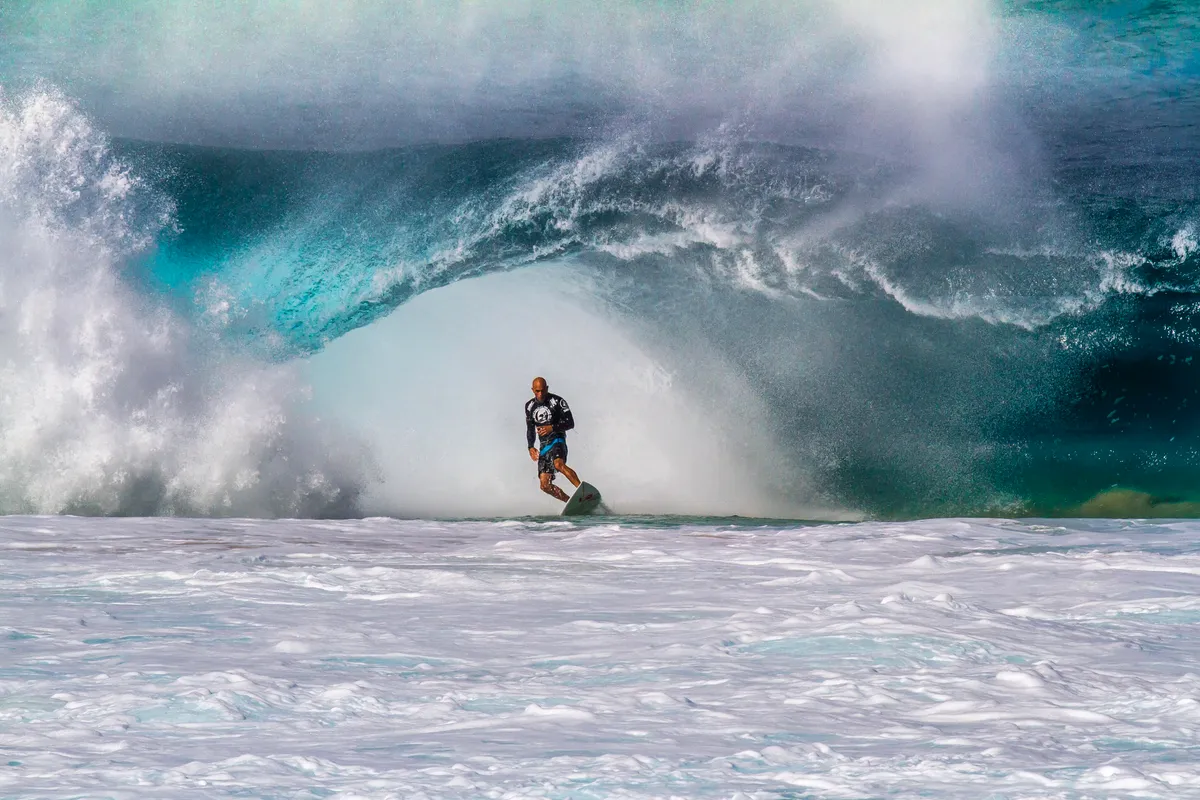
| Peʻahi (Jaws) | Big-wave reef | Advanced | A giant wave that works only on the largest north swells. A spectator spot for visitors; surfing it is for expert teams. |
| Honolua Bay | Right-hand reef point | Intermediate–Advanced | A long right in a protected bay that works on winter north-west swells. Crowded when it is on. |
| Launiupoko | Beach/reef | Beginner–Intermediate | Near Lahaina with a gentle beach for learners and a few intermediate peaks. Check access and conditions in the area. |
| The Cove, Kihei | Reef/sand | Beginner | A soft, forgiving wave and a popular first-wave spot. Works best on south swells and is busy with lessons. |
| Ukumehame | Reef | Intermediate | A south-side reef that picks up summer south swells. Quieter than some of the south shore beaches. |
Full profile: Jaws (Peʻahi).
Maui surf climate, measured
Ten years of ocean model data for the open water off this coast: what the swell usually looks like before it reaches the beach. Shelter, sandbars and reefs change what you actually surf, so read this next to the month notes below.
| Month | Swell | Period | From | Wind | Water | Wetsuit | Days over 2.5 m |
|---|---|---|---|---|---|---|---|
| Jan | 2.3 m | 14 s | NW | 21 km/h E | 25°C | Boardshorts | 28% |
| Feb | 2.3 m | 12 s | NE | 26 km/h E | 24°C | Rash vest or 1 mm top | 33% |
| Mar | 2.2 m | 11 s | NE | 24 km/h E | 24°C | Rash vest or 1 mm top | 30% |
| Apr | 1.8 m | 10 s | NE | 27 km/h E | 24°C | Rash vest or 1 mm top | 13% |
| May | 1.7 m | 9 s | E | 26 km/h E | 25°C | Boardshorts | 0% |
| Jun | 1.5 m | 8 s | E | 26 km/h E | 26°C | Boardshorts | 0% |
| Jul | 1.6 m | 8 s | E | 27 km/h E | 26°C | Boardshorts | 3% |
| Aug | 1.5 m | 8 s | E | 26 km/h E | 27°C | Boardshorts | 0% |
| Sep | 1.5 m | 8 s | E | 25 km/h E | 27°C | Boardshorts | 3% |
| Oct | 1.8 m | 11 s | NE | 23 km/h E | 27°C | Boardshorts | 8% |
| Nov | 2.1 m | 11 s | NE | 25 km/h E | 26°C | Boardshorts | 23% |
| Dec | 2.4 m | 14 s | N | 25 km/h E | 25°C | Boardshorts | 38% |
Median values from ERA5 at a sea point near Maui (21.25°N, 156.5°W), sampled 4 days a month at 12:00 UTC, 2015-2024. Highlighted months are our suggested planning window. Not a forecast or a safety assessment. How we use this data.
Book a surf trip to Maui
Everything we can link you to for this trip, grouped by what you need. Before you pay a camp or school, read who holds your money, and check that your insurance covers surfing.
Where to stay
Search near the breaks. Filter for surf hostels, apartments or hotels once you can see the map.
Surf lessons and activities
Listings change by season, so check what the operator includes and who coaches.
Flights
Add your dates and check the board fee on every leg before you pay.
Car hire
Ask about roof racks and whether the insurance covers boards on the roof.
Airport transfer
Tell the driver you have a board and its length when you book.
Mobile data
Download a forecast app and offline maps before you land.
Flight delay claims
If a delay eats your first surf day, check whether you can claim.
Luggage storage
Useful between check-out and a late flight. Check the size limit before dropping a board.
Links marked as partner links may earn us commission at no cost to you; the rest earn us nothing. We have not checked live availability or price, and the seller's terms apply. How we handle this.
Cheapest months to fly to Maui
Lowest return fare to OGG that Aviasales users found recently, in US dollars. Treat these as a guide to which months are cheaper, not as prices you can book today.
| From | Nov 26 | Dec 26 | Jan 27 | Feb 27 |
|---|---|---|---|---|
| New York | $640 | $556 | $620 | – |
| Los Angeles | $452 | – | $441 | $447 |
Prices seen by 1 November 2026. Travelpayouts Data API. Board fees are extra on most airlines: see our surfboard baggage guide.
Two seasons on one island
Maui's surf is split by direction. In winter, storms in the North Pacific send swell to the north and north-west shores, which absorb the most energy between roughly November and March. In summer, smaller south swells arrive on the south and west sides, but the neighbouring islands and Maui's own bulk can block some of that energy, so summer is typically gentler.
That split is useful. If the north shore is huge and unrideable, there is often a sheltered bay on the other side of the island. If the south is flat, Honolua Bay and Hookipa may be working. The practical approach is to look at the swell direction in the forecast before deciding where to drive, and to be ready to switch coasts.
The north shore: Hookipa and Peʻahi
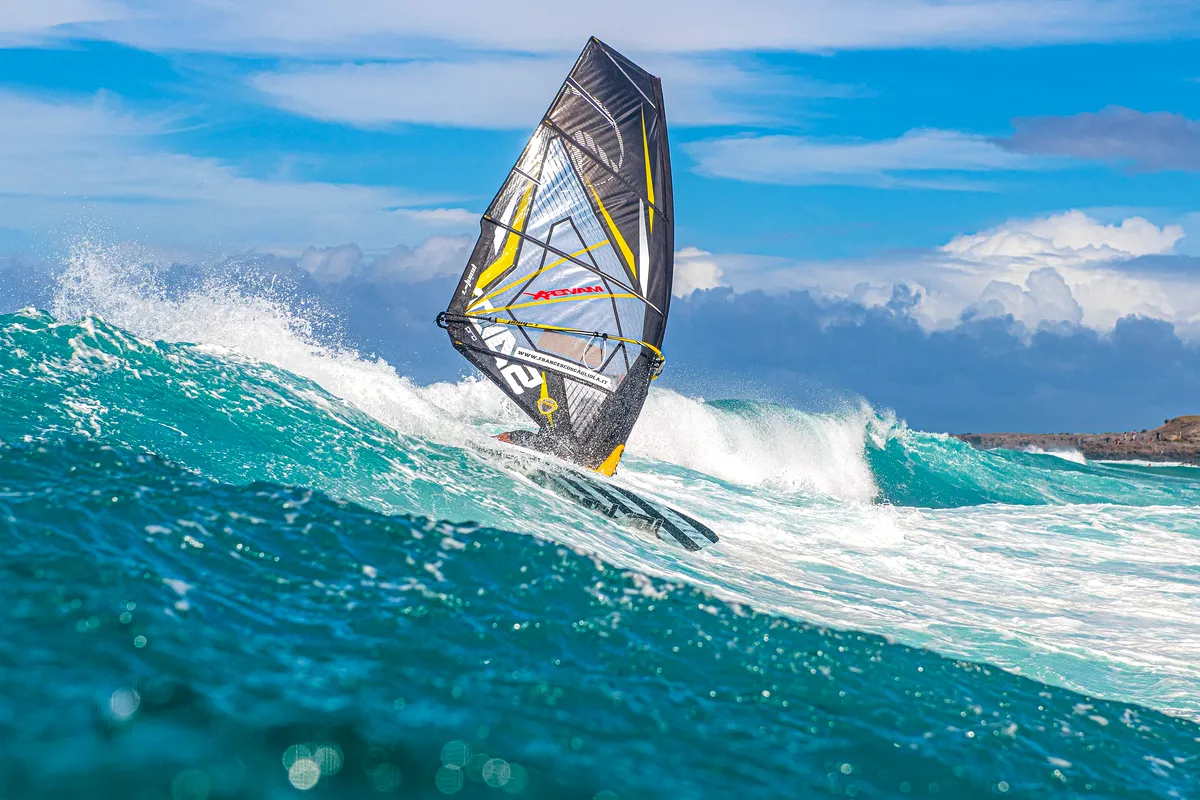
Hookipa Beach Park, on the north shore near Paia, is among Maui's most famous surf and windsurf spots. It breaks on most swell directions except south, with several reef sections, and during big winter swells it attracts skilled surfers and large crowds of onlookers. In the afternoons, the trade winds usually bring windsurfers and kites out on the same bay.
Peʻahi, known as Jaws, is a few kilometres east. It is a big-wave break that works only on the largest north swells and is not a place for visitors to paddle out. Tow-in teams and a small group of expert paddle surfers ride it, and spectators watch from the cliffs. Treat it as a spectacle, keep a safe distance from cliff edges and follow any local access rules.
West Maui and Honolua Bay
On the island's north-west corner, Honolua Bay is a famous right-hand point that lights up on winter north-westerly swells. It is part of a marine conservation area, with coral and clear water, and the take-off can be crowded with strong surfers. When there is no swell the bay is a snorkelling destination.
Further south, Launiupoko, near Lahaina, is a gentler beach with a protected area for beginners and a few intermediate waves. Ukumehame, along the highway towards Maalaea, picks up south swell in summer. Lahaina itself was largely destroyed by fire in 2023, and parts of the town have been closed, so check current conditions, local advice and respectful guidelines before visiting.
South Maui: Kihei and the gentle waves
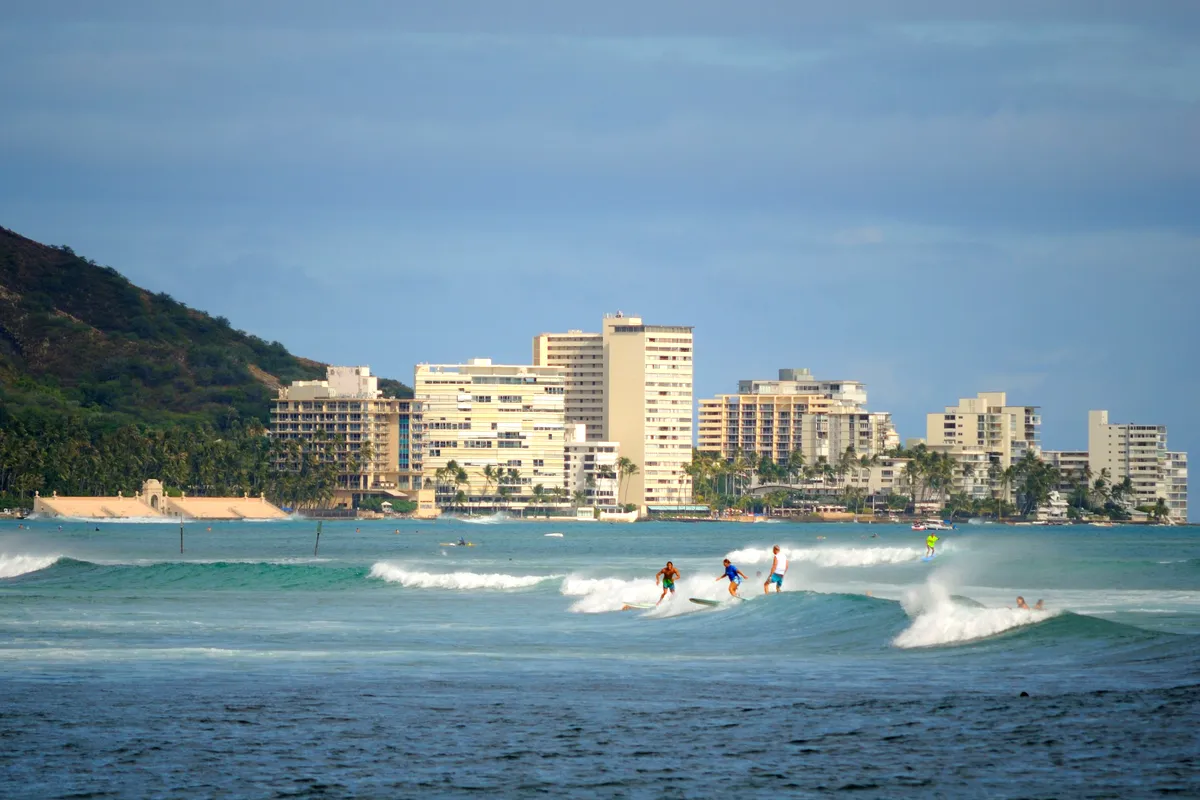
Kihei, Wailea and Makena are on the leeward side, drier and sunnier than the north, and they are the usual base for visitors. The Cove in Kihei is known as a good first-wave break, with a mild, rolling wave and a sandy bottom in places. Other breaks in the area work on south swells in summer, from March or April through to roughly October.
Because of island blocking, the south shore is not a high-performance wave zone. What it offers is warm water, mellow waves and a relaxed atmosphere. Learners, longboarders and families make up much of the crowd. Be aware of shallow reef under some peaks and of busy beach parking.
Trade winds and early mornings
Trade winds blow mainly from the north-east and build through the day. They are what make the north shore a windsurfing capital, with Kanaha Beach Park near the airport a focal point for wind and kite sports. For surfers, the trade winds are generally offshore on the north-west and west sides, but cross-shore or onshore on the north shore.
In practice, the best surf is early in the morning, before the trades kick in. A dawn patrol at a leeward break is often glassy, and by midday the wind can be strong enough to blow out many spots. On days with big winter swells, a wind-sheltered bay can be the only option.
Reef, urchins and respect in the water
Most Maui breaks are over reef, and many of them are shallow. Fall off and you can graze coral, so wear reef-safe sun protection and consider booties or a rash vest. Sea urchins and Portuguese man-of-war occasionally appear, and rip currents run along channels beside reef passes.
Hawaiian waters have a strong local culture. Locals who surf these breaks daily expect newcomers to be patient, take turns and avoid the main peaks on big days. Green sea turtles often rest on beaches such as Hookipa, and they are protected, so keep your distance. Whales visit between about November and April, so keep clear of them in the water, too.
Getting around: car, Kahului and the Hana road
Most visitors land at Kahului Airport (OGG) in central Maui and rent a car. The drive from the airport to Paia and Hookipa takes about 15 to 25 minutes, to Kihei about 25 to 35 minutes, and to West Maui around an hour. A car is effectively required, as public transport is limited and the breaks are spread across several coasts.
The Hana Highway follows the east coast through rainforest, waterfalls and black-sand beaches, and it makes a classic day out when the surf is off. The highway is narrow and winding, so allow a full day. Haleakalā, the dormant volcano that dominates the island, rises to over 3,000 metres and is popular for sunrise and for stargazing.
Maui surf season month by month
A broad planning picture, not a forecast. Swell, wind and water temperature vary from year to year.
| January | Peak north-shore season. Hookipa and Honolua can be big and busy, and whales are in the channel. South shores are mostly flat. |
|---|---|
| February | Consistent winter swell on the north and north-west. Experienced surfers have plenty of options; beginners should stay at gentle bays. |
| March | Winter swell remains, with the first south swells appearing late in the month. A good time for a mix of coasts. |
| April | A transition month. North shore fades, south swells begin, and whales are still around. Fewer crowds than in winter. |
| May | Warm days, smaller waves and starting south swells. Good for learners at the Cove and Launiupoko. |
| June | South swell season begins in earnest. Warm water and moderate crowds; trade winds are strong in the afternoons. |
| July | Peak summer. South and west shores have the best waves, though island blocking limits size. The north shore is mostly flat. |
| August | Warm water and occasional bigger south swells. Hurricane season in the Pacific can bring distant swell, so check forecasts. |
| September | South swells taper off. Water is at its warmest and the island is quieter after the summer holidays. |
| October | Transition month, with early north swells arriving and final south swells. Reasonable value for visitors. |
| November | The north shore starts to wake up. Honolua Bay and Hookipa begin to work, and whales return to the channel. |
| December | Winter swell arrives in force. Holiday crowds are high and the north shore can be very big. Watch the surf report. |
Learning to surf on Maui
Maui has a long list of surf schools, most in Lahaina, Kihei and the south shore, where the waves are small and the water is warm. The Cove and Launiupoko are common teaching beaches, with soft waves and sandy patches among the reef.
Lessons usually last around two hours, with a soft-top longboard and a rash vest. Ask how many students share an instructor and where the school teaches in winter, when the south shore can be flat and the north is too powerful. Good operators have a plan B.
Once you can ride small waves on your own, look for coaching to learn about reef etiquette and safety. Never paddle out at Hookipa or Honolua on a big day just because it looks good in photos.
Comparing options across the country? Read our guide to surfing in the USA.
Seasonal notes on this page describe typical patterns, not the conditions on a given day. Use the local forecast, lifeguard advice and a qualified instructor for water-safety decisions, and get a written breakdown of what any surf package includes before paying.
Maui surf trip questions
When is the best time to surf Maui?
Winter, from November to March, has the biggest waves on the north and north-west shores. Summer brings smaller south swells and is better for beginners on the south shore.
Is Maui good for beginners?
Yes, in the right places. Kihei and parts of West Maui have gentle waves and schools. The north shore in winter is for experienced surfers only.
Can visitors surf Jaws?
Jaws (Peʻahi) is an extreme big-wave break ridden by experts and tow teams. Visitors are best off watching from the clifftop on a big day and following local access rules.
Do I need booties on Maui?
Many breaks are over reef, so booties or reef-safe protection are useful, especially when you are walking out over coral. Beginners at sandy spots may not need them.
Is Lahaina open to visitors?
Lahaina was heavily damaged by fire in 2023, and access has been restricted in parts. Check current local advice and treat the area with respect before planning a visit.
Sources & editorial notes
Destination context checked against the sources below. Base-selection and itinerary suggestions are Book & Surf editorial recommendations. Seasonal windows are broad planning suggestions, not measured forecasts or guarantees.
We do not claim to have personally surfed every break. Read our editorial standards.