The breaks
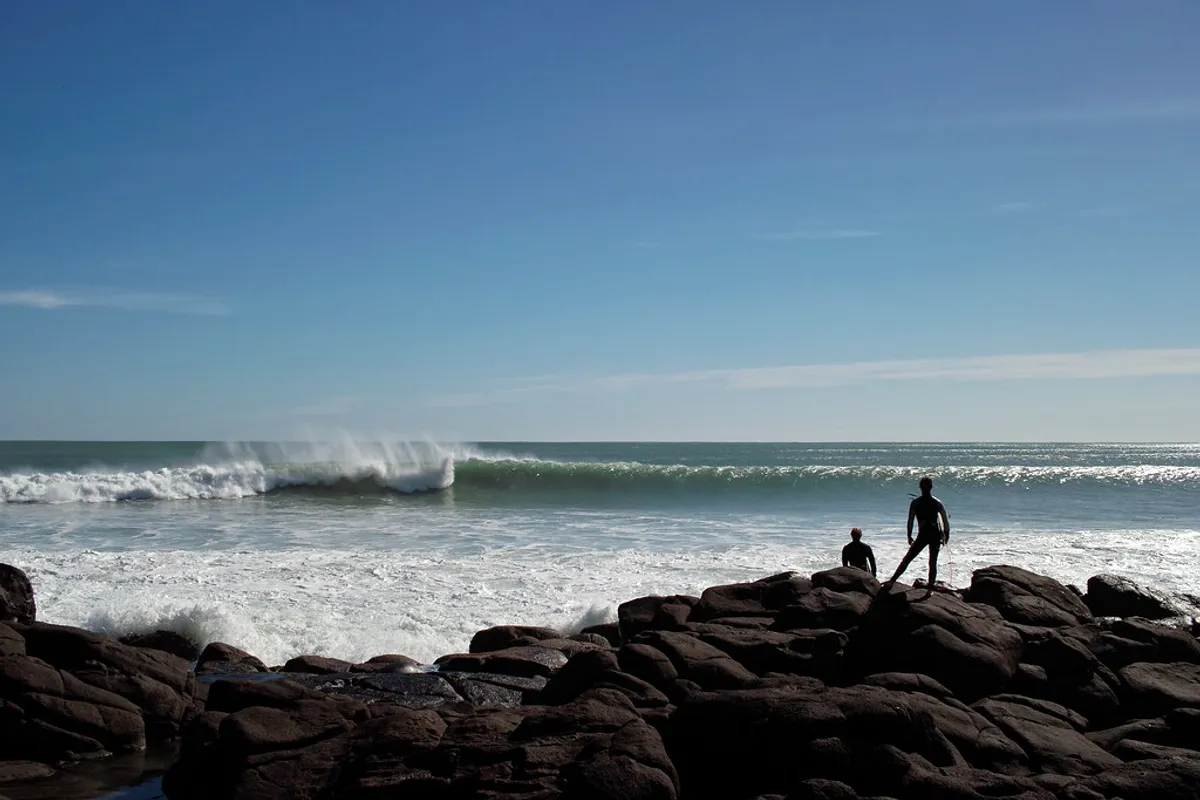
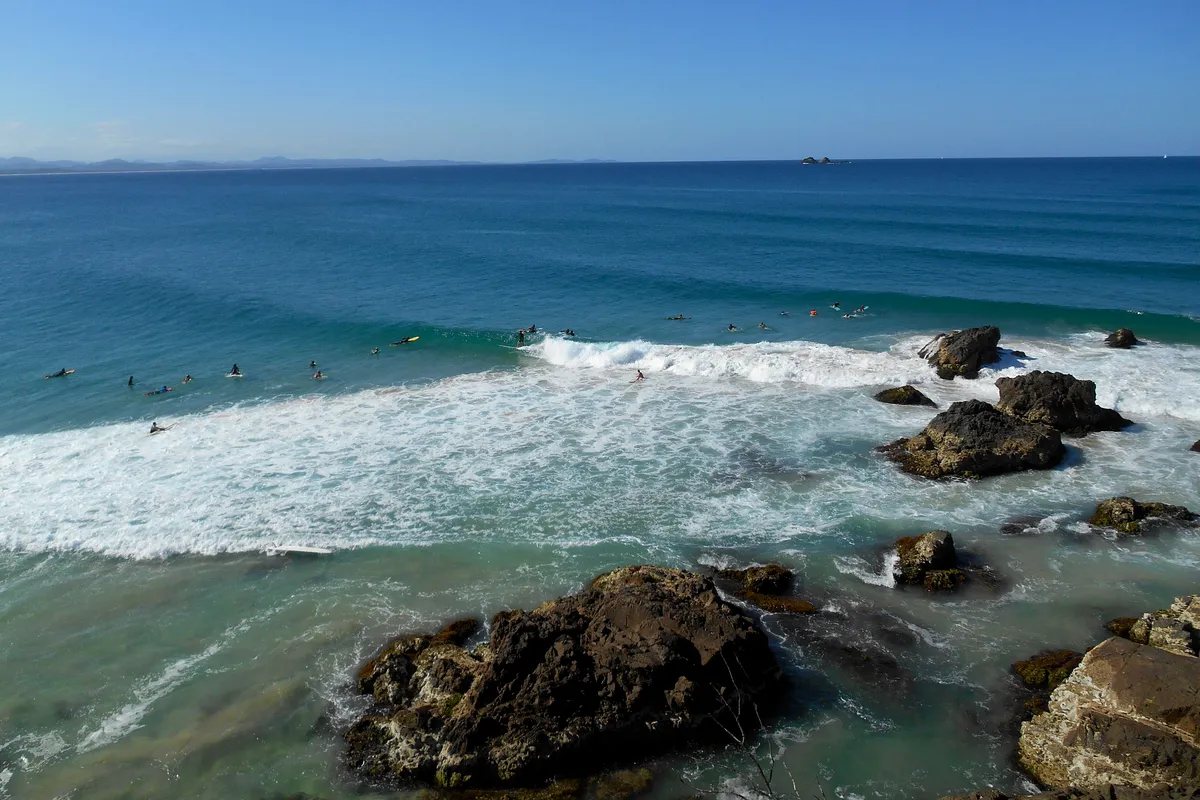
Recognised, publicly known surf spots around Piha. Suitability depends on the day's swell, wind and tide, so treat the level as a guide, not a guarantee.
| Break | Type | Best for | Notes |
|---|---|---|---|
| South Piha (patrolled beach) | Beach break | Intermediate | The patrolled end near the surf club. Banks shift through the year, so ask the lifeguards where to surf and stay out of the flagged swimming area. |
| North Piha | Beach break | Intermediate–Advanced | A wide, open stretch on the northern side of Lion Rock. Often a little quieter but with powerful waves and rips. |
| Karekare | Beach break | Advanced | A remote-feeling beach south of Piha reached by road. Strong currents and few people around, so surf it with company and check the tide first. |
| Muriwai | Beach break | Intermediate | A longer black-sand beach north of Piha with several peaks and a lifeguard presence in summer. A common alternative when Piha is blown out. |
| Bethells Beach (Te Henga) | Beach break | Intermediate–Advanced | A dune-backed beach north of Piha reached by a short drive. Wild, exposed and best chosen on a smaller, offshore day. |
Piha surf climate, measured
Ten years of ocean model data for the open water off this coast: what the swell usually looks like before it reaches the beach. Shelter, sandbars and reefs change what you actually surf, so read this next to the month notes below.
| Month | Swell | Period | From | Wind | Water | Wetsuit | Days over 2.5 m |
|---|---|---|---|---|---|---|---|
| Jan | 1.4 m | 13 s | SW | 17 km/h SW | 21°C | 2 mm shorty or spring suit | 0% |
| Feb | 1.4 m | 12 s | SW | 15 km/h NE | 21°C | 2 mm shorty or spring suit | 5% |
| Mar | 1.5 m | 13 s | SW | 15 km/h NE | 21°C | 2 mm shorty or spring suit | 10% |
| Apr | 1.6 m | 13 s | SW | 17 km/h SW | 19°C | 2 mm shorty or spring suit | 15% |
| May | 1.8 m | 13 s | SW | 18 km/h SE | 18°C | 3/2 mm full suit | 20% |
| Jun | 1.6 m | 13 s | SW | 15 km/h SW | 16°C | 3/2 mm full suit | 23% |
| Jul | 1.8 m | 13 s | SW | 18 km/h SW | 15°C | 4/3 mm full suit | 18% |
| Aug | 1.8 m | 14 s | SW | 19 km/h SW | 14°C | 4/3 mm full suit | 15% |
| Sep | 1.9 m | 14 s | SW | 23 km/h SW | 14°C | 4/3 mm full suit | 30% |
| Oct | 1.6 m | 14 s | SW | 20 km/h SW | 15°C | 4/3 mm full suit | 15% |
| Nov | 1.7 m | 13 s | SW | 20 km/h NW | 17°C | 3/2 mm full suit | 5% |
| Dec | 1.5 m | 12 s | SW | 16 km/h SW | 19°C | 2 mm shorty or spring suit | 8% |
Median values from ERA5 at a sea point near Piha (37°S, 174.5°E), sampled 4 days a month at 12:00 UTC, 2015-2024. Highlighted months are our suggested planning window. Not a forecast or a safety assessment. How we use this data.
Book a surf trip to Piha
Everything we can link you to for this trip, grouped by what you need. Before you pay a camp or school, read who holds your money, and check that your insurance covers surfing.
Where to stay
Search near the breaks. Filter for surf hostels, apartments or hotels once you can see the map.
Surf lessons and activities
Listings change by season, so check what the operator includes and who coaches.
Flights
Add your dates and check the board fee on every leg before you pay.
Car hire
Ask about roof racks and whether the insurance covers boards on the roof.
Airport transfer
Tell the driver you have a board and its length when you book.
Mobile data
Download a forecast app and offline maps before you land.
Flight delay claims
If a delay eats your first surf day, check whether you can claim.
Luggage storage
Useful between check-out and a late flight. Check the size limit before dropping a board.
Links marked as partner links may earn us commission at no cost to you; the rest earn us nothing. We have not checked live availability or price, and the seller's terms apply. How we handle this.
Cheapest months to fly to Piha
Lowest return fare to AKL that Aviasales users found recently, in US dollars. Treat these as a guide to which months are cheaper, not as prices you can book today.
| From | Nov 26 | Dec 26 | Jan 27 | Feb 27 | Mar 27 | Apr 27 |
|---|---|---|---|---|---|---|
| London | $1150 | $1089 | – | $843 | $1210 | – |
| New York | $1602 | – | $1146 | – | – | – |
| Los Angeles | – | $2451 | – | – | – | $841 |
| Sydney | $362 | $396 | $378 | $388 | $406 | $391 |
| Frankfurt | – | $1125 | – | $1399 | – | – |
Prices seen by 1 November 2026. Travelpayouts Data API. Board fees are extra on most airlines: see our surfboard baggage guide.
Why Piha works as a surf beach
Piha faces west into the Tasman Sea and has no offshore island or reef to take the sting out of incoming swell. Storm energy from the Southern Ocean arrives with very little interruption, and the result is a long, steep beach with sandbars that shift through the year. Waves are strong, often sectiony and best suited to people who already feel comfortable in the white water.
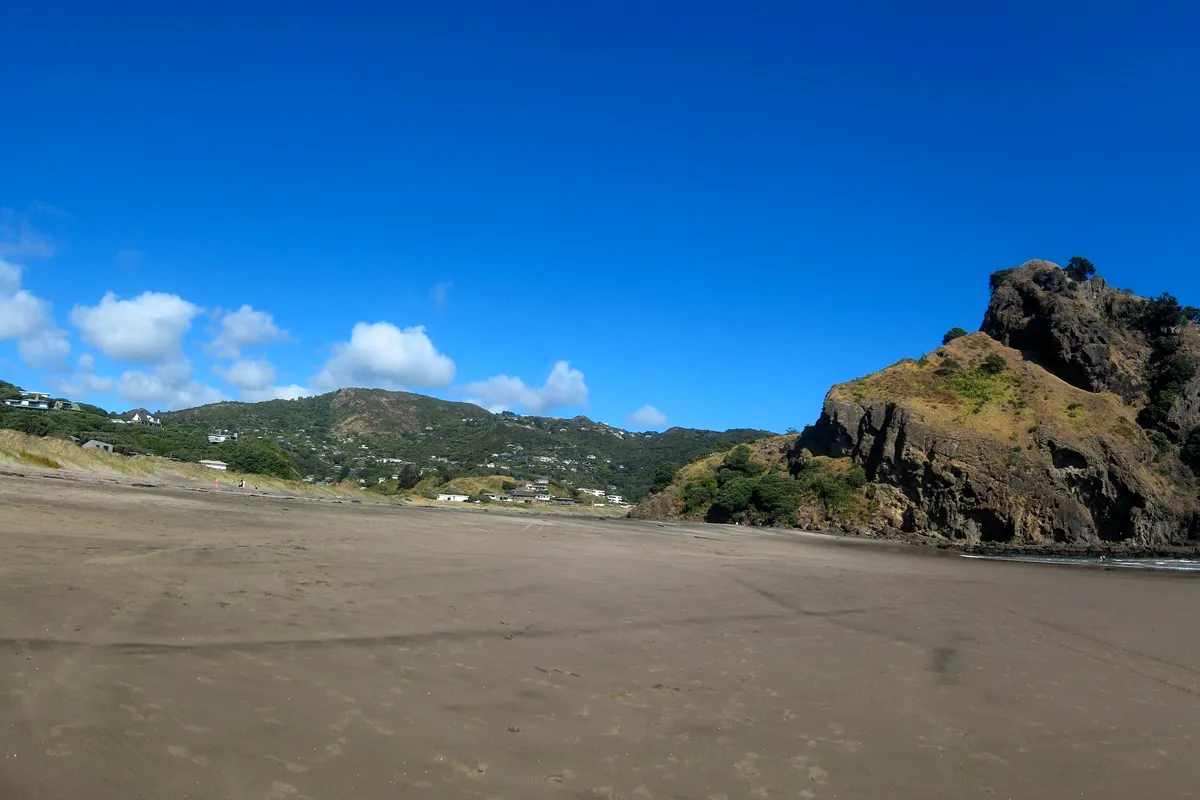
The sand is dark because of its iron content. Wikipedia attributes it to volcanic sources including Mount Taranaki, and it is hot underfoot on a sunny afternoon in summer. The beach is described by the community as the place where board riding in New Zealand took off in the late 1950s, and it has hosted national and international contests since.
Lion Rock and the two ends of the beach
Lion Rock is an eroded volcanic neck that stands at the middle of the beach and divides it into North Piha and South Piha. From the shore side it resembles a resting lion, and it is the thing everyone photographs. The rock also matters for surfers because it affects currents and gives each end of the beach a different feel.
South Piha is the more obviously organised end, with the surf lifesaving club and its clubhouse close to the road. North Piha is wider and can be quieter. Sandbars move, so the best peaks are rarely in the same place for more than a few weeks. Spend the first session watching, ask lifeguards or locals where the banks are and choose the end where fewer people are in the water.
Rips and lifeguard flags
The first thing to understand is that Piha has strong, unpredictable rips. Lifeguards in the area have warned repeatedly that calm-looking water can hide a powerful current, and the beach has a long history of rescues. Most drownings in the area have happened after patrols finish for the day or when rock fishers have been swept off ledges.
Patrol coverage is split: Piha Surf Life Saving Club patrols the southern side of Lion Rock, and a separate service covers the north. Red and yellow flags mark the swimming area, and surfers should stay clear of it and check with the lifeguards. Never surf alone, and do not go out when the patrols are off duty. If you get caught in a rip, float, signal and swim parallel to shore; do not try to paddle against it.
The wider coast: Karekare, Whites Beach and the Gap
Piha is the most popular of a string of west-coast beaches. Karekare lies to the south and is reached by road, with a more remote feel and a creek and waterfall nearby. Anawhata is to the north and also has road access. Whites Beach, to the north of Piha, and Mercer Bay, to the south, are reachable only on foot over steep terrain.
The Gap, about a kilometre south of South Piha, has a lagoon and a blowhole that can be seen at lower tides. Kitekite Falls is a short walk inland. These make good rest-day outings, and they give surfers something to do in a week when conditions rule out the beach. Always check current track status before you set out.
Kauri dieback and the walking tracks
Large parts of the Waitākere Ranges have been closed to walkers since 2018 because of kauri dieback, an incurable disease that spreads through soil. Some tracks have re-opened with boardwalks and cleaning stations; others remain off limits. This matters for visitors who plan to hike during a surf trip.
Respect the signs and the rāhui, scrub your boots at the stations and stay on formed tracks. Surf trips are easy to build around the beach alone, but there is also a good case for exploring the open tracks to keep the trees healthy. For up-to-date information, check the Auckland Council and Department of Conservation sites before you leave.
Getting here from Auckland
Piha is about forty kilometres from central Auckland by road, with the final stretch winding through bush. A car makes everything easier, since public transport is limited and the beach, shops and tracks are spread out. The drive from the airport usually takes a little over an hour, depending on traffic through the western suburbs.
After Cyclone Gabrielle in early 2023, the main road to Piha was closed to non-residents for some months, and slips have affected roads in this area before. In the wetter months it is wise to check council road updates before you drive out. Fill the tank in the city, since there are few services on the hill, and arrive early at weekends and in summer when parking is stretched.
Staying and eating on a small coast
Piha is a small community with a handful of accommodation types, ranging from campsites and holiday homes to short-stay rooms, and a few places to eat. Book ahead for summer and long weekends, because there is not much overflow capacity. A cafe and a shop cover the basics, but for a bigger shop you will want to stop on the way out of Auckland.
If you prefer a town base, some visitors stay in west Auckland suburbs or at Muriwai and drive over for the day. The village is relaxed, with a mixture of residents, lifeguards and city day-trippers, and evenings are quiet. That suits surfers who value early mornings and an early night.
Piha surf season month by month
A broad planning picture, not a forecast. Swell, wind and water temperature vary from year to year.
| January | Summer holidays and the busiest month. Water is the warmest of the year, though the swell is often small. Lifeguards are on duty daily. |
|---|---|
| February | Warm water, long days and the first autumn swells arriving. Still busy at weekends, but quieter than January. |
| March | A very good month. Water is warm, lifeguards are still present at weekends and the swell begins to pick up. |
| April | Autumn consistency with shorter days, less crowd and southerly swells. A 3/2 suit works for most sessions. |
| May | Cooler water and regular swell. Piha is much quieter and conditions can be excellent on clean, offshore mornings. |
| June | Start of winter. Cold water and frequent storm swell; patrols are limited, so surf with experience and a friend. |
| July | The coldest water of the year, which usually means a 4/3 or 5/4 wetsuit with boots. Big swell is common and the beach is empty. |
| August | Winter swell continues and westerlies can make for messy conditions. Only confident surfers should paddle out in the largest swells. |
| September | Spring storms and strong winds. Water begins to warm very slowly, and swell stays consistent. |
| October | Gradual improvement as days lengthen. Conditions are changeable, and some days will be flat while others are powerful. |
| November | Early summer, with lifeguards beginning to patrol more often. Winds shift around and morning sessions are often best. |
| December | Holiday season starts. Water is warming and crowds on the beach grow. Surf is moderate, so take care of other beach users. |
Learning to surf near Piha
Piha is not an easy place to learn. The waves break with force, and the rips are unpredictable even to people who know the beach well. Some surf schools operate here in summer, usually in the whitewater near the patrolled flags, but beginners will often get more out of a day at a gentler beach.
If you want to learn on the west coast, ask a school which beach they plan to use on the day, and how they pick it. The best operators check the tide, wind and swell before choosing and will move if conditions change. Lessons in the white water with a wetsuit, soft board and small group are the sensible starting point.
When you can stand and control a board on small days, Piha is a good place to build confidence, but always stay inside the lifeguard patrol area.
Comparing options across the country? Read our guide to surfing in New Zealand.
Seasonal notes on this page describe typical patterns, not the conditions on a given day. Use the local forecast, lifeguard advice and a qualified instructor for water-safety decisions, and get a written breakdown of what any surf package includes before paying.
Piha surf trip questions
Is Piha good for beginners?
Not generally. The beach breaks are powerful and the rips are strong, so first-timers are better off with a school and a patrolled stretch of sand on a small day. Calmer beaches suit complete beginners better.
When is the best time to surf Piha?
Late summer and autumn, from February to May, usually give the best mix of warm water and clean swell. Winter has the biggest waves and coldest water, and fewer lifeguards.
How far is Piha from Auckland?
About forty kilometres by road, which usually means a little over an hour to drive from the airport. Public transport is limited, so most visitors drive.
Why is the sand black?
The dark colour comes from iron-rich volcanic material washed down from sources including Mount Taranaki and local volcanic rocks. It heats up quickly in sunshine, so carry sandals.
Are there lifeguards at Piha?
Yes, in the main summer season. Piha Surf Life Saving Club patrols south of Lion Rock and another service covers the north. Outside patrol hours the beach is unpatrolled and rips remain dangerous.
Sources & editorial notes
Destination context checked against the sources below. Base-selection and itinerary suggestions are Book & Surf editorial recommendations. Seasonal windows are broad planning suggestions, not measured forecasts or guarantees.
We do not claim to have personally surfed every break. Read our editorial standards.