The breaks
Recognised, publicly known surf spots around Sardinia. Suitability depends on the day's swell, wind and tide, so treat the level as a guide, not a guarantee.
| Break | Type | Best for | Notes |
|---|---|---|---|
| Capo Mannu | Mistral-fed point and reef | Advanced | On the Sinis peninsula near Oristano. The island's best-known wave for experienced surfers, working with strong mistral; reported waves of up to around four metres. |
| Porto Ferro | Beach break | Beginner–Intermediate | About 17 to 18 km from Alghero. A sandy bay with waves from both sides, commonly regarded as the most reliable west-coast beach. |
| Buggerru | Breakwater and reef | Intermediate–Advanced | On the south-west coast, with a breakwater side that suits intermediate to advanced surfers. Rocky seabed and a remote setting. |
| Portixeddu | Beach break | Intermediate–Advanced | A bay with a sandy bottom on the south-west coast, recommended for experienced surfers. Strong currents are possible when swell is up. |
| San Nicolò | Beach break | Beginner–Advanced | A long beach on the Buggerru side where surfers of all levels can find waves. Conditions vary greatly along its length. |
Sardinia surf climate, measured
Ten years of ocean model data for the open water off this coast: what the swell usually looks like before it reaches the beach. Shelter, sandbars and reefs change what you actually surf, so read this next to the month notes below.
| Month | Swell | Period | From | Wind | Water | Wetsuit | Days over 2.5 m |
|---|---|---|---|---|---|---|---|
| Jan | 1.2 m | 6 s | NW | 18 km/h W | 14°C | 4/3 mm full suit | 10% |
| Feb | 0.7 m | 6 s | NW | 18 km/h W | 14°C | 4/3 mm full suit | 8% |
| Mar | 0.7 m | 6 s | NW | 13 km/h NW | 14°C | 4/3 mm full suit | 5% |
| Apr | 0.6 m | 6 s | NW | 13 km/h W | 15°C | 4/3 mm full suit | 8% |
| May | 0.6 m | 6 s | NW | 14 km/h W | 17°C | 3/2 mm full suit | 0% |
| Jun | 0.4 m | 5 s | NW | 14 km/h W | 21°C | 2 mm shorty or spring suit | 0% |
| Jul | 0.4 m | 6 s | NW | 16 km/h NW | 25°C | Boardshorts | 0% |
| Aug | 0.3 m | 6 s | NW | 16 km/h NW | 26°C | Boardshorts | 0% |
| Sep | 0.5 m | 5 s | NW | 14 km/h NW | 24°C | Rash vest or 1 mm top | 0% |
| Oct | 0.5 m | 6 s | NW | 12 km/h NW | 22°C | Rash vest or 1 mm top | 0% |
| Nov | 0.7 m | 6 s | NW | 14 km/h NW | 19°C | 2 mm shorty or spring suit | 3% |
| Dec | 0.9 m | 7 s | NW | 14 km/h NW | 16°C | 3/2 mm full suit | 10% |
Median values from ERA5 at a sea point near Sardinia (40°N, 8.5°E), sampled 4 days a month at 12:00 UTC, 2015-2024. Highlighted months are our suggested planning window. Not a forecast or a safety assessment. How we use this data.
Book a surf trip to Sardinia
Everything we can link you to for this trip, grouped by what you need. Before you pay a camp or school, read who holds your money, and check that your insurance covers surfing.
Where to stay
Search near the breaks. Filter for surf hostels, apartments or hotels once you can see the map.
Surf lessons and activities
Listings change by season, so check what the operator includes and who coaches.
Flights
Add your dates and check the board fee on every leg before you pay.
Car hire
Ask about roof racks and whether the insurance covers boards on the roof.
Airport transfer
Tell the driver you have a board and its length when you book.
Mobile data
Download a forecast app and offline maps before you land.
Flight delay claims
If a delay eats your first surf day, check whether you can claim.
Luggage storage
Useful between check-out and a late flight. Check the size limit before dropping a board.
Links marked as partner links may earn us commission at no cost to you; the rest earn us nothing. We have not checked live availability or price, and the seller's terms apply. How we handle this.
Cheapest months to fly to Sardinia
Lowest return fare to CAG that Aviasales users found recently, in US dollars. Treat these as a guide to which months are cheaper, not as prices you can book today.
| From | Nov 26 | May 27 | Oct 27 |
|---|---|---|---|
| London | $149 | – | – |
| Sydney | – | $1062 | – |
| Frankfurt | – | $159 | $518 |
Prices seen by 1 November 2026. Travelpayouts Data API. Board fees are extra on most airlines: see our surfboard baggage guide.
A big island facing the right way
Sardinia is the second-largest island in the Mediterranean after Sicily, at about 24,100 square kilometres, and lies roughly 200 kilometres west of the Italian mainland. Its west coast is open to the western Mediterranean, which is why surfers gravitate there. Guides note that Sardinia and Sicily are well placed to pick up the strongest swells that cross the western Mediterranean in winter.
The key word is limited. The Mediterranean is an enclosed sea with little fetch, so waves are smaller and shorter-lived than on the Atlantic. Summer is often flat. When conditions do line up, though, the west coast can produce proper surf, and the island's beaches, rocky capes and quiet roads make the travel worthwhile even if the sea is tricky. The right attitude is to treat any surf as a bonus and plan the rest of the trip around the island itself.
Mistral days and Capo Mannu
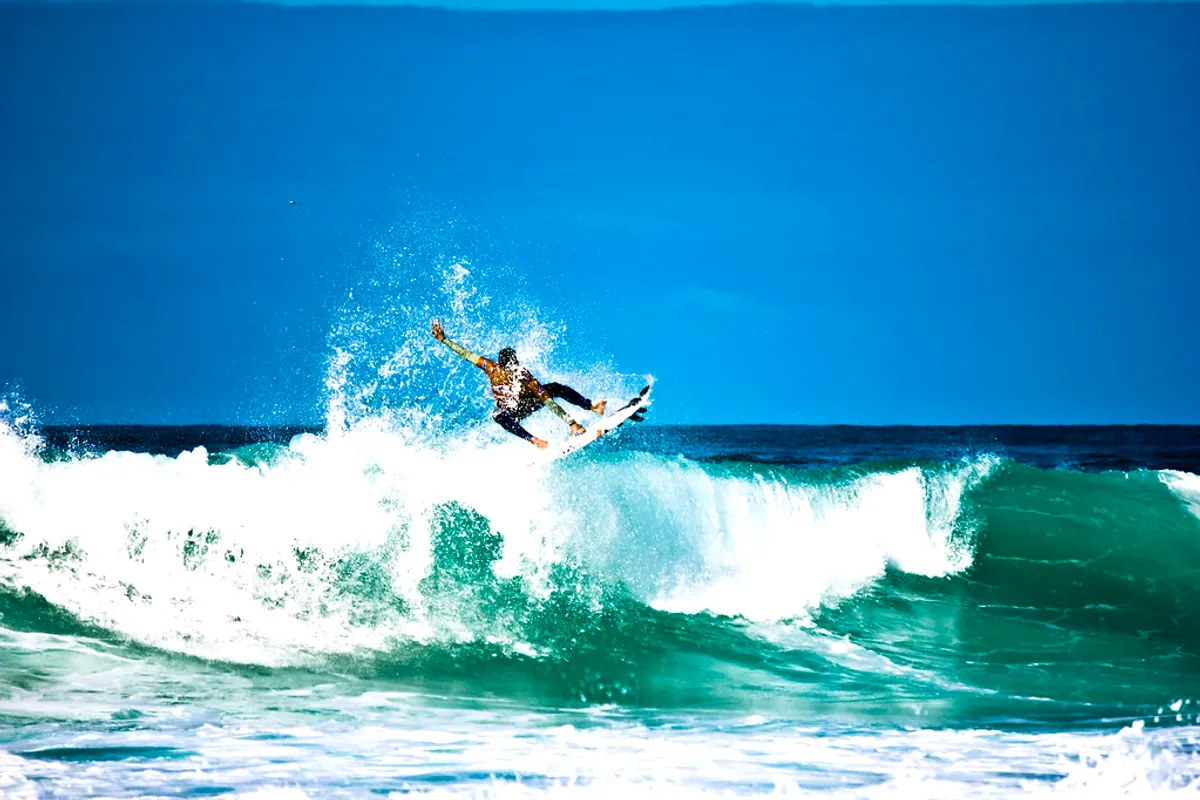
The mistral, a cold north-westerly wind, is the engine of Sardinia's best surf. It generates local wind swell and, on strong days, produces large waves on exposed west-facing coasts. Capo Mannu, on the Sinis peninsula near Oristano, is the best-known wave in this setting. Guides describe it as the island's top spot for experienced surfers, with waves reported up to around four metres, and it hosts a well-known windsurf and kitesurf contest each year.
Because mistral surf arrives with strong wind, sessions can be messy and the water can be cold and choppy. These are not conditions for novices. Check the forecast closely, look for where the wind is lightest and avoid the biggest days unless you are used to that environment.
Buggerru to Funtanamare: the rocky south-west
Sardinian tourism material describes the stretch of coast from Buggerru to Funtanamare as the domain of expert surfers who are comfortable with rocky bottoms and powerful seas. Within it, the breakwater side at Buggerru is suggested as an intermediate to advanced option. Portixeddu has a sandy bottom but is still recommended for experienced surfers, while San Nicolò is a long beach where surfers of all levels can find a place.
Buggerru has one of Sardinia's longest-established surf schools, according to sources, so learning is possible. But the coast is remote, rocky and unforgiving. Bring a buddy, check the tide, and be careful on cliff paths and boulders at the entries.
Porto Ferro, the friendlier beach near Alghero
Porto Ferro lies roughly 17 to 18 kilometres from Alghero and is often described as the most reliable west-coast beach and effectively Sardinia's surf hub. It has a sandy bottom and waves that arrive from both directions, making it a common choice for beginners and intermediates. Several guides rank it as the top surf spot in Italy, though that kind of claim is subjective.
Because the beach is exposed, conditions change with wind and swell. A sheltered corner may be flat while another is working. Alghero's airport is the nearest, and the town itself is an attractive base with a historic centre and seafront. Check lifeguard presence in the bathing season, and avoid swimming and surfing across rip channels.
When the Mediterranean sleeps
Summer is often almost flat, with average wave heights of only a fraction of a metre, so expect to swim, snorkel or stand-up paddle rather than surf. The best waves arrive from October to April, with the strongest days in the middle of winter, most commonly in January and February.
The sea is cooler than most visitors expect for a Mediterranean island. In midwinter, water temperatures are typically in the mid-teens Celsius, which calls for a 4/3 or a 5/4, while the shoulder months are comfortable in a 3/2. Air temperatures are mild by northern European standards, but wind from the north-west can bite.
If you are flexible, the best approach is to watch the forecast for several days before you travel. Storms in the western Mediterranean can develop quickly, and locals sometimes decide at short notice to drive to the coast. A trip built around two or three possible sessions, rather than daily surf, matches how the island really works.
Airports, roads and the size of the island
Sardinia has three main airports, at Cagliari in the south, Alghero in the north-west and Olbia in the north-east. For the west coast, Alghero suits Porto Ferro and the north, while Cagliari is the better gateway for the south-west and Buggerru. Distances are larger than they look on a map, and public transport on the west coast is limited.
A rental car is close to essential. Roads can be narrow and winding, and fuel stops are sparse in some interior areas. Allow extra time for any drive on the island, and do not plan to chase surf across the whole coast in a single day.
Beyond the surf: food, ruins and quiet coves
Sardinia has a distinct cuisine, with seafood on the coast and mountain dishes inland, and its own language and traditions. The island is dotted with prehistoric sites, medieval towns and coves that are quiet outside of summer.
On flat days, the west coast offers walking, swimming and cliff-top drives. Out of season, many resort towns are quiet and some facilities close, so check opening times before you rely on them.
Sardinia surf season month by month
A broad planning picture, not a forecast. Swell, wind and water temperature vary from year to year.
| January | Often the best month for swell on the west coast, with cold water and sharp mistral days. A 4/3 or 5/4 is the norm. |
|---|---|
| February | Consistent winter surf, often alongside January's best. Quiet beaches, short days and changeable weather. |
| March | Swell is still possible, with milder air. Mistral episodes continue, so plan flexible days and keep an eye on the forecast. |
| April | The season tails off. Waves are smaller and less frequent, but the island is green and pleasant, and crowds are thin. |
| May | Mostly small to flat. Better for hiking, swimming and exploring than for chasing waves. |
| June | Summer flat spells begin. Warm days and gentle seas make it a stand-up paddle and beach trip. |
| July | Usually flat, with crowded beaches and high accommodation prices. Not a surf month. |
| August | Peak holiday season and the warmest sea. Waves are rare, so surf only if a swell happens to coincide with your stay. |
| September | The sea is still warm, and the first storms of autumn begin to produce occasional swell. Beaches are quieter than in August. |
| October | The season starts. Occasional swells and manageable temperatures make it a pleasant month for those who can be flexible. |
| November | More frequent swell, increasing wind and cooler water. A good month for those who like quiet beaches and some uncertainty. |
| December | Cooler water and an increasing chance of mistral surf. Many facilities are closed, so book carefully and bring your own supplies. |
Learning to surf in Sardinia
Sardinia can work for beginners, but only with realistic expectations. Waves are smaller and less frequent than on the Atlantic, so lessons depend on the day. Porto Ferro and San Nicolò are the two beaches most often named for learners, and Buggerru has a long-established surf school.
Most schools operate in the main season, and some close in winter. Ask when they run, what the policy is on cancelled sessions, and whether they supply wetsuits suitable for cool water.
If you are already a competent surfer, the island is a good place to practise reading wind-driven surf, but be careful about the mistral. It can turn a calm session into a hazardous one in a short time.
Comparing options across the country? Read our guide to surfing in Italy.
Seasonal notes on this page describe typical patterns, not the conditions on a given day. Use the local forecast, lifeguard advice and a qualified instructor for water-safety decisions, and get a written breakdown of what any surf package includes before paying.
Sardinia surf trip questions
Can you surf in Sardinia?
Yes, mainly on the west coast in winter, when storms and the mistral generate waves. Summer is often flat, so plan accordingly.
When is the best time to surf in Sardinia?
October to April, with the strongest surf usually in January and February. The summer sea is warm but typically very small.
What is Capo Mannu?
A headland on the Sinis peninsula near Oristano, regarded as the island's best wave for experienced surfers when the mistral blows. It is also a venue for windsurf and kitesurf events.
Is Sardinia good for beginners?
Sometimes. Porto Ferro and San Nicolò are named as options with sandy bottoms, but waves are small and irregular, so lessons depend on the day.
Which airport should I use for surfing in Sardinia?
Alghero is closest to Porto Ferro, Cagliari suits the south-west and Buggerru, and Olbia serves the north-east. A rental car is needed for any of them.
Sources & editorial notes
Destination context checked against the sources below. Base-selection and itinerary suggestions are Book & Surf editorial recommendations. Seasonal windows are broad planning suggestions, not measured forecasts or guarantees.
- Sardegna Turismo: in search of wind and waves ↗
- The Surf Atlas: Surfing in Italy ↗
- Wikipedia: Sardinia ↗
We do not claim to have personally surfed every break. Read our editorial standards.