Choosing a beginner surfboard: size, volume and type
Why your first board should be bigger than you think, how volume works and when to move from a soft-top to a mid-length.
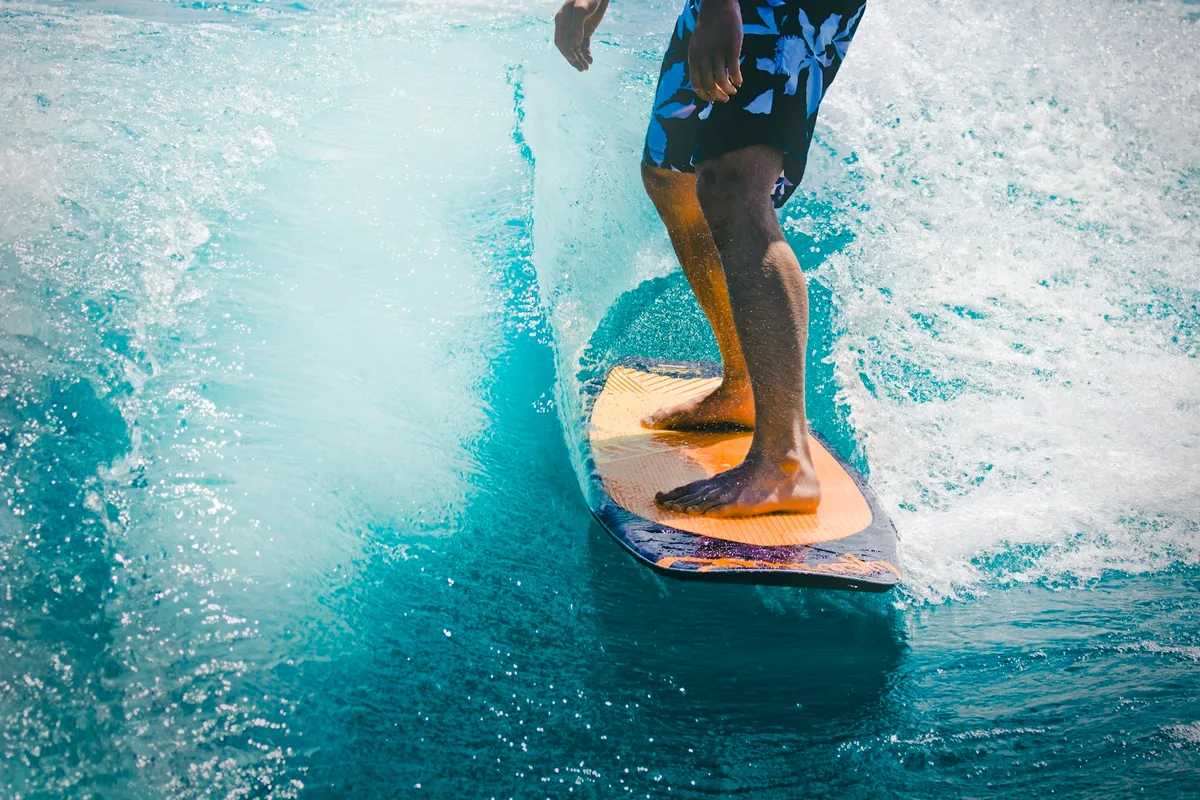
The most important rule: go big
The single biggest mistake beginners make with surfboards is choosing one that is too small. Small, thin boards look exciting, but they are harder to paddle, less stable and much harder to catch waves on. A beginner on a board that is too small catches fewer waves, falls more often and progresses more slowly.
A large, wide, thick board floats you higher in the water, paddles faster, catches waves earlier and gives you a stable platform to stand up on. That is why surf schools use big soft-top boards for beginners. When in doubt, choose more board, not less. You can always move to something smaller once you have mastered the basics.
Length, width, thickness and volume
Surfboards are described by their length, width and thickness, usually in feet and inches, such as 8'0" x 22" x 3". Together, these dimensions determine the board's volume, measured in litres. Volume is a useful single number for comparing boards, because it tells you how much the board will float.
For beginners, a high volume relative to body weight is ideal. Many beginners start on boards of around 8 to 9 feet with plenty of width and thickness, and heavier or older beginners may benefit from even bigger boards. Surf shops and schools can recommend a suitable size based on your weight, fitness and the waves you will surf.
Soft-tops and foam boards
Soft-top boards, often called foamies, have a soft foam deck and usually a slick plastic bottom. They are the standard learning board at surf schools because they are buoyant, stable and much less likely to hurt you or others if you fall. They are also durable and relatively affordable.
For your first months of surfing, a soft-top of around 8 to 9 feet is usually the best choice. Many experienced surfers also enjoy soft-tops for fun in small waves. The downside is that they are less responsive than hard boards, so as you progress to turning and riding steeper waves, you may want to move on.
Longboards
Longboards are typically 9 feet or longer, with rounded noses and plenty of volume. They catch waves very easily and are stable, which makes them a good option for beginners who have mastered the basics on a soft-top and want a hard board. They are also a style of surfing in their own right, with smooth turns, trimming and noseriding.
Longboards are heavy and long, which can make them harder to carry, transport and paddle out through breaking waves, especially in bigger surf. They work best in small to medium, gentle waves, such as those at Batu Bolong in Canggu, the Côte des Basques in Biarritz or Imsouane's Bay.
Mid-lengths and funboards
Mid-length boards and funboards sit between longboards and shortboards, typically around 7 to 8 feet, with plenty of volume and rounded outlines. They are a popular choice for improvers moving on from soft-tops, offering a good balance of wave-catching ability, stability and manoeuvrability.
A mid-length is often the best second board for someone who can catch and ride green waves and wants to start turning more. It is easier to manage than a longboard in bigger surf and much easier to catch waves on than a shortboard.
When to move to a smaller board
Move to a smaller board only when you can consistently paddle out, catch green waves on your own, ride along the face and turn. Even then, step down gradually, for example from a 9-foot soft-top to an 8-foot mid-length, and then to a 7-foot board. Each step should still allow you to catch plenty of waves.
If you find you are catching far fewer waves or struggling to paddle on a new board, go back to something bigger for a while. Many experienced surfers ride a range of boards, choosing larger ones for small, weak waves and smaller ones for powerful surf.
Matching the board to the waves
The right board also depends on the waves you surf. Small, slow, crumbly waves, common at many beginner beaches, reward bigger boards with lots of volume, which help you catch waves early and keep moving through flat sections. Steeper, faster waves suit boards with more rocker, the curve from nose to tail, and slightly less volume, which are easier to control on a steep face.
If you surf mainly in gentle summer waves in Europe, the white water of a sandy beach in Sri Lanka or the slow rollers at Batu Bolong in Bali, a soft-top, longboard or mid-length will serve you well. If you plan to surf more powerful beach breaks, such as those in south-west France in autumn, an experienced shaper or surf shop can help you choose something with a bit more control once your skills allow.
Rent first, buy later
For your first surf trips, renting or using a surf school's boards is usually best. You can try different sizes and types without a big investment, and you avoid the cost and hassle of travelling with a board. Most surf towns have rental shops with soft-tops, longboards and mid-lengths.
When you decide to buy, consider a second-hand board, which is cheaper and less precious about dings, or a durable soft-top or epoxy board. Talk to local shops and shapers, who can recommend a board suited to your local waves.
Fins, leashes and accessories
Beginner boards usually come with soft or flexible fins for safety. A leash, which attaches the board to your ankle, is essential so that your board does not wash away or hit others. Choose a leash roughly the same length as your board, or slightly longer for longboards.
Wax or a traction pad on hard boards helps your feet grip. A board bag protects your board during travel and from sun damage. If you travel with your own board, check airline rules and fees for sports equipment in advance.
Questions
What size surfboard should a beginner get?
Most beginners do well on a soft-top of around 8 to 9 feet with plenty of width and thickness. Heavier or older beginners may need an even bigger board.
Is a longboard good for beginners?
Yes, especially after a few sessions on a soft-top. Longboards catch waves easily and are stable, though they are heavy and best in small, gentle waves.
When should I get a shortboard?
Only once you can consistently catch green waves, ride along the face and turn on a bigger board. Step down gradually through mid-lengths rather than jumping straight to a shortboard.
Should I buy or rent a surfboard as a beginner?
Rent at first, ideally through a surf school, so that you can try different boards. Buy once you surf regularly and know what size and type suit you.
What is surfboard volume?
Volume, measured in litres, describes how much space a board takes up and therefore how much it floats. Higher volume means more buoyancy, easier paddling and easier wave-catching, which is ideal for beginners.
Are soft-top surfboards only for beginners?
No. Many experienced surfers ride soft-tops for fun in small waves, crowded summer beaches or with family. They are safer and more forgiving than hard boards.
Plan the trip
- Canggu surf guide
- Biarritz surf guide
- Imsouane surf guide
- Weligama surf guide
- Surfing in Indonesia
- Surfing in France
- Surfing in Morocco
Sources
These are editorial planning suggestions, not a substitute for local instruction or current conditions. How we write our guides.