A young surf culture on a very long coast
Modern surfing is new to India. Wikipedia notes that surfing and stand-up paddling were not well known in the country until recently. The first competition was held at Mahabalipuram in August 2011, organised and funded by Temple Adventures and Temple Surfboards, and the first organised surf camp, run in Chennai in 2011 by Bay of Life with the Surfing Federation of India, is described as the start of surfing as an organised sport.
The surf club at Mulki in Karnataka, Mantra Surf Club, is widely credited as the first in the country, although sources give different founding dates around 2004. A profile of the American surfer Jack Hebner, who came to India in the 1970s and later set up an ashram at Mulki, ties him to the school there. The Surfing Federation of India is the national governing body and grew out of that first community.
For a visitor, this means two things. The scene is friendly and not yet crowded, and the infrastructure is thin compared with places such as Portugal or Indonesia. Lessons, rentals and board repairs exist in a few hubs, and almost nowhere else.
Monsoon versus winter: reading the seasons
India's surf calendar is dominated by the south-west monsoon. Wikipedia says the largest waves usually arrive from May to September, in the pre-monsoon and monsoon period. That is true on much of the west coast, but those are also the months with heavy rain, rough seas, strong rips and, in places, closed beaches. Kerala Tourism describes June to September as a high-risk period for surfing at Varkala because of the rough sea.
For learners the better time is the cooler, drier season from roughly October to April. Waves are smaller, the sea is calmer and surf schools run regular lessons. Kerala sources point to December to February as especially suitable for beginners.
The east coast works to a different pattern. Tamil Nadu, around Covelong and Mahabalipuram, has its own swell windows, and the Bay of Bengal brings cyclones in the autumn. If you plan a trip there, check local advice and storm forecasts rather than assuming the west-coast calendar applies.
What the waves are like
Most Indian surf is beach break over sand, with soft shoulders and short rides. Varkala is described by Kerala Tourism as generally gentle to moderate, with a sandy seabed that makes the breaks forgiving. Many other mainland spots are similar. That is good news for beginners and a limitation for anyone who wants power.
Outside the mainland, the Andaman and Lakshadweep islands are mentioned in surf writing. A small number of charter boats take surfers to Little Andaman, which is said to have quality reefs, but information is thin and logistics are complicated. Treat any claims about these places with caution until you have talked to an operator who runs trips there.
The overall message is the same as for Thailand or Vietnam: India is a country for learning, for small-wave fun and for a cultural trip with some surfing, rather than a destination for chasing size or barrels.
Getting around and what it costs
India has a huge domestic flight network and a vast railway system. For the west coast, the main gateways are Thiruvananthapuram and Kochi in Kerala and Mangalore in Karnataka. For the east, Chennai is the nearest major airport to Covelong and Mahabalipuram. Trains are an inexpensive and atmospheric way to move along the Kerala coast.
Prices are generally low by international standards. Kerala Tourism lists lessons at Varkala in the range of about 1,200 to 3,500 rupees per session, with multi-day courses costing more, but prices vary by school, season and group size. Accommodation ranges from simple guesthouses to boutique hotels.
Carrying a board is possible, but airline fees and rules differ and rental boards are available at the main hubs, so many visitors travel light. Allow extra time for road travel, as traffic can be slow and journeys often take longer than distances suggest.
Fishing villages, clubs and local surfers
Surfing in India has grown out of coastal communities as much as out of tourism. A report on Covelong describes a fisherman, Murthy Megavan, who first rode waves on a wooden door before meeting Jack Hebner and getting a proper board. Stories like this explain why the scene feels grounded: many of the best Indian surfers grew up on the same beaches that visitors now use.
The national and state bodies reflect that growth. Alongside the Surfing Federation of India, Wikipedia lists the Karnataka Surfing Association, the Orissa Surfing Association and the Surfing and Water Sports Association of Tamil Nadu. Competitions and festivals, such as the Covelong Point Surf Festival, bring locals and visitors together in the water and on the beach.
As a visitor, the most useful thing you can do is behave as a guest. Learn from local instructors, pay fair prices for lessons and rentals, keep beaches clean and give priority to people who live and work there. Those habits help keep the line-up friendly as the scene grows, and they make a trip more rewarding than any single wave.
Safety, culture and being a visitor
Rip currents and strong undertow are the principal sea hazards, especially in the monsoon. Lifeguards are limited at many beaches, so ask your school about local conditions and swim or surf between flags where they are posted.
Culture matters in the water and on land. Many beaches are also religious or community spaces, and Varkala's main beach is a bathing place with religious significance. Dress more modestly than you would at a Western beach once you leave the sand, avoid public displays of affection and ask before photographing local people. Women travelling alone are generally advised to take sensible precautions, such as using well-reviewed accommodation, travelling in daylight and trusting instinct.
Check health advice for India well before you travel, including food and water hygiene, mosquito-borne illnesses and insurance, and carry a basic first-aid kit.
Building an India surf trip
The simplest plan is a winter trip to Kerala. Base yourself at Varkala for lessons and cliff-top cafes, then explore the backwaters, temples and tea country inland. If you want a second stop, head up the coast to Karnataka or across to Tamil Nadu.
A more adventurous plan is to follow one of the surf communities. Mulki and the Mangalore coast have a long-established club, and Covelong near Chennai hosts an annual surf festival with longboard, shortboard and stand-up paddle categories. Check the date, as events shift from year to year.
Be realistic about the surf. Plan the trip around travel and culture, and treat the waves as a pleasant addition. That framing leaves most visitors with a better trip than one built on the hope of finding world-class surf.
Surf regions of India
Kerala and the south-west coast
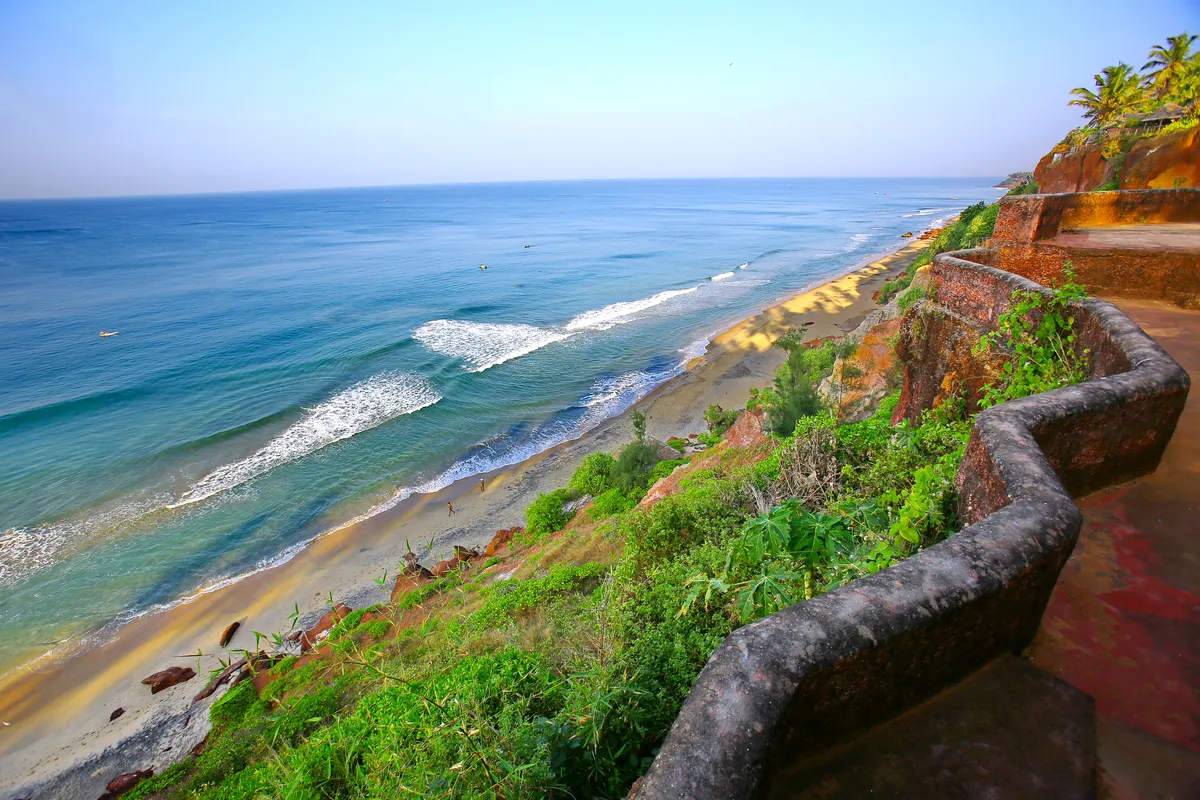
Kerala's coast has gentle beach breaks that work best from October to April. Varkala, with its red cliffs and active cafe scene, is the main base for lessons, using Papanasam, North Cliff and Golden Beach, while Kovalam near Thiruvananthapuram is another Kerala surf location named by Wikipedia. The monsoon months bring rough seas that Kerala Tourism treats as high risk. It is the easiest area for a first lesson and has good rail and air links.
Known for: Varkala, Papanasam, North Cliff, Golden Beach, Kovalam
Karnataka coast
The Karnataka coast around Mangalore is where Indian surfing started. Mulki, home to the Mantra Surf Club, and nearby beaches such as Kapu and Sasihithlu have beach breaks that pick up monsoon swell, while Murdeshwara to the north is also listed among Karnataka surf locations. The monsoon brings the biggest waves and the most hazardous conditions, so most visitors who are not experienced should choose the cooler months. Facilities are simpler than in Kerala.
Known for: Mulki, Kapu, Sasihithlu, Murdeshwara, Mangalore
Tamil Nadu and the east coast
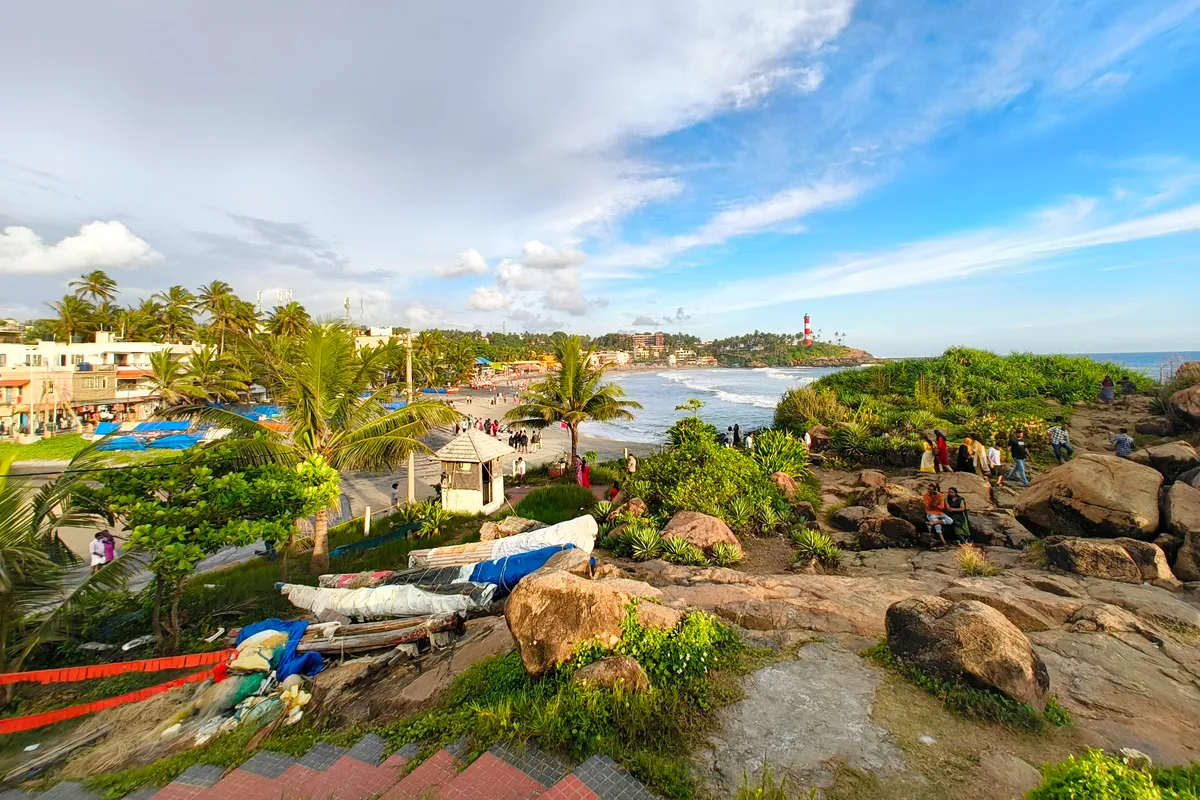
Tamil Nadu has India's other main surf cluster, south of Chennai. Covelong, also called Kovalam, hosts an annual surf festival, and Mahabalipuram staged the country's first competition in 2011. Muttukadu and Manapad are also named as surf locations. Fishing communities are part of the scene here, with local surfers learning alongside visitors. Bay of Bengal storms and cyclones affect the autumn months, so check forecasts and local advice.
Known for: Covelong, Mahabalipuram, Muttukadu, Manapad
The Andaman Islands
Little Andaman, in the Andaman and Nicobar group, is mentioned in surf writing as having quality reefs, reached by a small number of charter boats. Information is limited and access is complicated by permits, transport and distance, so this is a destination for experienced surfers with an operator, not for casual planning. Always check current entry rules and safety advice before considering a trip.
Known for: Little Andaman
Learning to surf in India
India is a good place to take a first lesson in the cooler months. Varkala has a handful of schools, some of them linked to the Surfing Federation of India or the International Surfing Association, offering soft-top boards, small groups and shore briefings before entering waist-deep water. Tamil Nadu and Karnataka also have established schools.
Choose lessons in the early morning, when winds are lighter, and avoid the monsoon months. Ask how many students share an instructor, what safety arrangements exist and whether lessons are cancelled in poor conditions. Kerala Tourism suggests that children from about ten or twelve years old can join, depending on the operator.
Expect to spend a few days on white-water waves before catching green ones. If you want to keep progressing, plan a follow-up trip to Sri Lanka, which is nearby and has more consistent waves.
Surfing in India: questions
Can you surf in India?
Yes. There is a small but growing scene in Kerala, Karnataka and Tamil Nadu, with a few remote options in the Andamans. Waves are mostly gentle beach breaks, and the sport is still young in the country.
What is the best time to surf in India?
For learners, October to April, when the sea is calmer. Larger waves arrive from May to September in the monsoon, but those months bring rough seas, and Kerala Tourism treats June to September as high risk at Varkala.
Where is the best place to learn to surf in India?
Varkala in Kerala is a popular choice during the cooler months, with several schools and gentle beach breaks. Karnataka's Mulki area and Tamil Nadu's Covelong also have established surf communities.
How much do surf lessons cost in India?
Kerala Tourism lists around 1,200 to 3,500 rupees per session at Varkala, with multi-day courses costing more. Prices vary by school and season, so confirm with the provider.
Is it safe to surf in India?
With sensible precautions, yes. Rip currents are the main water hazard, especially in the monsoon. Choose reputable schools, avoid rough seas, follow local advice and check health and travel guidance before you go.
Do you need a wetsuit in India?
Generally no. The sea is warm throughout the year, and schools usually provide a rash vest or a light wetsuit depending on weather. Sun protection matters more than insulation.
Sources & editorial notes
Country context checked against the sources below. Regional summaries are Book & Surf editorial planning suggestions, not forecasts or safety assessments.