What surfing in Thailand really is
Start with honest expectations. Thailand has a long coastline across two seas, the Andaman Sea on the west and the Gulf of Thailand on the east, but neither sits on an open ocean exposed to long-period groundswell. Surfing relies on monsoon-driven swell and local wind, so waves are usually small, often messy and variable from day to day.
The best of it is genuinely enjoyable. Sand-bottom beach breaks with warm water and gentle waves are good for learning, for longboards and for surfers who want a few hours of sliding between beach days. Travel writers who cover Thai surf broadly agree that it is a destination for beginners and casual surfers, with a few exceptions on the biggest days.
It is not the place to chase barrels or long point waves. If those are your aim, Thailand works best as part of a wider Southeast Asia or Indian Ocean trip, perhaps with a week in Bali or Sri Lanka.
Two coasts, two seasons
The country's geography gives it a useful quirk: the Andaman coast and the Gulf of Thailand are fed by different monsoons. The south-west monsoon, roughly May to October, drives swell onto the Andaman coast, which includes Phuket, Khao Lak and the islands around Phang Nga. Sources place the most reliable Andaman window between May and October, with the strongest pulse between June and September.
The north-east monsoon, in the cooler months of roughly November to March, sends small waves to the Gulf side. Breaks near Koh Samui, Koh Phangan, Nakhon Si Thammarat, Songkhla and Hua Hin can work then, though sources date the Samui season inconsistently, some saying October to December and others December to February.
This means that in theory you can find a small wave somewhere in Thailand in most months. In practice, many of those waves are knee-high, and the Gulf in particular offers gentle rolling surf rather than anything you would call a swell. Treat that opposite-season idea as a reason to be flexible, not as a promise.
Climate, wet season and when to travel
Thailand is hot all year, with a rainy season, a cooler dry season and a hot season in between. On the Andaman coast, Phuket's wet season is described as lasting about eight months, with a drier period from December to March. That is the opposite of what most holidaymakers prefer, because the best surf coincides with rain, cloud and onshore wind.
If your priority is sunshine and calm seas, the dry months on the Andaman side are the best time to visit, but expect little or no surf. If your priority is waves, accept a wetter holiday. Many surfers split the difference by visiting in May or October, when the swell is working but the weather is not at its peak of wetness.
Typhoons rarely reach the south of the country, but strong monsoon weather can still close beaches and cancel boats. Check forecasts and flags each day, and pay attention to local advice.
How big do the waves get?
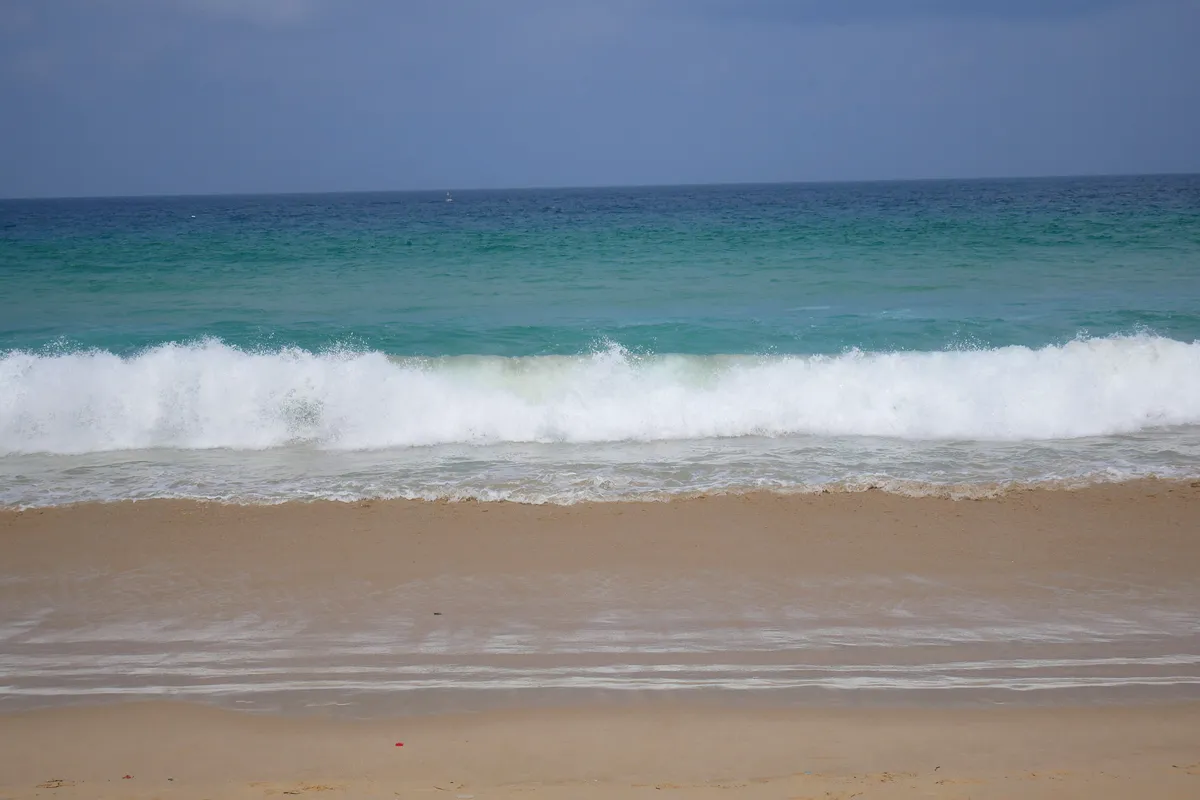
In most places, waves in Thailand sit between knee and head height. At Kata on Phuket, sources quote typical heights of around one to two metres in the middle of the season, with a few days reaching about three metres at the July and August peak. Elsewhere, wave size is smaller. Gulf-coast spots are often described as gentle waves up to about a metre and a half at best.
The waves are mostly beach breaks, with soft sand and short rides. A small number of reef and rock-assisted waves exist around islands and headlands, but they are not widely documented and quality varies. Khao Lak's breaks are often described as soft and forgiving, which makes them suited to beginners.
Because conditions are strongly wind-affected, early mornings usually give the cleanest surf. Afternoon onshore wind commonly turns the same beach into chop.
Getting around Thailand with a board
Thailand has excellent transport links. Bangkok is the main international gateway, with domestic flights to Phuket, Krabi, Koh Samui and other airports, and Phuket has its own international airport. Roads, buses, vans and ferries link most coastal areas, and renting a scooter or hiring a driver are common ways to get around once you arrive.
Boards can be hard to carry on cheaper domestic flights and on minibuses, so ask in advance. In many surf locations you can rent a board, and some schools include equipment in their lesson price, so travelling light is often easier than travelling with your own gear.
The cost of travel is generally modest by the standards of Europe or Australia, although resort areas like Phuket can be expensive in peak periods. Costs fall in the monsoon, when many visitors stay away.
Safety, rips and respect
The main surf-related risk is rip currents. During the monsoon months, red flags are flown on the Phuket west coast, and the sea can be dangerous for swimmers who are unfamiliar with it. Surfers should treat flagged beaches with caution, avoid surfing alone and learn from local teachers.
The Andaman coast was hit by the 26 December 2004 Indian Ocean tsunami. Phuket's west coast beaches were affected, with about 250 deaths reported on the island. Warning systems and evacuation signs are now in place in many coastal areas, and you should learn where they are.
In daily life, Thailand is welcoming, but there are customs to respect: dress modestly away from the beach, remove shoes before entering temples and homes, and avoid disrespect to the monarchy or to Buddhist images. Scooter accidents are the most common serious injury among visitors, so wear a helmet and check your travel insurance.
How to build a surf trip around Thailand
The most realistic plan is a mixed trip. Spend the first few days on Phuket, learning at Kata or Karon, then add culture and food in Bangkok, Chiang Mai or the southern islands. If you are travelling May to October, head to Khao Lak or Phang Nga for a quieter surf experience.
If you are a more experienced surfer, pair Thailand with Indonesia or Sri Lanka. Flights from Phuket and Bangkok connect to Bali, Colombo and other surf hubs, and a week of small waves in Thailand will not replace a proper surf trip but can complement one.
Finally, keep your plans flexible. When waves are poor, the country offers diving, island hopping, climbing and cooking classes. A traveller who treats surf as one part of the trip tends to leave happier than one who treats it as the only point.
Surf regions of Thailand
Phuket and the Andaman coast
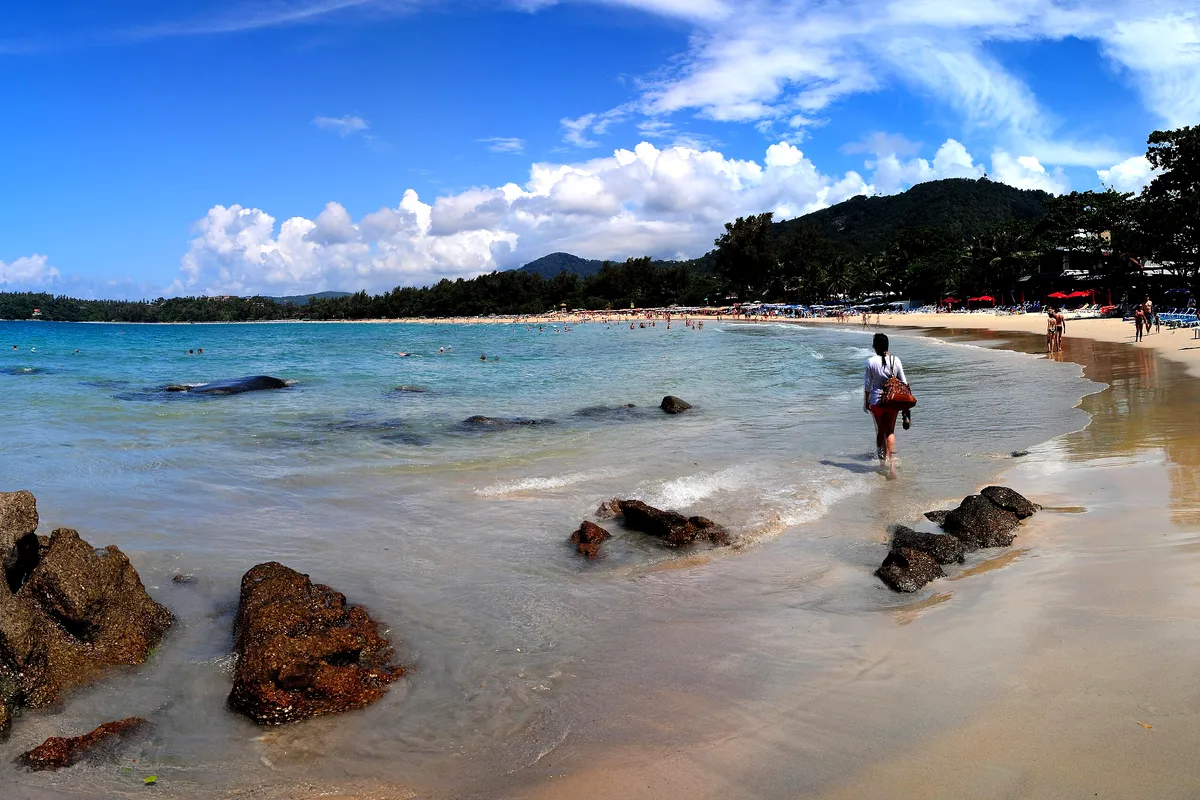
Phuket is Thailand's biggest island and its most developed surf base, with beach breaks along the west coast that work during the south-west monsoon, roughly May to October. Kata is the surf hub, with schools and rentals, while Kata Noi is smaller and quicker. Karon, Kalim, Surin and Bang Tao add options, although the sand moves each season. The island has an international airport, a wide choice of accommodation and plenty to do when the sea is flat. It is the easiest place in the country to take a lesson.
Known for: Phuket, Kata Beach, Kata Noi, Karon, Kalim, Surin, Bang Tao
Khao Lak and Phang Nga
North of Phuket, across the Sarasin Bridge, the Khao Lak coast has long, quieter beaches and a smaller surf scene. Sources describe the waves here as soft and forgiving, with the best window from May to October and a few tiny winter swells at spots such as Laem Pakarang. The offshore island of Ko Phayam is also mentioned by travellers for small dry-season waves. Facilities are less developed than on Phuket, so lessons and rentals are fewer, but the atmosphere is calmer. It suits beginners who prefer a low-key setting.
Known for: Memories Beach, Khao Lak, Laem Pakarang, Ko Phayam
The Gulf of Thailand
On the east side of the southern peninsula, the Gulf coast picks up small swell from the north-east monsoon, roughly November to March, though sources date the season differently. Hua Hin, with its Khao Takiab beach, is often cited as a spot for beginners on small days. Koh Samui, Koh Phangan, Nakhon Si Thammarat and Songkhla also appear in surf guides. Waves here are gentle and short, and quality varies a lot, so check local conditions and keep your expectations modest. It is best seen as a bonus when the Andaman coast is flat.
Known for: Hua Hin, Khao Takiab, Koh Samui, Chaloklum, Nakhon Si Thammarat, Songkhla
Learning to surf in Thailand
Thailand is a reasonable place to learn, as long as you go in the right months. Phuket's Kata Beach offers surf schools and board rental during the monsoon season, with soft sand underfoot and warm water. Khao Lak has fewer schools but a more relaxed feel, and Hua Hin offers a few lessons on the Gulf side.
What you want from a school is simple: small groups, enough time in the water, boards that suit beginners and instructors who explain rips and flags. Be wary of any school that runs lessons in dangerous conditions or ignores red flags. Ask about the school's safety policies and whether it carries insurance.
Because the waves are small, progress comes from repetition. A week of lessons will usually get a new surfer standing on white water and catching a few green waves. To progress beyond that, you will probably need to travel to a place with more consistent surf, such as Sri Lanka or Bali.
Surfing in Thailand: questions
Can you actually surf in Thailand?
Yes, but the waves are small and seasonal. The Andaman coast, including Phuket and Khao Lak, works during the south-west monsoon from May to October. The Gulf side has small waves in the cooler months. It suits beginners more than experienced surfers.
What is the best time to surf in Thailand?
May to October on the Andaman coast, with swell peaking in July and August. For the Gulf coast, the north-east monsoon season from roughly November to March gives small waves, though sources vary on the months.
Where is the best place to learn to surf in Thailand?
Kata Beach on Phuket has the most schools and rentals during the monsoon season. Khao Lak is quieter and more laid-back. Both are best between May and October.
Is surfing in Thailand dangerous?
Rip currents and rough monsoon seas are the main hazards, and red flags are flown on the Phuket west coast. Scooter accidents are another common risk for visitors. Follow flags, avoid surfing alone and take lessons with reputable schools.
Do I need a wetsuit in Thailand?
No. The water is warm throughout the year, and a rash vest is usually enough for sun and board rash. A thin top may be useful in the cooler months on the Gulf coast.
Is Thailand worth visiting just for surfing?
Probably not. The waves are small and the best surf season is the wettest. Thailand works better as a holiday that includes a few days of surfing, or as a stopover on a longer trip to Indonesia or Sri Lanka.
Sources & editorial notes
Country context checked against the sources below. Regional summaries are Book & Surf editorial planning suggestions, not forecasts or safety assessments.