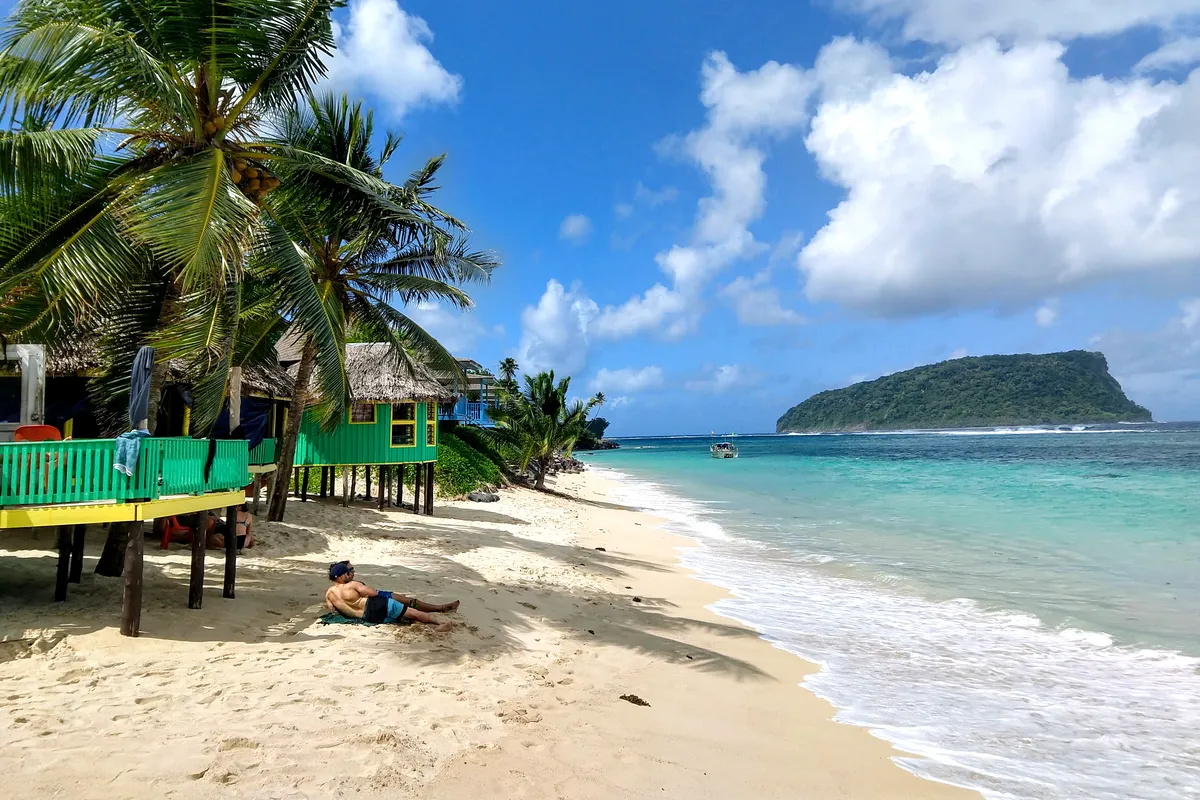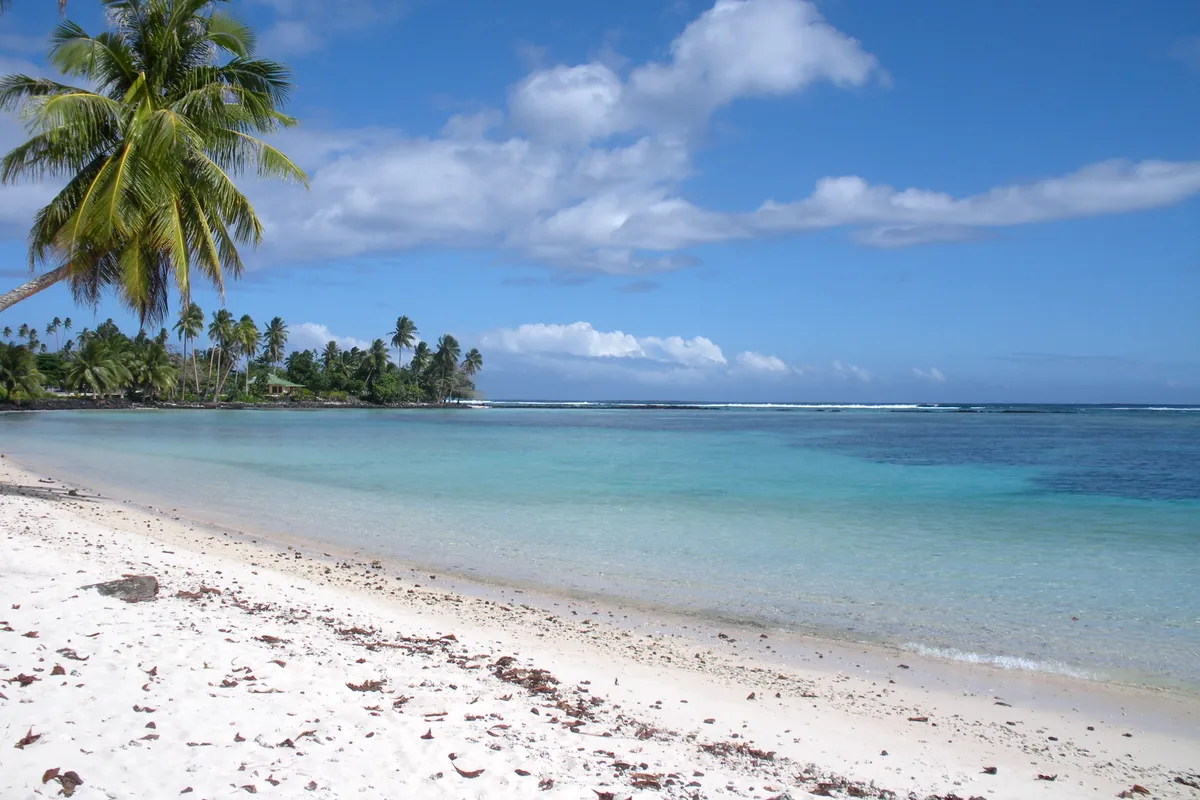
Two islands, one reef coast
Samoa is an island country in Polynesia, in the South Pacific. The two main islands are Upolu and Savai'i, with smaller inhabited islands such as Manono and Apolima nearby. At the November 2021 census the country had about 205,557 people, and nearly three-quarters of them live on Upolu, where the capital, Apia, is found. Samoan and English are the official languages, and the currency is the tala.
Surfing here is built on reef. Fringing and barrier reefs ring the islands, and gaps in them, called passes, funnel swell into clean waves. That makes Samoa a place for people who are comfortable on coral and who can read a line-up, not a place for learning to stand up.
The country is also small, with a modest tourism industry. Tourism accounted for around a fifth of GDP in 2024, and about 200,000 visitors came that year. For a surfer, this means few crowds and few facilities, a combination that rewards patience and planning.
Season: May to October, with caveats
Samoa has an equatorial climate with an average temperature of about 26.5 degrees Celsius. The main rainy season runs from November to April, and the drier peak tourist season runs from June to September. Cyclones can occur in the wet season, so travel between November and April needs close attention to forecasts.
Surf sources are not unanimous. Some say the south-coast reefs are at their best from May to September, when southern hemisphere swells arrive regularly. Others point out that Samoa can be surfed year-round, with glassy days reported in February, April and October, and that the north shores of Upolu and Savai'i can work on northern swells during the southern summer.
The practical conclusion is simple. If you want the best chance of consistent waves and settled weather, travel between May and October. If you travel in the wet season, accept more rain, less reliable swell and some cyclone risk.
Customary land, fees and respect
Samoa has a distinctive land system. Most land is customary land, owned by villages and extended families under the traditions known as fa'a Samoa. In practice, access to beaches, reef passes and even some roads depends on the permission of the village that holds the land.
Surfers typically pay a small access fee. Travellers report amounts in the range of 10 to 40 tala for beach access roads on Upolu's north side, and a few dollars at some Savai'i beaches, while a family-run spot reported by the Samoa Observer charged about 15 US dollars per person for unlimited day access. There is no single published tariff, and who to pay can be confusing, so confirm current arrangements locally.
The simplest way to handle this respectfully is to stay at a place that arranges access for you. Dress modestly in villages, ask before taking photographs, and remember that Sundays are a quiet day of church and family in much of the country.
Getting there and getting around
International flights land at Faleolo International Airport on Upolu, with connections from New Zealand, Australia, Fiji and other Pacific hubs. Schedules change, so check what is available when you plan. Samoa moved to the other side of the international date line in 2011, which means it is now one of the first places in the world to see each new day, and it switched to driving on the left in 2009.
On Upolu, taxis, hotel transfers and hire cars are the main options, with informal buses on the main roads. Savai'i, the larger island to the north-west, is reached by ferry from Upolu, and it is quieter and more rural.
Because reef passes often need a boat, the cost of a surf trip is usually higher than in cheaper Southeast Asian destinations. Expect to pay for accommodation, access fees and boat transfers, and check what is included before you book.
Beyond the lineup: what else Samoa offers
Flat days are common enough that it is worth knowing what else the islands offer. Upolu is a basaltic shield volcano about 75 kilometres long, with a forested interior and a coast of beaches and lagoons. Robert Louis Stevenson's former estate at Vailima, later a governor's residence and now the official home of the head of state, is one of the island's best-known historic places. Apia has markets, churches and a harbour front that give a sense of everyday life.
Savai'i is larger and quieter, and its volcanic landscape and village life reward a day or two of exploring. Local hosts can arrange snorkelling, village visits and guided walks, although services and prices vary and are best confirmed directly.
Samoa's recent history also matters to visitors. The country gained independence from New Zealand administration on 1 January 1962 and changed its name from Western Samoa in 1997. Christianity is central to daily life, and Sunday observance is taken seriously, with many businesses closed and village life centred on church. Respecting these customs, and the fa'a Samoa that underpins them, matters as much as respecting the reef.
Hazards: reef, cyclones and tsunamis
The main surfing hazard is reef. Shallow coral, sharp edges and changing tide windows make cuts and impact injuries a risk. Reef shoes are sensible for walking on coral, and wounds should be cleaned promptly because tropical infections develop quickly.
Boat access means you rely on the skipper for the return. Agree pick-up times and weather limits in advance, and do not paddle to a pass you cannot get back from.
Samoa is also exposed to natural hazards. A tsunami struck the south side of Upolu on 29 September 2009, reportedly destroying about twenty villages, including Lepa. Cyclones are a feature of the wet season. Ask your accommodation about warning systems and the route to high ground when you arrive, and follow official advice during storms.
Planning a surf trip to Samoa
A week is a sensible minimum. Plan to base yourself on one coast, ideally the south or west of Upolu, and add a side trip to Savai'i or Apia if the swell is small. Book early for the dry-season months, because the number of rooms near the breaks is limited.
Bring spare equipment, because replacements are hard to find. Reef shoes, a first-aid kit, sun protection and a rash vest are all worth packing, along with extra leashes and fins. A board bag with extra protection helps on small aircraft and boats.
Finally, treat Samoa as more than a wave. The country has dramatic coastlines, rainforest, natural swimming holes and a living culture. Surfers who spend time with local hosts, eat local food and respect village rules are likely to have a richer trip than those who treat it as a purely technical exercise.
Money, costs and what to budget for
Samoa is not a budget surf destination in the way parts of Indonesia are. Flights from New Zealand, Australia or Fiji are the main fixed cost, and accommodation near the best breaks is limited, so prices reflect that. Boat transfers to the passes, access fees and meals at a resort can add up quickly, so check what is included before you book.
As a broad guide, a trip that includes accommodation near the breaks and daily boat access sits at the upper end of the mid-range for most travellers, while staying in simple beach fale and paddling out where possible costs less. Treat these as rough labels, not quotes, and compare several options.
Carry cash in tala for village fees, markets and small purchases, because card payments may not be accepted outside Apia and the main resorts. Keep some spare money for delays, as flights and boat trips can be disrupted by weather.
Surf regions of Samoa
Upolu south and west coast
The south and west coasts of Upolu hold the island's best-known reef breaks. Boulders, an exposed left, and Salani, which works even outside the trade-wind season, are the usual names, with Coconuts, a right within a short paddle of the Sinalei resort area, another option. Many passes need a boat or resort access. Faleolo airport is on the west side of the island. The area suits intermediate and advanced surfers and is best from May to October.
Known for: Upolu, Boulders, Salani, Coconuts
Apia and the north coast
Apia is Samoa's capital and commercial centre, roughly mid-way along Upolu's north coast. It offers restaurants, markets and shops, and works as a stopover for supplies rather than a surf base. Some north-shore beaches pick up northern swells in the southern summer, and travellers report access roads where a small fee is collected. Quality and arrangements vary, so ask locally. The city is also the base for the Robert Louis Stevenson estate at Vailima, a notable cultural stop.
Known for: Apia, North coast beaches
Savai'i
Savai'i is the larger, quieter island, reached by ferry from Upolu. Aganoa Beach has a reef break with left and right waves within paddling distance of the beach, and hosted surfing at the 2007 South Pacific Games. Other Savai'i breaks named by travel sources include Pastor Point, K-Land and Middles. Facilities are simple, with beach fale-style accommodation, and access usually involves a village fee or a visit with permission.
Known for: Aganoa, Pastor Point, K-Land, Middles
Learning to surf in Samoa
Samoa is not an ideal first-lesson destination. The best-known waves are reef passes, often reached by boat, and the infrastructure of surf schools that you find in Bali or Costa Rica does not exist at the same scale.
That said, intermediate surfers who want to progress onto reef waves can benefit from the guidance of local boatmen and resort hosts. Ask in advance whether coaching, board hire or guided sessions are available, and be honest about your level.
If you are new to surfing, learn on a sandy beach elsewhere in the Pacific or in Southeast Asia. Come to Samoa once you can paddle confidently, duck-dive and control your board in waves of waist to head height, and you will get far more from the trip.
Surfing in Samoa: questions
When is the best time to surf in Samoa?
May to October is the safest window, with consistent southern swell and the drier season. Surf is possible year-round, but November to April brings rain and cyclone risk.
Is Samoa good for beginners?
Not generally. Most of the best waves are reef passes that need boat access and experience. Beginners should learn elsewhere first.
Do you have to pay to surf in Samoa?
Often yes. Most land is customary, and villages charge access fees. Reported amounts range from a few dollars to tens of tala, with no standard tariff, so confirm locally or stay somewhere that arranges access.
Do you need a boat to surf in Samoa?
For many of the best passes, yes. Some breaks, such as Aganoa on Savai'i, are within paddling distance of the beach. Ask your accommodation which arrangement applies.
Are cyclones and tsunamis a risk in Samoa?
Yes. Cyclones can occur in the wet season from November to April, and a tsunami struck Upolu's south side in September 2009. Ask your accommodation about warning systems and evacuation routes.
What currency and language are used in Samoa?
The currency is the Samoan tala, and the official languages are Samoan and English. Bring cash for village access fees and small purchases.
Sources & editorial notes
Country context checked against the sources below. Regional summaries are Book & Surf editorial planning suggestions, not forecasts or safety assessments.