Reading Vietnam's coast for surf
Vietnam is a long, narrow country, with the South China Sea along its eastern side and the Gulf of Thailand at its south-western tip. Its surf comes mainly from the north-east monsoon, which sends swell onto the central and southern beaches in the cooler half of the year. There is no open-ocean groundswell of the kind that reaches Bali or Portugal, so waves are generally small to moderate, and they depend heavily on wind.
That shapes the type of trip Vietnam suits. The surf is soft enough for beginners and for longboarders, with sandy beach breaks and warm water, and there is a growing network of surf schools in the main hubs. It is a poor choice for travellers who want long, powerful waves, and it is best treated as one part of a wider holiday that might also include food, cities and history.
The country has an area of about 331,000 square kilometres and a currency called the dong. Travel between regions can be long, so choose one or two bases rather than trying to see the whole coast.
The main surf season and its limits
Sources place the central coast season around September to March. For Da Nang, the national tourism site gives September to March and wave heights of roughly three to six feet in the best weeks, while other sources say the peak is from September to November. Further south, Mui Ne is most often described as working from November to March, when the winds build waves for both new and experienced surfers.
For Nha Trang the sources are inconsistent: one gives November to March, another March to September with a peak in June and July. If you are planning a trip there, ask a local school what is working, because the descriptions do not agree.
The flip side is that summer, roughly April to August, is mostly flat on the central coast. It is hot and sunny, the sea is calm and swimmers fill the beach. If you travel then, treat surf as an occasional bonus.
Typhoons, rain and the wet season
The surf season overlaps with the wet season and the period when typhoons are most likely. Wikipedia describes Da Nang's typhoon and wet season as running from September to December, with a dry season from January to August and about 2,205 millimetres of rain a year. Tropical showers are often short and heavy, and they do not necessarily stop surfing, but a typhoon is a different matter.
Before travelling in October or November, check the forecast and be prepared to change plans. Typhoons can close beaches, disrupt flights and make the sea unsafe, and a trip to the central coast at that time of year benefits from flexible bookings and travel insurance that covers weather.
The south behaves a little differently. Mui Ne and Vung Tau are further south and see fewer storms, with the dry months of the north-east monsoon often bringing steady wind. Wind is both an asset, because it builds waves, and a limitation, because it can leave the sea choppy.
Getting around Vietnam with a board
Vietnam has three main international airports: Hanoi in the north, Da Nang in the centre and Ho Chi Minh City in the south, with domestic flights, buses and trains linking the coastal towns. Da Nang's airport is within the city, which makes it unusually convenient for a beach destination. Hanoi is about 764 kilometres to the north and Ho Chi Minh City about 964 kilometres to the south.
Vung Tau is roughly 100 kilometres from Ho Chi Minh City and can be reached by road or fast ferry, making it the easiest surf day trip from the south. Mui Ne is a longer road journey east of Ho Chi Minh City, and Nha Trang has its own airport.
Boards can be rented at the main hubs, and many visitors travel without their own. If you take your own, check domestic airline fees and rules, and ask whether buses and trains will accept oversize luggage.
Safety, scooters and etiquette
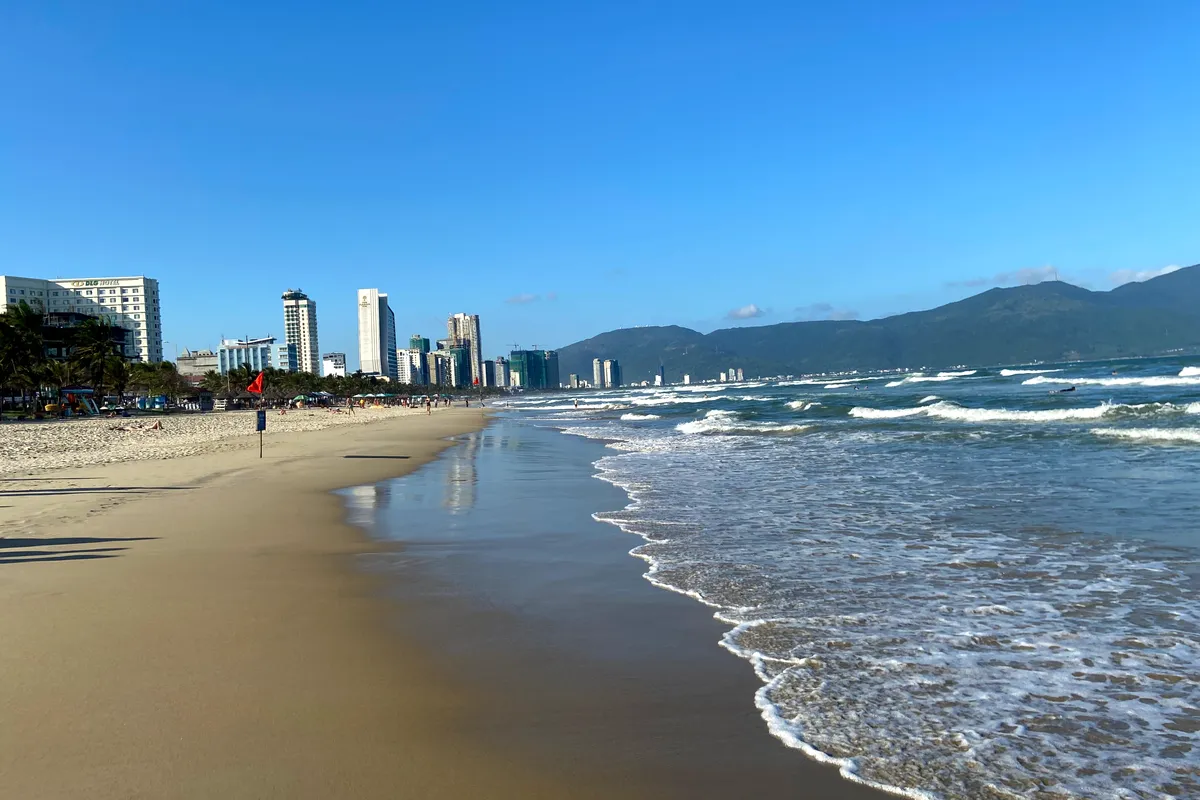
Rip currents are the main surf hazard on exposed beaches, especially on the biggest days. At My Khe, sources specifically warn about rippy currents when the swell is up. Swim and surf where lifeguards or flags are present, and ask local teachers about conditions.
Scooters are the most common serious risk for visitors. Traffic in Vietnamese cities is dense and unpredictable. If you ride, wear a helmet, check that your insurance covers motorcycles and that you hold a licence valid in Vietnam. Many visitors prefer ride-hailing or taxis.
The surf scene is small and friendly. Follow normal etiquette, give priority to the surfer closest to the peak, keep beginners away from the take-off zone and respect local people who use the beach for fishing, swimming and work. Dress more modestly away from the beach, especially at temples.
Tet, crowds and timing your visit
Tet, the lunar new year, falls in late January or February and is the busiest and most expensive time to travel on the Vietnamese coast. Many Vietnamese families travel to the beach, transport books out early, and some businesses close for several days. If your surf trip overlaps with Tet, book flights, trains and accommodation well in advance, and have a back-up plan if a school or rental shop is shut.
Outside Tet, the line-ups are usually relaxed. The surf community is small, the number of visiting surfers is modest compared with Bali, and most beaches are shared with swimmers, fishing boats and families. That is part of the charm, but it also means that surfers need to be extra careful around other water users, particularly at weekends and on public holidays.
When choosing a base, think about what you will do on flat days. Da Nang and Hoi An offer food, history and easy day trips, Mui Ne offers wind sports and desert scenery, and Nha Trang offers diving and island trips. A varied base makes the inevitable flat day part of the holiday rather than a disappointment.
Planning a trip: how to use Vietnam's coast
The easiest plan is a base in Da Nang between October and December, using My Khe for lessons and fun waves, with day trips to Hoi An, the Marble Mountains or the Son Tra peninsula when the sea is flat. Extend into a north-south journey by train or flight if you have time.
A southern alternative is to base in Mui Ne between November and March, using the wind-driven surf at the main beach, with Ho Chi Minh City as the arrival point. Vung Tau can be a weekend add-on, although the national tourism site notes that it is often crowded at weekends.
Finally, build slack into the plan. Monsoon swell does not arrive on a schedule, and typhoons can intrude. Travellers who treat surf as one piece of a broader trip usually have the best time.
Surf regions of Vietnam
Da Nang and the central coast
Da Nang is Vietnam's most dependable surf base, with My Khe as the main beach and Non Nuoc a quieter option to the south. The season runs from September to March, with swell often best from late September to November, and typhoon risk in the same period. The city has an airport in its centre, a wide range of accommodation, schools and rentals, and Hoi An, the Marble Mountains and the Hai Van Pass within easy reach. It is the best starting point for first-time visitors.
Known for: Da Nang, My Khe, Non Nuoc
South-central coast: Nha Trang to Mui Ne
Between Nha Trang and Mui Ne, a string of beaches pick up wind-driven surf. Mui Ne is the most widely cited, with a season from November to March. Nha Trang's Bai Dai is described as having gentle waves over soft sand, suited to beginners, though sources disagree on the dates. Phan Rang is said to have larger, more powerful waves than Mui Ne or Nha Trang, which suits intermediate and advanced surfers. Facilities are less developed than in Da Nang, so confirm lessons and rentals before you go.
Known for: Mui Ne, Nha Trang, Bai Dai, Phan Rang
Vung Tau and the south
Vung Tau, about 100 kilometres from Ho Chi Minh City, is the nearest surf beach to the country's largest city. The national tourism site describes consistent, beginner-friendly waves, though it also notes that the beach can be crowded at weekends, and that the waves are inconsistent. Back Beach, or Bai Sau, is the usual spot and works during the north-east monsoon. It suits a short trip from the city more than a dedicated surf holiday.
Known for: Vung Tau, Back Beach, Bai Sau
Learning to surf in Vietnam
Vietnam is a sensible place to take lessons, provided you visit in the right months. Da Nang's My Khe has surf schools and rentals on the sand during the season, and Nha Trang's Bai Dai and Mui Ne also have operators. Waves are small to moderate, the bottom is sandy and the water is warm.
Look for a school that runs small groups, provides soft boards and explains rip currents before you enter the water. Ask what happens if the sea is unsafe, particularly in typhoon season. Check whether lessons are running when you arrive, because some schools close or reduce activity in the flat summer months.
Most people need several sessions to progress from white water to green waves. If you want to continue after a Vietnam trip, a follow-up in Sri Lanka, Bali or the Philippines gives more consistent surf.
Surfing in Vietnam: questions
Can you surf in Vietnam?
Yes, mainly on the central and southern coast between roughly September and March, when the north-east monsoon brings swell. Waves are modest beach breaks that suit beginners and longboarders.
What is the best place to surf in Vietnam?
Da Nang is the most dependable base for first-time visitors, with My Khe and Non Nuoc beaches. Mui Ne is popular from November to March, and Vung Tau is the closest option to Ho Chi Minh City.
When is the best time to surf in Vietnam?
September to March on the central coast, with late September to November often cited as the peak. Mui Ne is usually described as best from November to March. Summer is mostly flat.
Are typhoons a risk for surfers in Vietnam?
Yes. The central coast's wet and typhoon season runs from about September to December. Check forecasts before and during your trip, and be ready to change plans.
Is Vietnam good for beginners?
Yes, in season. Da Nang, Nha Trang and Vung Tau have beginner-friendly beach breaks and schools. Watch for rip currents and choose a school that takes safety seriously.
Do you need a wetsuit in Vietnam?
Usually not. Water is warm for most of the season, though it cools somewhat in winter on the central coast, when a thin top may be comfortable on windy days.
Is Vietnam cheap for a surf trip?
Costs are generally lower than in most Western countries, though prices rise in resort areas and around Tet. Lessons, rentals and accommodation vary widely, so compare what is included before booking.
Sources & editorial notes
Country context checked against the sources below. Regional summaries are Book & Surf editorial planning suggestions, not forecasts or safety assessments.